

%202%20(1).svg)
.svg)

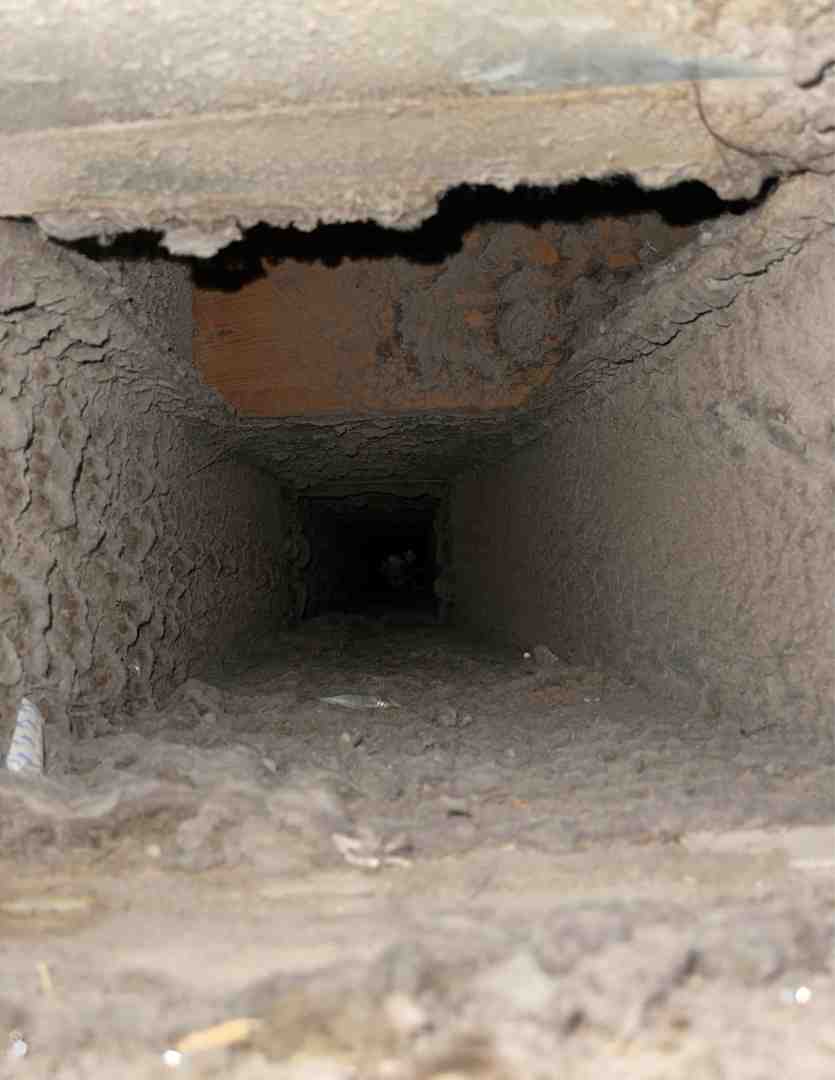
The Complete Guide to Duct Cleaning Worth It for Your Home
Written by
On Time Heating & Cooling
Published on
July 7, 2026
Is Duct Cleaning Worth It for Your Home? Here's the Short Answer
Is duct cleaning worth it for your home? It depends on your specific situation — and the honest answer is more nuanced than most ads will tell you.
Here is a quick breakdown to help you decide:
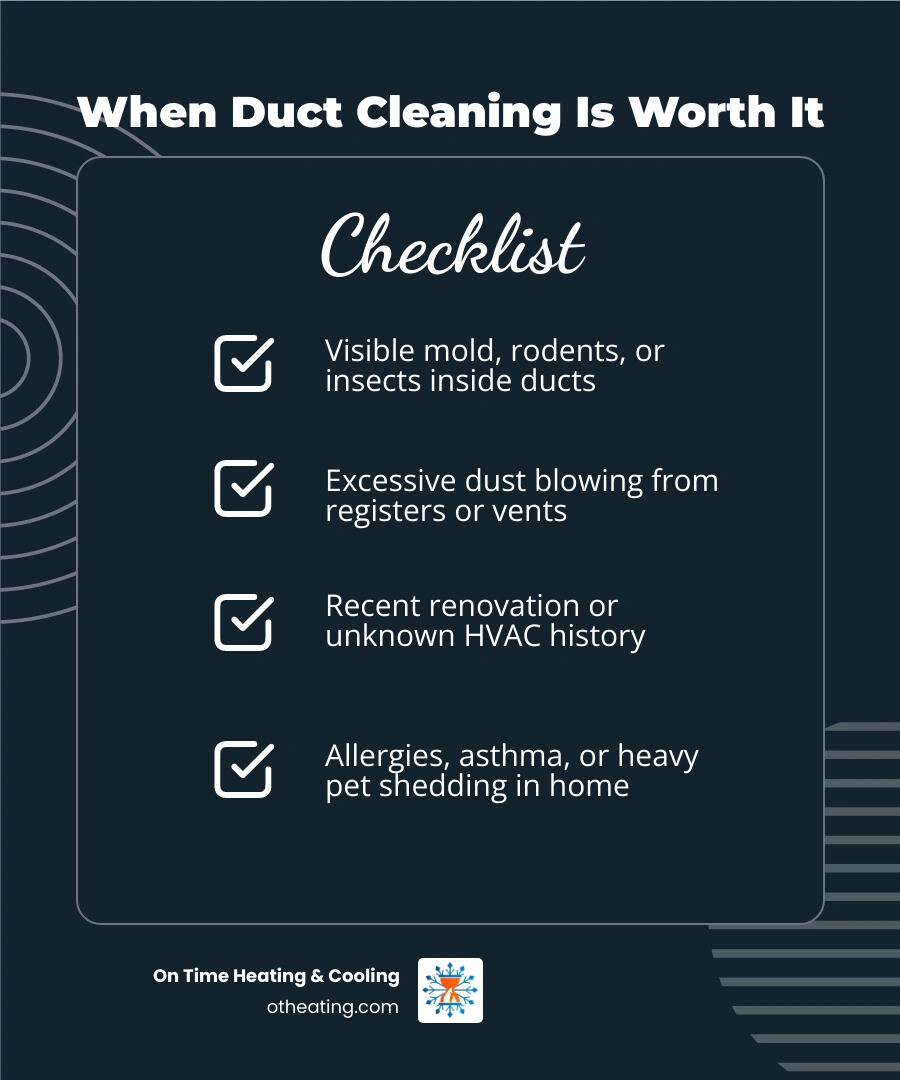
Duct cleaning is likely worth it if you have:
- Visible mold growth inside your ducts or around vents
- Evidence of rodents or insects living in your ductwork
- Excessive dust or debris blowing from your registers
- Recently completed a home renovation
- Moved into a home with unknown HVAC history
- Household members with allergies, asthma, or respiratory sensitivities
- Pets that shed heavily
Duct cleaning is probably not urgent if:
- Your HVAC system is well-maintained with regular filter changes
- There are no visible signs of contamination or unusual odors
- You had a professional cleaning within the last 3 to 5 years
- No one in the home has respiratory sensitivities
The EPA does not recommend routine duct cleaning as a standard preventive measure. However, it does recommend cleaning under the specific conditions listed above. The National Air Duct Cleaners Association (NADCA) suggests most homes benefit from professional cleaning every 3 to 5 years, with shorter intervals for homes with pets, smokers, or allergy sufferers.
For homeowners in Menomonee Falls and the greater Southeast Wisconsin area, seasonal humidity swings and heavy year-round heating and cooling demands can accelerate dust and contaminant buildup — making that 3-to-5-year window worth taking seriously.
This guide walks you through everything you need to know: what the process actually involves, when it makes sense, what the science says, and how to avoid getting scammed.
What is Air Duct Cleaning and How Does the Process Work?
To understand whether is duct cleaning worth it for your home, it is essential to look at what the process actually entails. It is not simply a matter of sticking a household vacuum hose down your floor registers. True professional air duct cleaning is a highly specialized process that requires industrial equipment and a systematic approach to prevent contaminating your living spaces.
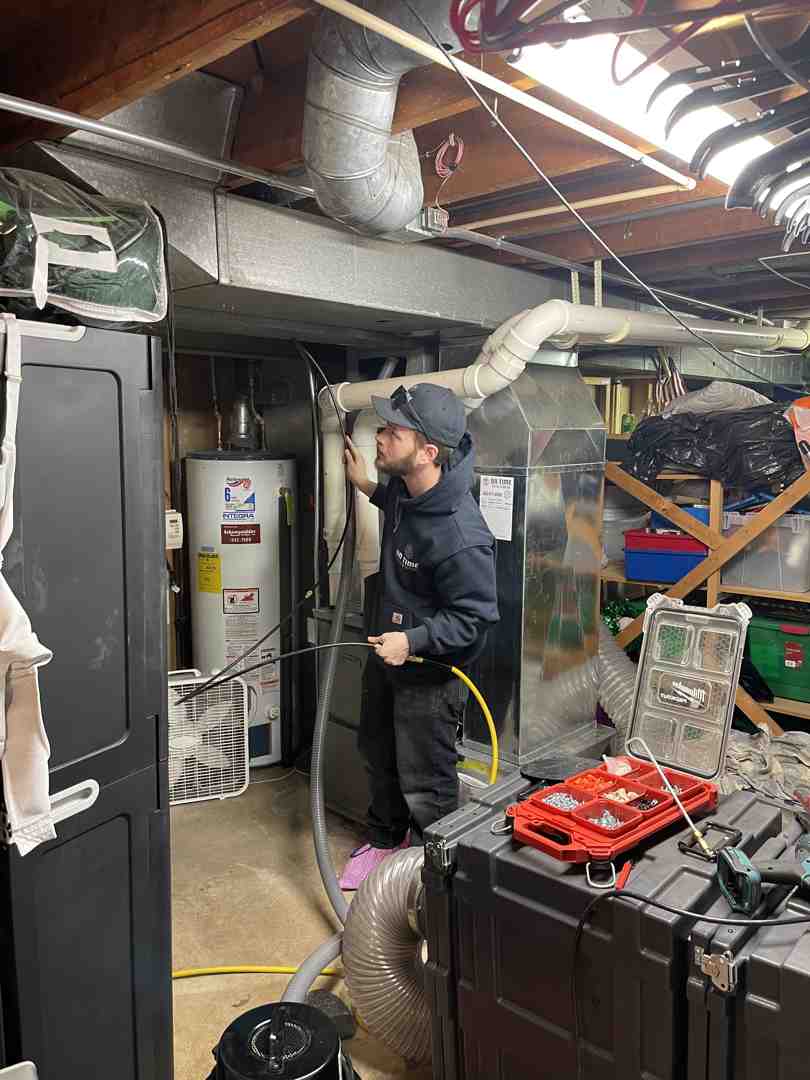
The process begins by creating negative pressure throughout your entire duct system. A certified technician hooks up a high-powered, truck-mounted vacuum collection device to your main duct trunk line. This specialized vacuum uses HEPA filtration to ensure that any dust, dander, or mold spores pulled from your system are safely captured and exhausted outside your home rather than being blown back into your indoor air.
Once the negative pressure is established, the technician uses mechanical agitation tools — such as rotating brushes, pneumatic whips, and compressed air nozzles — to dislodge the accumulated dust and debris adhering to the inner walls of your ductwork. Because of the negative pressure, all the loosened particles are immediately sucked down the line and into the vacuum collector. To learn more about how this looks in practice, you can read our detailed breakdown of the Air Duct Cleaning Process or consult our Air Duct Cleaning Complete Guide.
Key Components of a Whole-System HVAC Cleaning
A common mistake homeowners make is hiring a service that only vacuums the visible supply vents. For a cleaning to be effective, it must target the entire heating and cooling system. Cleaning only the ducts while leaving the main air handler dirty will result in immediate re-contamination the moment your system kicks back on.
A thorough, professional whole-system cleaning must include:
- Supply and Return Ducts: The main metal or flexible pathways carrying air to and from your rooms.
- Registers and Grilles: The wall, floor, or ceiling covers where air enters and exits.
- Heat Exchangers and Cooling Coils: Dirt on these components severely restricts heat transfer.
- Condensate Drain Pans: High-moisture areas where biological growth often starts.
- Blower Motor and Housing: The fan that physically moves the air through your home.
When all these elements are addressed, the benefits extend far beyond a simple reduction in surface dust. You can explore how these components interact to keep your system running smoothly in our article on How Clean Air Ducts Improve Your HVAC System.
Determining If and When Is Duct Cleaning Worth It for Your Home
Because air ducts are largely out of sight, it is easy to adopt an "out of sight, out of mind" mentality. However, the average house collects up to 40 pounds of dust, dirt, and allergens every single year. While much of this settles on your furniture and floors, a significant portion is pulled into your heating and cooling system, where your HVAC fan recirculates it throughout your home 8 to 12 times a day.
To determine if is duct cleaning worth it for your home, we recommend aligning your decision with evidence-based standards set by the EPA and the National Air Duct Cleaners Association (NADCA). Rather than treating it as a mandatory annual service, it should be treated as a targeted maintenance action. If your system is running cleanly and your indoor air is fresh, routine cleaning can wait. But if certain triggers are met, professional intervention becomes highly valuable. For more guidance on this decision, check out our resource on When Should You Get Your Air Ducts Cleaned and review the Air Duct Cleaning Benefits for Your Home.
Signs That Prove Is Duct Cleaning Worth It for Your Home
There are several undeniable warning signs that indicate your ductwork needs immediate professional attention:
- Visible Mold Growth: If you notice black, green, or fuzzy patches around your vent covers, or if your system emits a persistent musty odor when running, mold may be growing inside the damp sections of your ductwork. Because mold spores can cause respiratory irritation, this requires prompt removal. Learn how to recognize these issues in our guide on the Signs of Mold Growth in Your Air Duct System and what to do about it in our article on Air Duct Cleaning Mold Removal.
- Vermin Infestation: If rodents, insects, or birds have nested in your ductwork, they leave behind droppings, nesting materials, and unpleasant odors. This debris can severely compromise your indoor air quality and must be cleared out completely.
- Excessive Dust and Clogged Registers: If you find yourself dusting your home constantly, or if you see visible puffs of dust escape from your supply registers every time the furnace or air conditioner starts up, your ducts have likely reached their holding capacity.
- Musty, Stale Odors: Persistent odors that circulate throughout the home whenever the system runs are a clear indicator that contaminants are trapped inside the air path.
Environmental Factors: Is Duct Cleaning Worth It for Your Home in Wisconsin?
Our local climate in Southeast Wisconsin plays a massive role in how our home comfort systems operate. In communities like Brookfield, Pewaukee, and Delafield, we experience dramatic seasonal transitions.
In the hot, humid summer months, our air conditioners run continuously, producing significant amounts of condensation inside our indoor evaporator coils and drain pans. If dust is present in the system, this moisture creates the perfect breeding ground for mold and mildew. Conversely, during our freezing winters, our heating systems run around the clock, keeping our homes tightly sealed and recirculating the same indoor air for months on end.
Because we spend so much time indoors during the winter, any accumulation of pet dander, pollen, or dust in our ductwork is continuously breathed in by our families. This local environmental stress makes seasonal evaluations and periodic cleanings highly beneficial for local households. If you live in these areas, you can find localized information in our guides for Duct Cleaning Brookfield WI, Duct Cleaning Pewaukee WI, and Duct Cleaning Delafield WI.
The Real Impact of Duct Cleaning on Health and HVAC Efficiency
When evaluating if is duct cleaning worth it for your home, it is helpful to look at the two primary areas where it has the greatest impact: your household's health and your system's operating efficiency. While duct cleaning is not a magic cure-all for every ailment, removing a massive reservoir of dust and biological contaminants can yield noticeable improvements in your living environment.
Health Benefits for Allergy and Asthma Sufferers
While scientific studies do not conclusively prove that light, routine household dust in air ducts directly causes health issues, the situation changes dramatically for individuals with heightened sensitivities. For those suffering from asthma, seasonal allergies, or chronic respiratory conditions, the buildup of pet dander, pollen, and dust mites inside your ventilation system acts as a constant trigger.
Whenever the HVAC fan turns on, these fine particles are resuspended into the air, keeping your immune system on high alert. By thoroughly cleaning out these pollen reservoirs and dander deposits, you remove the source of the irritation. Many homeowners report a significant reduction in morning congestion, coughing, and sneezing within just a few days of a professional service. You can read more about these direct health impacts in our articles on Why Air Duct Cleaning Improves Health and How Dirty Ducts Affect Your HVAC Performance.
For local families, understanding these connections is key to maintaining a healthy household. Learn more about how this impacts your family's wellness in our article on Duct Cleaning Benefits for Allergy Sufferers and explore the specific regional factors in our guide on How Dirty Air Ducts Impact Health in Sussex.
HVAC System Performance and Energy Efficiency
Your heating and cooling system relies on unrestricted airflow to operate correctly. When dust and debris accumulate inside your ductwork, they create friction, which restricts the smooth passage of air. This forces your blower motor to work harder and run longer to achieve your desired thermostat settings, leading to premature wear and tear.
Furthermore, if that dust migrates to your indoor evaporator coils or blower wheel, even a tiny fraction of an inch of buildup can reduce heat transfer efficiency by over 20%. This airflow restriction and component strain can noticeably shorten the lifespan of your furnace or air conditioner. By opting for a comprehensive system cleaning, you restore optimal airflow, ease the strain on your equipment, and help prevent costly breakdowns.
To dive deeper into the relationship between system cleanliness and performance, read our articles on the Benefits of Professional Air Duct Cleaning and The Impact of Clogged Ventilation Systems in Lannon.
Potential Risks, Downsides, and Common Industry Scams
While a proper cleaning offers clear benefits, a poorly executed job can actually leave your home's air quality worse than before. If an untrained operator uses inadequate vacuum equipment without proper HEPA filtration, they can end up agitating settled dust and blowing it directly into your living spaces.
Additionally, modern homes often utilize flexible, coil-style ductwork or fiberglass-lined ducts. These materials are delicate; if a technician uses harsh, stiff-bristled brushes or incorrect tools, they can easily puncture the flexible plastic or tear the fiberglass insulation. This damage can release harmful fiberglass fibers into your airstream and create massive air leaks that spike your energy usage.
Furthermore, some companies may pressure you into applying chemical biocides or sealants inside your ducts. The EPA has not registered any chemical biocides for use on internally insulated duct systems, and these chemicals can cause respiratory irritation once they break down. Understanding how improper maintenance can backfire is crucial, as detailed in our article on how Air Duct Maintenance Affects IAQ in Lannon.
How to Spot and Avoid Shady Duct Cleaning Scams
The duct cleaning industry is unfortunately known for "bait-and-switch" marketing tactics. You have likely seen flyers or social media posts offering unbelievably low-priced whole-house duct cleaning specials (often for under $100).
These are classic traps. Once the technician arrives, they will often perform a superficial, 20-minute vacuuming of your registers, or they will use scare tactics — such as showing you fake photos of mold — to pressure you into paying hundreds of dollars more for "emergency" mold remediation or sanitizing.
To protect your home and your wallet, keep these best practices in mind:
- Verify NADCA Certification: Legitimate professionals are certified by the National Air Duct Cleaners Association and adhere to strict cleaning standards.
- Insist on a Whole-System Quote: Ensure the written estimate explicitly covers return ducts, supply ducts, and the main air handler components.
- Avoid "Too-Good-To-Be-True" Deals: Quality whole-home cleaning requires heavy commercial equipment and hours of labor; it cannot be performed properly for a nominal fee.
- Request Visual Verification: A reputable company will gladly use a duct camera to show you the actual condition of your system before any work begins.
For more tips on choosing a trustworthy local provider, consult our Best Duct Cleaning Waukesha Guide and our Best Duct Cleaning Pewaukee Tips.
Practical Alternatives and Prevention Strategies for Homeowners
If you decide that a professional cleaning is not currently necessary for your home, there are highly effective, proactive steps you can take to maintain your indoor air quality and protect your HVAC system from future contamination.
| Strategy | Primary Benefit | Recommended Frequency |
|---|---|---|
| High-Efficiency Filters (MERV 11/13) | Captures fine pollen, pet dander, and mold spores before they enter the system | Replace every 2 to 3 months |
| Moisture Control (30% - 50% Humidity) | Prevents mold and mildew from growing inside the ductwork | Continuous monitoring |
| Regular Register Vacuuming | Keeps surface dust and pet hair from falling into the duct openings | Weekly during routine cleaning |
| Professional HVAC Maintenance | Ensures coils and blowers are clean and operating efficiently | Twice a year (Spring & Fall) |
Upgrading your standard, thin fiberglass filter to a high-quality pleat filter with a MERV (Minimum Efficiency Reporting Value) rating of 11 or 13 is one of the single best investments you can make. These filters are dense enough to trap microscopic allergens and dust particles, preventing them from settling in your system in the first place. Just be sure to change them regularly to avoid restricting your system's airflow.
Additionally, keeping your home's humidity balanced between 30% and 50% using dehumidifiers or humidifiers will discourage mold spores from taking root. For more actionable advice on keeping your indoor air pristine, read our guides on how Air Duct Cleaning Improve Home Air Quality and Enhancing Air Quality in Pewaukee with Duct Cleaning.
Frequently Asked Questions About Duct Maintenance
How often should residential air ducts be cleaned?
According to NADCA guidelines, most residential air ducts should be professionally cleaned every 3 to 5 years. However, this frequency should be adjusted based on your household's lifestyle. If you have indoor pets that shed, smokers in the home, or family members who suffer from severe seasonal allergies, you may want to consider a cleaning every 2 to 3 years. For more details on establishing a schedule, refer to the Importance of Regular Air Duct Cleaning and our Air Duct Cleaning Waukesha Guide.
Can I clean my home's air ducts myself?
While you can easily vacuum your floor registers and replace your return air filters, deep duct cleaning is not a viable DIY project. Standard household shop vacuums lack the negative static pressure and specialized HEPA filtration needed to safely pull dust out of long duct runs. Attempting to clean deep inside your vents with standard vacuum hoses often ends up pushing the dust further into the system or damaging flexible duct walls. Professional equipment is necessary to ensure the dust is safely contained and removed from your home. Learn more about these limitations in our Air Duct Cleaning Brookfield Guide and our page on Duct Cleaning Sussex WI.
Is duct cleaning necessary after a home renovation?
Yes, post-construction duct cleaning is highly recommended. Home remodeling projects generate massive amounts of fine drywall dust, sawdust, and plaster particles. Even if you seal off your registers during construction, these fine particulates inevitably find their way into your return vents, where they settle in your ductwork and coat your sensitive heating and cooling components. Cleaning your system after a major renovation protects your blower motor and ensures you aren't breathing in construction debris for years to come. For more information, read our articles on Post Construction Duct Cleaning and Duct Cleaning New Berlin WI.
Conclusion
Determining whether is duct cleaning worth it for your home comes down to assessing your household's specific needs, your local climate, and the physical condition of your HVAC system. While it is rarely a mandatory annual requirement, a professional, whole-system cleaning is an invaluable service when dealing with mold, pest infestations, post-renovation dust, or chronic allergy struggles.
At On Time Heating & Cooling, we are proud to serve Menomonee Falls, WI, and our surrounding Southeast Wisconsin communities. We believe in delivering old-school, honest customer service backed by modern, industry-leading practices. Our factory-trained technicians prioritize punctuality and absolute transparency — meaning we will never push unnecessary services or use bait-and-switch pricing tactics. If your system is clean, we will tell you; if it needs attention, we will show you exactly why.
If you are concerned about your home's air quality or want to ensure your system is operating at peak efficiency, we are here to help. Explore our local services and expert tips across our service areas:
- Duct Cleaning Menomonee Falls WI
- Duct Cleaning Lannon WI
- Best Duct Cleaning Grafton WI
- Oconomowoc WI Best Air Duct Cleaning Tips
- Learn more about our comprehensive approach to Duct Cleaning page.
.svg)
.svg)
.svg)
Monday to Sunday:
24/7
24/7
Payments By:

review us on:
©
on time heating & cooling All rights reserved.
Designed & Developed By :
.svg)