How to Do Air Duct Cleaning Mold Removal in 5 Easy Steps
Discover air duct cleaning mold removal in 5 steps. Remove mold, boost IAQ & health in SE Wisconsin homes. Schedule pro service now!
Shane Herro
Owner & Lead Tech

Discover air duct cleaning mold removal in 5 steps. Remove mold, boost IAQ & health in SE Wisconsin homes. Schedule pro service now!
Why Air Duct Cleaning Mold Removal Matters for Your Home's Health
Air duct cleaning mold removal is the process of professionally inspecting, cleaning, and sanitizing your HVAC ductwork to eliminate mold colonies and prevent them from spreading through your home's air supply.
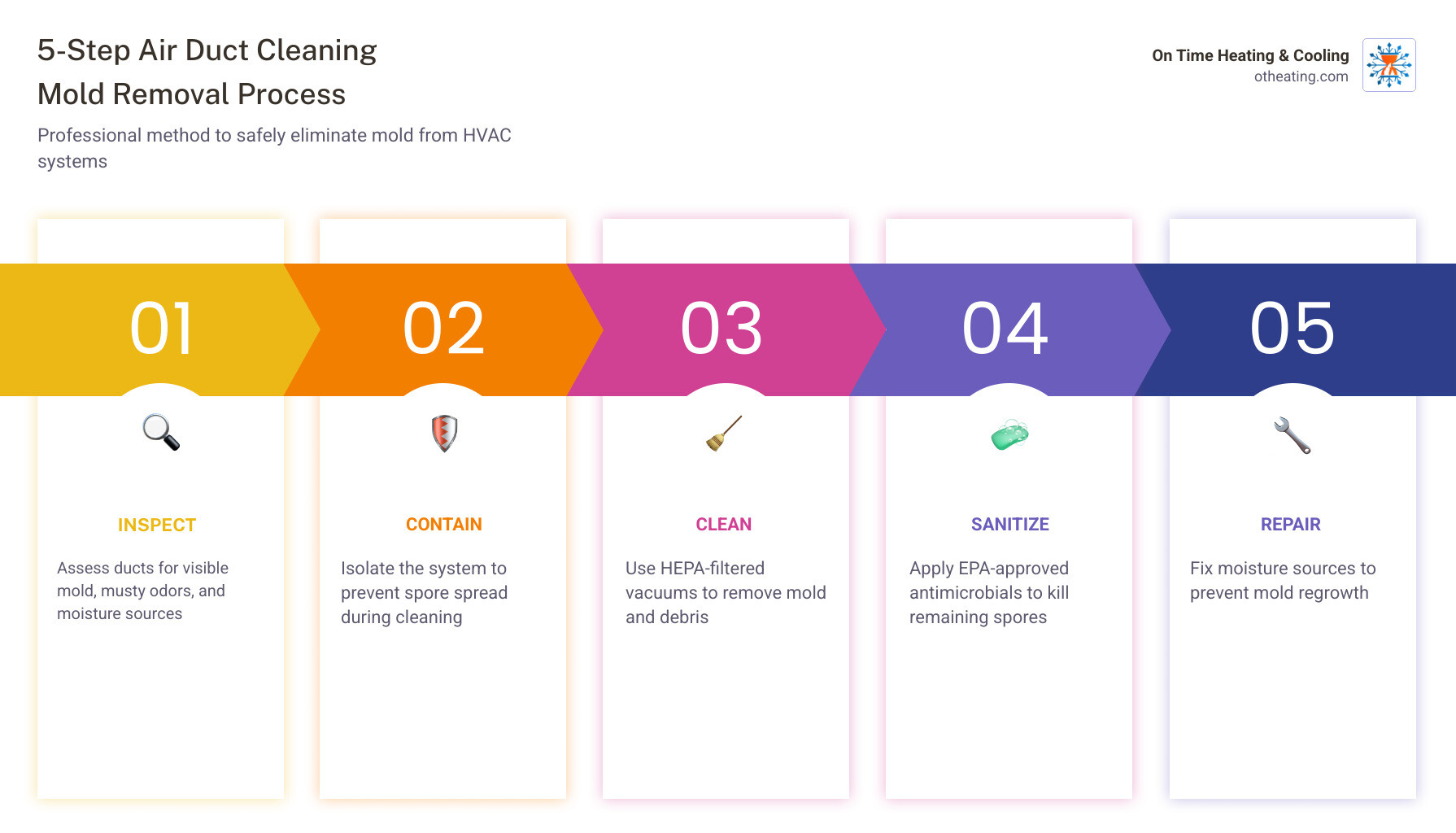
Here's a quick overview of the 5-step process:
- Inspect - A certified technician assesses your ducts for visible mold, musty odors, and moisture sources
- Contain - The system is isolated to prevent spores from spreading during cleaning
- Clean - HEPA-filtered negative-pressure vacuums physically remove mold and debris
- Sanitize - EPA-approved antimicrobial treatments are applied to affected surfaces
- Repair - The underlying moisture source is identified and corrected to prevent regrowth
Most homeowners don't think about what's inside their air ducts — until they notice a persistent musty smell every time the HVAC kicks on, or family members start sneezing more than usual indoors. If that sounds familiar, mold in your ductwork could be the culprit.
Consider this: the typical American spends roughly 90% of their life indoors. In Menomonee Falls and across Southeast Wisconsin, where humid summers create ideal conditions for moisture buildup inside HVAC systems, mold can quietly take hold in your ductwork and circulate spores throughout your entire home with every cycle of your heating or cooling system.
The good news? When caught early and handled correctly, mold in air ducts can be effectively removed — and kept from coming back. The key, as the EPA puts it, is simple: moisture control is mold control.
In this guide, we'll walk you through how to recognize the signs, what the professional removal process looks like, and how to protect your home long-term.
Identifying the Need for Air Duct Cleaning Mold Removal in Southeast Wisconsin

Living in communities like Waukesha, Brookfield, or Mequon, we are no strangers to the seasonal shifts that bring humidity into our homes. Identifying mold isn't always as simple as seeing a green fuzzy patch. Often, mold is a "silent squatter" that hides deep within your vents.
The first sign is usually olfactory. If you notice a damp, musty odor that intensifies when the blower fan turns on, that’s a major red flag. You might also see visible spotting—dark, "shower grout-like" specks or fuzzy growth—creeping around the edges of your supply registers. For a deeper dive into these indicators, check out our guide on Signs of Mold Growth in Your Air Duct System.
Physical health is another major indicator. Did you know that 8.4% of U.S. children suffer from asthma, and roughly 60% of allergy sufferers find their symptoms worsen in homes with dirty or contaminated ducts? If you find yourself sneezing, coughing, or dealing with itchy eyes only when you’re at home, your HVAC system might be "sneezing" mold spores onto you.
Healthy vs. Contaminated Air Duct Indicators
| Feature | Healthy Air Duct System | Contaminated Air Duct System |
|---|---|---|
| Scent | Neutral or fresh air | Musty, "wet basement" odor |
| Visual | Clean metal or light dust | Dark spots, fuzzy patches, or streaks |
| Airflow | Consistent and strong | Reduced due to debris/clogs |
| Health | No indoor-specific allergies | Frequent sneezing, headaches, or asthma |
| Moisture | Dry interior surfaces | Standing water or condensation on vents |
Why Mold Thrives in Residential HVAC Systems
It’s not that mold has a personal vendetta against your home; it simply follows the laws of biology. Mold requires three things to grow: moisture, darkness, and a food source. Your air ducts provide all three.
In Southeast Wisconsin, high humidity is the primary driver. When warm, moist air hits the cool metal of your air ducts, it creates condensation. This moisture, combined with the organic dust and debris (skin cells, pet dander, and pollen) that naturally accumulates in ducts, creates a "buffet" for mold spores.
Common causes of mold growth include:
- Oversized AC Units: If a unit is too large for a home in New Berlin or Pewaukee, it "short cycles," meaning it turns off before it has a chance to properly dehumidify the air, leaving the ducts damp.
- Leaking Components: Water leaks from a roof or plumbing can seep into duct insulation.
- Poor Ventilation: Areas like bathrooms and kitchens that aren't vented properly can push moisture into the HVAC system.
- Dirty Filters: Clogged filters restrict airflow, allowing moisture to settle and mold to feast on trapped dust.
By addressing these issues, you can significantly Air Duct Cleaning Improve Home Air Quality and stop the cycle of regrowth.
The 5-Step Professional Air Duct Cleaning Mold Removal Process
When we come to your home in Menomonee Falls or Germantown, we don't just "dust" your vents. Effective air duct cleaning mold removal requires a rigorous, clinical approach to ensure spores aren't just moved around, but actually eliminated.
Step 1: System Inspection and Lab Testing
We start by assessing the extent of the growth. Since many parts of your HVAC system are inaccessible, we may use high-definition cameras. If there is a dispute about whether a substance is mold, we can use clear sticky tape samples. For about $50, microbiology labs can confirm if a substance is mold or just harmless debris.
Step 2: Containment and Negative Air Pressure
This is the most critical step. We isolate the work area and connect a commercial-grade HEPA-filtered vacuum to your main trunk line. This creates "negative air pressure," ensuring that any mold dislodged during cleaning is sucked directly into our containment system rather than floating into your living room.
Step 3: Mechanical Agitation and Cleaning
Using rotary brushes and compressed air whips, we scrub the interior walls of the ducts. This physically breaks the mold's "roots" (known as hyphae) away from the metal. We pay special attention to the "wet" parts of your system, like the evaporator coil and drain pan, where mold colonization often begins. You can read more about this specialized process on our Mold Remediation Duct Cleaning page.
Step 4: Sanitization with EPA-Approved Products
Once the ducts are physically clean, we apply an EPA-registered antimicrobial fogger. This treatment kills any microscopic spores remaining on the surfaces. It’s important to note that we only use products safe for residential use that are specifically designed for HVAC systems.
Step 5: Moisture Source Repair
Cleaning is useless if the mold returns in two weeks. We identify why the moisture was there in the first place—whether it’s a sloped drain pan, a duct leak in your attic, or high indoor humidity—and help you find a permanent fix.
Is DIY Air Duct Cleaning Mold Removal Safe?
We often get asked if a homeowner can just spray some vinegar or bleach down the vents. While we love a good DIY project, mold removal from ducts is the exception.
DIY methods often fail because:
- Spore Dispersal: Without negative pressure, scrubbing mold just releases a "cloud" of spores that settles on your carpets and furniture.
- Porous Materials: If you have fiberglass-lined ducts or "flex" ducts, mold can grow inside the material. Wiping the surface doesn't kill the roots. In these cases, the Duct Cleaning process often requires replacing the contaminated sections entirely.
- Safety Risks: Crawling into tight spaces and handling mold without HEPA-rated respirators can lead to serious respiratory distress.
Long-Term Benefits of Air Duct Cleaning Mold Removal
Investing in professional cleaning isn't just about health; it's about your wallet. Clean, dry ducts decrease static pressure, allowing your furnace and AC to breathe easier. Most homeowners enjoy a 200%–300% lifetime ROI on regular HVAC care through lower energy bills and fewer emergency repairs.
Furthermore, Why Air Duct Cleaning Improves Health is well-documented. Removing the biological load from your air supply reduces the strain on your immune system, leading to better sleep and fewer sick days.
Preventing Future Mold Growth in Your Air Ducts
Once your ducts are pristine, the goal is to keep them that way. April 2026 is the perfect time to audit your home's moisture levels.
- Control Humidity: Keep your indoor relative humidity (RH) below 50–60%. If your basement in Slinger or Jackson feels "muggy," a whole-home dehumidifier is a wise investment.
- Upgrade Your Filters: Use high-MERV filters (rated 11 to 13). These can increase indoor air quality by up to 30% by capturing spores before they enter the ductwork. Change them every 1–3 months.
- Install UV-C Lights: These germicidal lights are installed near the evaporator coil. They disrupt the DNA of mold and bacteria, providing 24/7 protection against microbial growth.
- Regular Maintenance: Experts recommend professional Duct Cleaning every 3–5 years, but you should have a technician inspect your system annually to ensure drain pans are draining and coils are clean.
Frequently Asked Questions About Mold in Vents
Can mold in air ducts be completely removed?
Yes, on hard surfaces like sheet metal. However, the EPA and industry experts agree that if mold has infested porous materials like fiberglass insulation or duct board, those components cannot be effectively cleaned and should be removed and replaced.
How often should I have my air ducts inspected for mold?
While a full cleaning is typically done every 3–5 years, we recommend a visual inspection every year. You should also call for an inspection immediately after any water damage (like a pipe burst) or if you notice a new musty smell.
What are the health risks of mold in my ventilation?
Exposure to mold spores can cause a range of issues, from simple sneezing and sore throats to more severe asthma attacks and neurological impacts like headaches or fatigue. This is especially dangerous for the 8.4% of children with asthma and the elderly.
Conclusion
Your home should be a sanctuary, not a source of respiratory stress. At On Time Heating & Cooling, we take the air you breathe seriously. Our factory-trained technicians serve the entire Southeast Wisconsin area—from the quiet streets of Delafield to the bustling neighborhoods of Menomonee Falls—with a commitment to punctuality and old-school customer service.
Whether you're concerned about a weird smell or you just want to ensure your family is breathing the cleanest air possible, we’re here to help. Join our On The Dot Club for regular maintenance and peace of mind, or schedule your professional air duct cleaning today to reclaim your home's health. We'll be there on time, every time.
Related Articles
 Maintenance
Melting the Mystery of Frozen AC Units
Fix ice forming on your ac unit causes and what to do. Learn how to defrost your system and prevent costly damage today.
Read Article Maintenance
How to Stop AC Running Constantly in Wisconsin Heat Waves
Discover why your AC runs constantly during Wisconsin heat waves and learn proven fixes to restore comfort and cut energy costs.
Read Article Maintenance
5 Common AC Repairs and What Causes Them
Discover the most common AC repairs and what causes them in Brookfield WI homes, plus DIY checks and repair-or-replace tips from local pros.
Read ArticleNeed HVAC help?
Whether you need a repair, maintenance, or a new installation, our expert team is here to help.