

%202%20(1).svg)
.svg)

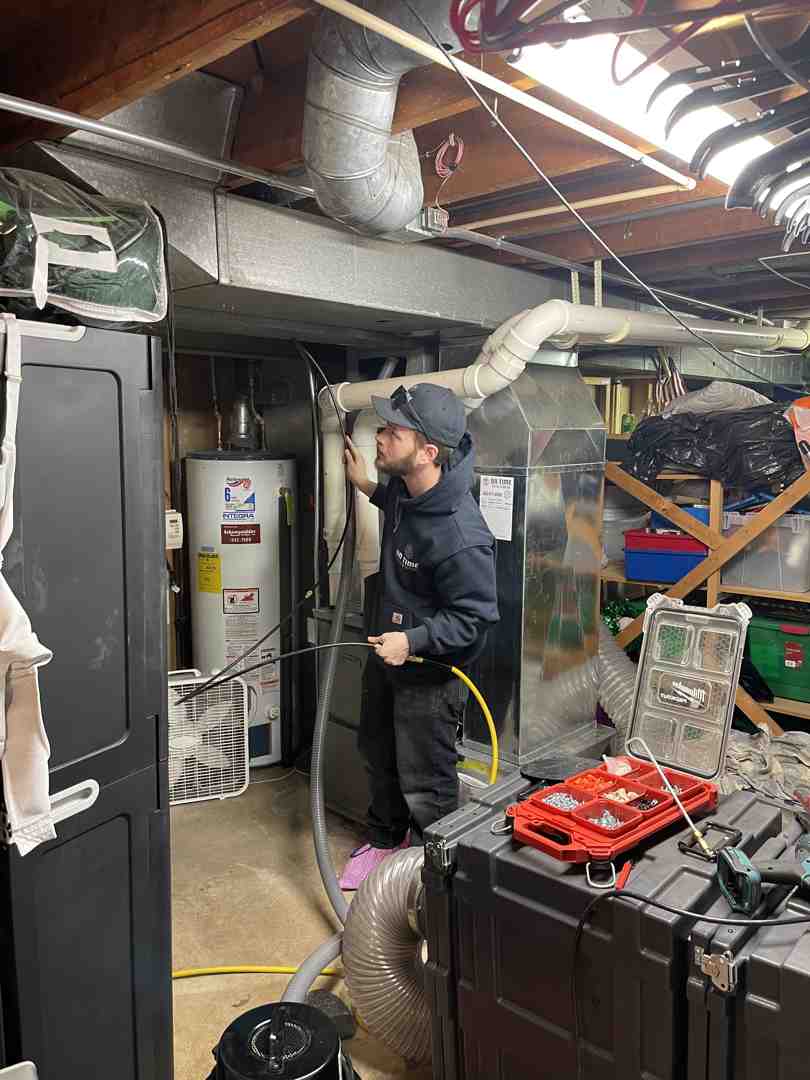
All About How Often to Get Ducts Cleaned
Written by
On Time Heating & Cooling
Published on
July 1, 2026
What Homeowners in Menomonee Falls Need to Know About Duct Cleaning Frequency
How often should you get your ducts cleaned is one of the most common questions homeowners ask about HVAC maintenance — and for good reason. Your ducts quietly move conditioned air through every room in your home, day after day. Over time, dust, debris, pet dander, and other contaminants build up inside them, and most of it stays completely out of sight.
Here is a quick answer based on expert guidance and industry standards:
| Household Situation | Recommended Cleaning Frequency |
|---|---|
| Average home, no pets or allergies | Every 3 to 5 years |
| Pets or allergy sufferers in the home | Every 2 to 3 years |
| Smokers in the home | Every 2 to 3 years |
| Recent major renovation | After construction is complete |
| Visible mold, vermin, or heavy dust discharge | As soon as possible |
Those are the general baselines. But your home in Menomonee Falls, WI may have its own set of conditions — seasonal allergens, older ductwork, or a multi-pet household — that shift that timeline one way or the other. The sections below break it all down so you can make a confident, informed decision about your home's air quality.
How Often Should You Get Your Ducts Cleaned for Optimal Air Quality?

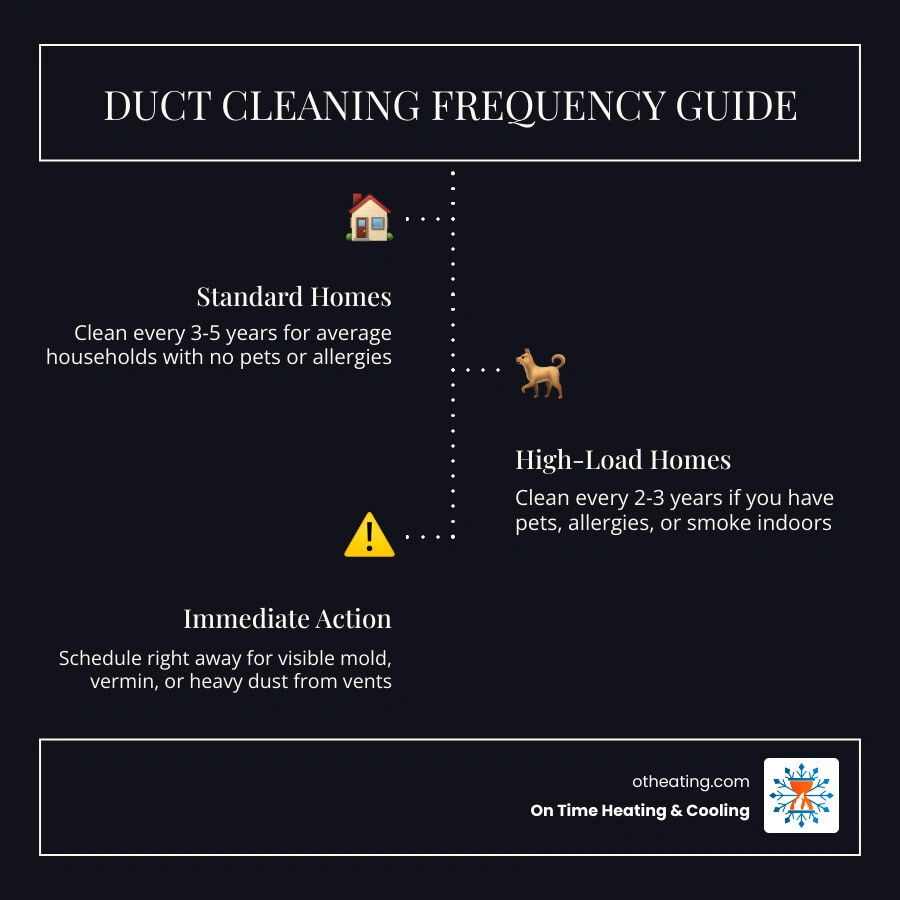
For most homes in Southeast Wisconsin, a practical baseline is professional duct cleaning every 3 to 5 years. That lines up with common industry guidance, including the often-cited NADCA range. Some experts also recommend a shorter interval of every 2 to 3 years, especially when a home has higher indoor air quality demands.
So which one is right? Usually, both can be.
We recommend thinking of duct cleaning as a range, not a rigid calendar reminder taped to the fridge forever. An average home with good filtration, no pets, and no unusual dust problems may do fine on the longer 3 to 5 year schedule. A home with more debris load, allergy concerns, heavier HVAC use, or indoor contaminants may benefit from the shorter 2 to 3 year rhythm.
If you want a broader overview of what the service includes, our air duct cleaning complete guide is a good next read. You can also review when to schedule air duct cleaning for a closer look at timing.
Here is a simple way to think about it:
| Home Condition | Good Starting Point |
|---|---|
| Typical household with normal dust levels | Every 3 to 5 years |
| Higher dust load or heavier HVAC use | Every 2 to 3 years |
| Pets, smokers, or allergy concerns | Every 2 to 3 years |
| After contamination events | Schedule an inspection and clean if needed |
A key point: ducts should not be cleaned just for the sake of saying they were cleaned. The better approach is a baseline schedule plus condition-based inspections. If your vents are puffing dust, your return grilles get dirty unusually fast, or you notice musty smells when the system starts, it may be time sooner than expected.
And yes, a little dust inside ductwork does not automatically mean panic. Homes collect dust. That is basically one of dust's favorite hobbies. What matters is whether buildup is excessive, being released into living spaces, or contributing to airflow, odor, or contamination concerns.
Key Factors and Signs That Influence Your Cleaning Schedule
The biggest mistake homeowners make is assuming every house needs the same duct cleaning schedule. In reality, your timeline depends on what your home puts into the system.
Common factors that can shorten the time between cleanings include:
- One or more shedding pets
- Family members with allergies or asthma
- Smoking indoors
- Recent remodeling or construction
- Older ductwork
- Heavy year-round HVAC use
- Water intrusion or moisture issues
- Past or current pest activity
If you are focused on comfort for sensitive family members, our article on duct cleaning benefits for allergy sufferers may help.
There are also clear warning signs that ducts may need attention now rather than later:
- Dust puffing out of supply vents when the system turns on
- Heavy dust or matted debris inside vent covers
- Return air registers that quickly develop thick buildup
- Persistent musty, stale, or unpleasant odors from vents
- Air filters clogging faster than expected
- Visible mold growth on or around components
- Evidence of insects or rodents
- Uneven airflow or rooms that suddenly feel harder to heat or cool
- Excess dust settling around the home even after cleaning
If you want to know more about what happens during service, see our air duct cleaning process and when should you get your air ducts cleaned.
One especially important note: visible mold, vermin, or heavy debris are not "watch and wait" situations. Those are prompt-inspection situations.
How often should you get your ducts cleaned if you have pets?
If you have pets, especially multiple pets or heavy shedders, every 2 to 3 years is usually the better baseline.
Why? Hair and dander do not politely stay on the couch. They circulate through the home, collect near returns, and can contribute to faster filter loading. In some homes, pet-related buildup becomes obvious around registers and inside return grilles well before the 3 to 5 year mark.
Homes with pets may also have:
- Faster air filter clogging
- More dust-like buildup on furniture
- Increased allergy irritation
- Greater chance of biological contaminants circulating if litter, tracked-in debris, or pest issues are present
That is one reason regular maintenance matters. Our post on the importance of regular air duct cleaning goes deeper on this.
If your household includes pets and allergy sufferers, that is even more reason not to stretch cleaning too long.
How often should you get your ducts cleaned after a home renovation?
After a major renovation, the answer is simple: once the work is complete, your ducts should be inspected and often cleaned.
Construction dust is not normal household dust. Drywall particles, sawdust, insulation fibers, and debris from cutting or sanding can enter the system, especially if registers were left uncovered during the project. Concrete grinding and demolition work are especially messy from an HVAC standpoint.
Renovation-related duct cleaning is often a one-time event rather than part of your regular cycle. Even if your home was cleaned recently, a major remodel can reset the clock.
Pay special attention after:
- Drywall installation or removal
- Floor sanding
- Major carpentry work
- Concrete cutting or grinding
- Whole-home remodeling
- Projects that created visible airborne dust
Preventive step for next time: seal supply and return registers before dusty work starts. Our article on air duct cleaning benefits for your home covers why this matters for long-term system cleanliness.
The Benefits of Maintaining Clean Air Ducts in Southeast Wisconsin
Homeowners usually ask about duct cleaning because they want cleaner air, but the benefits can extend beyond that.
Cleaner indoor air in the areas where you live
When ducts contain excessive dust, debris, pet dander, or contaminants, some of that material can be redistributed through the home. Cleaning may help reduce the amount of loose debris circulating, particularly when you already have visible buildup or discharge from vents.
For more on that connection, read how clean ducts improve indoor air quality.
That said, it is important to be accurate here: duct cleaning is not a cure-all for indoor air quality problems. Dust can come from many sources, including carpeting, upholstery, outdoor air, and everyday life. Clean ducts are part of the solution, not the whole solution.
Better HVAC performance
Debris inside the system can contribute to airflow restrictions and strain. Research in the materials you provided notes that dirty components such as coils and heat exchangers can increase run time and energy use. Some industry sources also report that neglected duct systems may reduce delivered airflow and force the blower to work harder.
Our related articles explain this in more detail:
The takeaway is simple: when the system moves air more freely, it often supports more consistent comfort and less unnecessary strain.
Less dust around the house
If your vents are releasing debris, cleaning can reduce how quickly dust settles on furniture and surfaces. It will not make house dust vanish forever, unfortunately. If it did, we would all be writing fan letters to duct cleaners. But it can help when duct contamination is part of the problem.
Reduced odors
Musty smells, stale air, and lingering odors can sometimes be linked to buildup inside the HVAC system, especially when moisture, debris, or pests are involved. Cleaning, combined with fixing the root cause, may improve how the home smells when heating or cooling starts up.
Support for system longevity
A cleaner system generally has an easier job than a dirtier one. While duct cleaning alone is not the same as full HVAC maintenance, reducing contamination in the air path can support smoother operation and may help reduce wear tied to airflow restrictions and dirt buildup.
EPA Recommendations and Preventive Maintenance Strategies
This is where the conversation gets more nuanced.
The EPA does not recommend routine duct cleaning for every home on a strict schedule. Instead, the EPA recommends cleaning ducts as needed, particularly when there is:
- Substantial visible mold growth inside hard-surface ducts or on other HVAC components
- Vermin infestation, such as rodents or insects
- Excessive dust and debris that is actually being released into the home
That guidance matters. It reminds us not to oversell the service or treat it like a magic health reset. The EPA has also stated that duct cleaning has not been proven to prevent health problems in all cases.
So how do we reconcile that with the 3 to 5 year or 2 to 3 year guidance?
The best answer is this: use a reasonable schedule as a planning baseline, but let actual conditions drive the final decision.
In other words:
- Do not ignore obvious contamination
- Do not clean too often without a reason
- Do focus on prevention
Helpful prevention steps include:
- Change HVAC filters regularly, often every 1 to 3 months depending on filter type and household load
- Use the highest efficiency filter your system manufacturer recommends
- Keep supply and return vents clean and unobstructed
- Control indoor humidity to help prevent mold growth
- Repair leaks or water damage promptly
- Make sure condensate pans drain properly
- Seal registers during remodeling or dusty projects
- Vacuum your home regularly, ideally with HEPA filtration
- Schedule routine HVAC maintenance so issues are caught early
- Have fuel-burning appliances inspected before each heating season
Our air duct cleaning complete guide and importance of regular air duct cleaning can help you build a smart maintenance routine.
Risks of over-cleaning or improper duct cleaning
More cleaning is not always better.
Potential downsides of unnecessary or poor-quality duct cleaning include:
- Wasted money on service that was not needed
- Damage to duct materials if the wrong tools or methods are used
- Incomplete cleaning that stirs up debris without removing it properly
- Overlooking the real issue, such as moisture, filter problems, or duct leaks
- Misuse of chemicals or sealants inside the system
EPA guidance also notes that chemical biocides are not registered for use in certain internally insulated duct systems, and wet or moldy fiberglass materials may need replacement rather than cleaning.
A good cleaning should address the full system as needed, not just wave a vacuum hose near a few vents and call it a day.
How to choose a reputable duct cleaning service provider
Homeowners in Menomonee Falls and nearby communities should look for a company that:
- Inspects the system before recommending cleaning
- Explains why cleaning is needed
- Cleans the full HVAC system components involved, not just visible vents
- Uses proper containment and high-powered vacuum equipment
- Follows recognized industry standards
- Avoids scare tactics and exaggerated health claims
- Provides clear communication about the scope of work
It is also smart to ask the provider to show you the contamination or symptoms that justify the service. A trustworthy recommendation should be based on what is actually happening in your home.
Frequently Asked Questions About Duct Maintenance
Does duct cleaning improve HVAC efficiency?
It can, especially when dirt and debris are contributing to airflow restrictions or when other HVAC components are dirty. Cleaner airflow pathways can reduce blower strain, support better air delivery, and help the system avoid longer run times caused by blockage.
That said, the biggest efficiency gains often come when duct cleaning is paired with overall HVAC maintenance. Dirty coils, clogged filters, and neglected blower components can all affect performance. You can learn more in how dirty ducts affect your HVAC performance.
What is the best time of year for duct cleaning in Menomonee Falls?
Spring is often ideal. It fits naturally with seasonal maintenance, helps clear out winter buildup, and prepares your AC system for warmer weather. It can also be a smart time if spring allergens are making indoor comfort more challenging.
Fall can also work well, especially before the heating season starts. Really, the best time is before you need the system working hard and definitely when you are noticing signs of contamination.
For timing help, see when should you get your air ducts cleaned and when to schedule air duct cleaning.
Can I clean my air ducts myself?
You can clean vent covers, vacuum around registers, and remove light debris from accessible openings. Those are good homeowner maintenance steps.
But full duct cleaning is different.
DIY tools usually reach only the first few feet of ductwork. Professional service uses specialized agitation tools and high-powered vacuum equipment to remove debris deeper in the system while containing dust rather than spreading it around the house.
So yes, you can handle light upkeep. No, your household vacuum and heroic optimism are not the same thing as a professional duct cleaning. For a better picture of what the service includes, read our air duct cleaning process.
Conclusion
If you have been wondering how often should you get your ducts cleaned, the simplest answer is this: most homes do well on a 3 to 5 year schedule, while homes with pets, smokers, allergies, or heavier dust loads often need attention every 2 to 3 years. And if you see mold, vermin evidence, or heavy dust blowing from vents, do not wait for the calendar.
For homeowners in Menomonee Falls and across Southeast Wisconsin, duct cleaning works best as part of a bigger indoor air quality plan that includes filtration, moisture control, and regular HVAC maintenance.
At On Time Heating & Cooling, we believe in straightforward advice, punctual service, and the kind of old-school customer care that never goes out of style. If you want help figuring out whether your ductwork is due for cleaning, or you are ready to improve comfort and indoor air quality in your home, we are here to help. And if you want extra peace of mind year-round, our On The Dot Club can help you stay ahead of maintenance before small issues become big ones.
Ready to take the next step? Schedule your professional duct cleaning today.
.svg)
.svg)
.svg)
Monday to Sunday:
24/7
24/7
Payments By:

review us on:
©
on time heating & cooling All rights reserved.
Designed & Developed By :
.svg)