The Ultimate Guide to Choosing the Right AC for Your Wisconsin Home
Learn how to choose the right AC for your Wisconsin home with expert tips on systems, sizing, efficiency, and professional installation.
Shane Herro
Owner & Lead Tech

Learn how to choose the right AC for your Wisconsin home with expert tips on systems, sizing, efficiency, and professional installation.
Why Choosing the Right AC for Your Wisconsin Home Is One of the Most Important Decisions You'll Make
Knowing how to choose the right ac for your wisconsin home can mean the difference between a cool, comfortable summer and a season of high energy bills, uneven temperatures, and frustrating breakdowns. Wisconsin summers bring real heat and humidity — and your cooling system has to be ready for it.
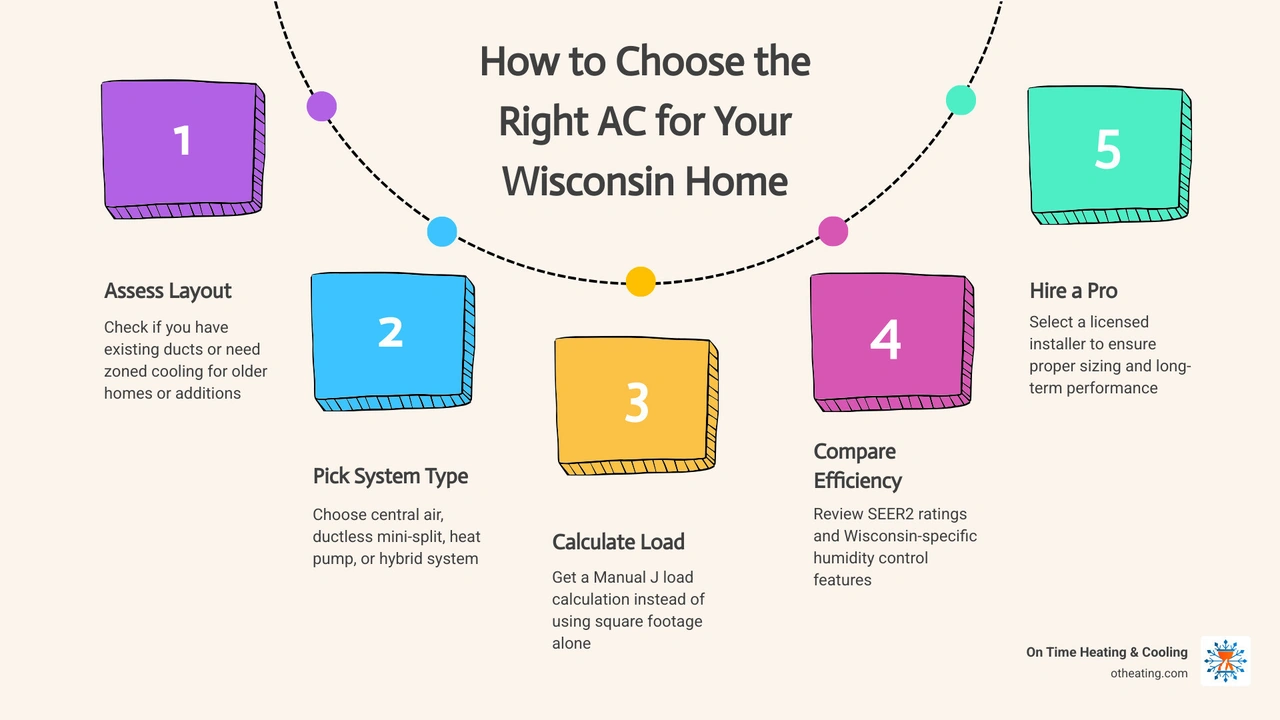
Here's a quick overview of the key steps to choosing the right AC for your home:
- Identify your home's layout and ductwork — Do you have existing ducts? This shapes which systems are practical.
- Choose the right system type — Central air, ductless mini-split, heat pump, or hybrid system.
- Get a proper Manual J load calculation — Sizing based on square footage alone isn't enough.
- Compare efficiency ratings (SEER2) — Higher ratings mean lower energy costs over time.
- Factor in Wisconsin's climate — Humidity control and cold-weather performance matter here.
- Look for available incentives — Federal tax credits and local rebates can offset upfront costs.
- Choose a licensed, professional installer — Poor installation can cut system efficiency by up to 30%.
Cooling can account for up to 20% of a Wisconsin home's total energy use during the summer months. That's a meaningful chunk of your annual utility budget — and it's one of the strongest reasons to get this decision right from the start. Whether you're replacing an aging system or cooling a home for the first time, the choices you make today will affect your comfort and your wallet for the next 10 to 15 years.
This guide walks you through everything you need to know, step by step, so you can move forward with confidence.
Understanding Your Options: How to Choose the Right AC for Your Wisconsin Home
When we sit down with homeowners in places like Brookfield or Oconomowoc, the first question is usually: "What are my options?" In May 2026, the technology available for home cooling is more efficient and versatile than ever before. Choosing the right system depends heavily on your home’s existing architecture and your specific comfort goals.
There are four primary ways we cool homes in Southeastern Wisconsin:
- Central Air Conditioning: The "gold standard" for homes that already have a furnace and ductwork.
- Ductless Mini-Splits: A lifesaver for older homes in the Lake Country area or for new room additions.
- Air-Source Heat Pumps: Systems that provide both heating and cooling, becoming increasingly popular due to high efficiency.
- Hybrid (Dual-Fuel) Systems: A combination of an electric heat pump and a gas furnace for the ultimate year-round efficiency.
Deciding between these often comes down to your home's current setup. For instance, comparing Central Air vs Mini Split for the Lake Country Area Homes reveals that while central air is often more affordable if ducts exist, mini-splits offer unparalleled efficiency for targeted zones. Furthermore, finding the Best HVAC Setup for Southeastern Wisconsin Weather requires looking at how a system handles both our humid July afternoons and our chilly September nights.
Central Air Conditioning for Whole-Home Comfort
If your home uses a forced-air furnace to stay warm in the winter, you likely already have the "veins" (ductwork) needed for central air. Central AC remains the most common choice in Wisconsin because it integrates seamlessly with your existing HVAC system.
One of the biggest perks of central air is its ability to provide consistent cooling across every room. It also allows for advanced indoor air quality (IAQ) solutions, like whole-home humidifiers or high-efficiency air filters, to be installed directly into the duct system. This ensures that the air you breathe is not just cool, but clean and properly balanced.
Ductless Mini-Splits for Targeted Cooling
Not every home was built with ductwork. We see this often in historic homes in Waukesha or newer additions like sunrooms and finished garages in Mequon. In these cases, installing ductwork can be invasive and expensive.
Ductless mini-splits consist of an outdoor condenser linked to one or more indoor units mounted on the wall or ceiling. They allow for "zoned comfort," meaning you can keep your bedroom at 68 degrees while leaving the guest room at 74. When looking at a Mini Split vs Central AC Cost Comparison, while the equipment might have a different upfront investment, the energy savings from not cooling unused rooms can be significant over time.
The Importance of Proper Sizing and Manual J Calculations
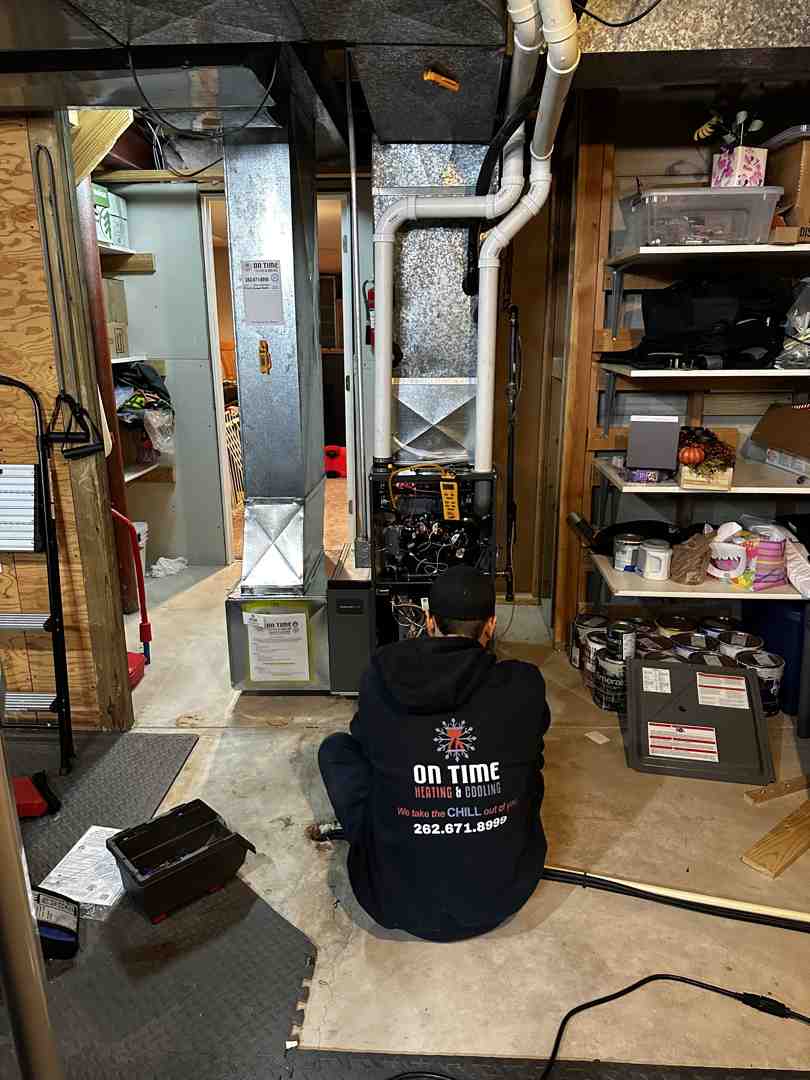
One of the most common mistakes homeowners make is assuming that "bigger is better." In HVAC, an oversized unit is just as problematic as an undersized one. To determine the perfect fit, we perform what’s called a Manual J load calculation.
This isn't a simple "square footage times X" formula. A true professional assessment looks at several critical factors:
- Square Footage: The total area that needs cooling.
- Ceiling Height: Vaulted ceilings in a Delafield living room require more cooling than standard 8-foot ceilings.
- Insulation Levels: How well your attic and walls hold in the cold air.
- Window Orientation: Large, south-facing windows act like heaters during a Wisconsin summer.
- Sun and Shade Exposure: Does your home sit under a canopy of oaks in Hartland, or is it in a new, treeless subdivision in Sussex?
- Number of Occupants: More people (and pets!) generate more heat.
Why Sizing Matters when Learning How to Choose the Right AC for Your Wisconsin Home
If your unit is too small, it will run constantly, struggling to reach your set temperature. This leads to high energy bills and a system that burns out years before it should.
On the flip side, an oversized unit will "short cycle." This means it turns on, blasts the house with cold air, and shuts off before it can actually remove the humidity from the air. You’ll end up with a home that feels cold and clammy—the classic "refrigerator" effect—which can eventually lead to mold issues and increased wear and tear on the compressor. Proper sizing ensures the system runs long enough to dehumidify your home while remaining energy-efficient.
Navigating Efficiency Ratings: SEER2 and Energy Savings
As of May 2026, the industry has fully transitioned to SEER2 (Seasonal Energy Efficiency Ratio 2). This rating measures how much cooling a system puts out for every watt of electricity it uses. In Wisconsin, the minimum allowed SEER2 for a new split-system AC is 14.3, but modern units can reach as high as 24 or 25.
High-efficiency systems often feature two-stage or variable-speed compressors.
- Single-stage: Like a light switch—it’s either 100% on or 100% off.
- Two-stage: Has a "high" and "low" setting, allowing it to run more quietly and efficiently on milder days.
- Variable-speed: Acts like a dimmer switch, adjusting its output in tiny increments to perfectly match the cooling needs of your home.
| SEER2 Rating | Estimated Energy Reduction (Compared to older 10 SEER units) |
|---|---|
| 14.3 SEER2 | ~30% Reduction |
| 16 SEER2 | ~38% Reduction |
| 18 SEER2 | ~45% Reduction |
| 20+ SEER2 | 50% or More Reduction |
Maximizing Incentives for High-Efficiency Systems
While high-efficiency units represent a higher initial investment, they often pay for themselves through energy savings and incentives. In 2026, federal tax credits remain a powerful tool for Wisconsin homeowners, potentially covering a significant portion of the cost for high-efficiency heat pumps.
Additionally, Wisconsin’s Focus on Energy program offers rebates for residents who choose qualifying energy-efficient equipment. We always recommend checking with your local utility provider in Waukesha or New Berlin for additional "perks" that can make the upgrade much more affordable.
Wisconsin Climate Considerations and Comfort Features
Wisconsin’s climate is unique. We don't just deal with heat; we deal with "The Humidity." On those sticky July nights in Menomonee Falls, the air can feel heavy. Your AC doesn't just lower the temperature; it acts as a giant dehumidifier.
Addressing Humidity in How to Choose the Right AC for Your Wisconsin Home
When choosing your system, look for features specifically designed for moisture removal. Variable-speed blower motors are excellent at this because they can run at slower speeds for longer periods, allowing the cooling coils to pull more water out of the air.
Other comfort features to consider:
- Quiet Operation: If your AC unit is located right outside your patio in Pewaukee, you’ll want a unit with sound-dampening technology.
- Smart Controls: Systems like the Ion System Control allow you to manage your home’s climate from your phone, adjusting for your arrival after a long day at the lake.
- Enhanced Filtration: If you suffer from seasonal allergies in the spring and fall, look for systems compatible with HEPA or MERV-13 filters to keep your indoor air pristine.
Professional Installation and Long-Term Maintenance
You could buy the most expensive, high-tech air conditioner on the market, but if it’s installed poorly, it will never perform as promised. In fact, improper installation can reduce your system's efficiency by as much as 30%. This is why we emphasize factory-trained technicians who understand the nuances of refrigerant handling and ductwork integrity.
Before you sign off on a new unit, it’s vital to understand AC Installation What Homeowners Need to Know. A professional installation involves more than just swapping out a box; it includes inspecting your electrical panel, ensuring your condensate drain lines are clear, and verifying that your existing ducts can handle the airflow of a modern high-efficiency blower.
We also have to think about the long game. Many people ask, How Long Does an AC Last in Wisconsin? Generally, you can expect 10 to 15 years of reliable service, but that lifespan is directly tied to how well the system was put in. This is Why Professional Home AC Installation is Crucial—it sets the foundation for a decade of worry-free comfort.
Steps for a Successful Installation Process
When we arrive at your home in Germantown or Richfield, we follow a strict AC Installation Process to ensure nothing is missed. This includes:
- Site Prep: Protecting your floors and clearing the area around the outdoor pad.
- Electrical Check: Ensuring your home’s power supply is safe and compatible with the new unit.
- Vacuum Evacuation: Removing all air and moisture from the refrigerant lines before charging the system.
- Airflow Testing: Measuring the "static pressure" in your ducts to ensure the air is moving as it should.
Following these Steps to Follow for Quality AC Installation ensures that your warranty remains valid and your energy bills stay low from day one.
Frequently Asked Questions about Wisconsin AC Systems
How long does a central air conditioner typically last in Wisconsin?
In our region, most central AC units last between 10 and 15 years. Because our cooling season is relatively short (usually May through September), the units don't run year-round like they do in the South. However, the extreme temperature swings and humidity can be tough on components. Regular maintenance is the single best way to push that lifespan toward the 15-year mark.
Is a heat pump a viable option for the Wisconsin climate in 2026?
Absolutely. In 2026, cold-climate heat pumps are more efficient than ever. Many homeowners in Southeastern Wisconsin are opting for "Hybrid" or "Dual-Fuel" setups. This means the electric heat pump handles the cooling in the summer and the heating during the milder spring and fall days. When the temperatures drop below zero in January, the system automatically switches to a high-efficiency gas furnace. It’s the best of both worlds.
How do I identify a reliable HVAC contractor in Southeastern Wisconsin?
Choosing a contractor is just as important as choosing the equipment. Look for a company that prioritizes punctuality and has a strong reputation in the local community. You should always feel comfortable asking Questions When Selecting an HVAC Company, such as whether they perform Manual J calculations and what their post-installation support looks like. For more tips, check out our guide on How to Choose a Reliable HVAC Company.
Conclusion
At On Time Heating & Cooling, we know that your home is your sanctuary. Whether you are in Menomonee Falls, Waukesha, or Mequon, you deserve a cooling system that works as hard as you do. We pride ourselves on our punctuality—after all, it’s in our name—and our commitment to providing modern HVAC solutions with old-school customer service.
If you’re ready to upgrade, consider joining our On The Dot Club. Our members enjoy priority service, regular tune-ups to keep their warranties valid, and the peace of mind that comes with 24/7 emergency support. Don't spend another summer "toughing it out" with an old, inefficient unit.
Schedule your professional AC installation in Waukesha and surrounding areas today and let us help you stay cool all summer long!
Related Articles
 Cooling
The Great Spring HVAC Transition: From Toasty to Tasty Cool
Master your spring hvac transition from heating to cooling with our 5-step checklist, DIY tips, and pro maintenance for peak efficiency.
Read Article Cooling
Why Your AC Bill Spikes in Wisconsin Summers
Discover why your AC bill spikes in Wisconsin summers and learn proven ways to cut cooling costs with smart habits and professional maintenance.
Read Article Cooling
Everything Homeowners Need to Know About the 2026 Refrigerant Transition
Learn how AC refrigerant changes affect homeowners in 2026: R-410A phase-out, new A2L options, repairs, efficiency & incentives.
Read ArticleNeed HVAC help?
Whether you need a repair, maintenance, or a new installation, our expert team is here to help.