The Ultimate Guide to How Proper AC Installation Affects Long-Term Performance
Discover how proper AC installation affects long term performance with expert setup that boosts efficiency, comfort, and system lifespan for Southeast Wisconsin homeowners.
Shane Herro
Owner & Lead Tech

Discover how proper AC installation affects long term performance with expert setup that boosts efficiency, comfort, and system lifespan for Southeast Wisconsin homeowners.
Why Every Homeowner Should Understand How Proper AC Installation Affects Long-Term Performance
How proper AC installation affects long-term performance is one of the most important things to understand before replacing or installing a cooling system in your home. The short answer: installation quality shapes everything — your energy bills, your comfort, how long the equipment lasts, and how often it breaks down.
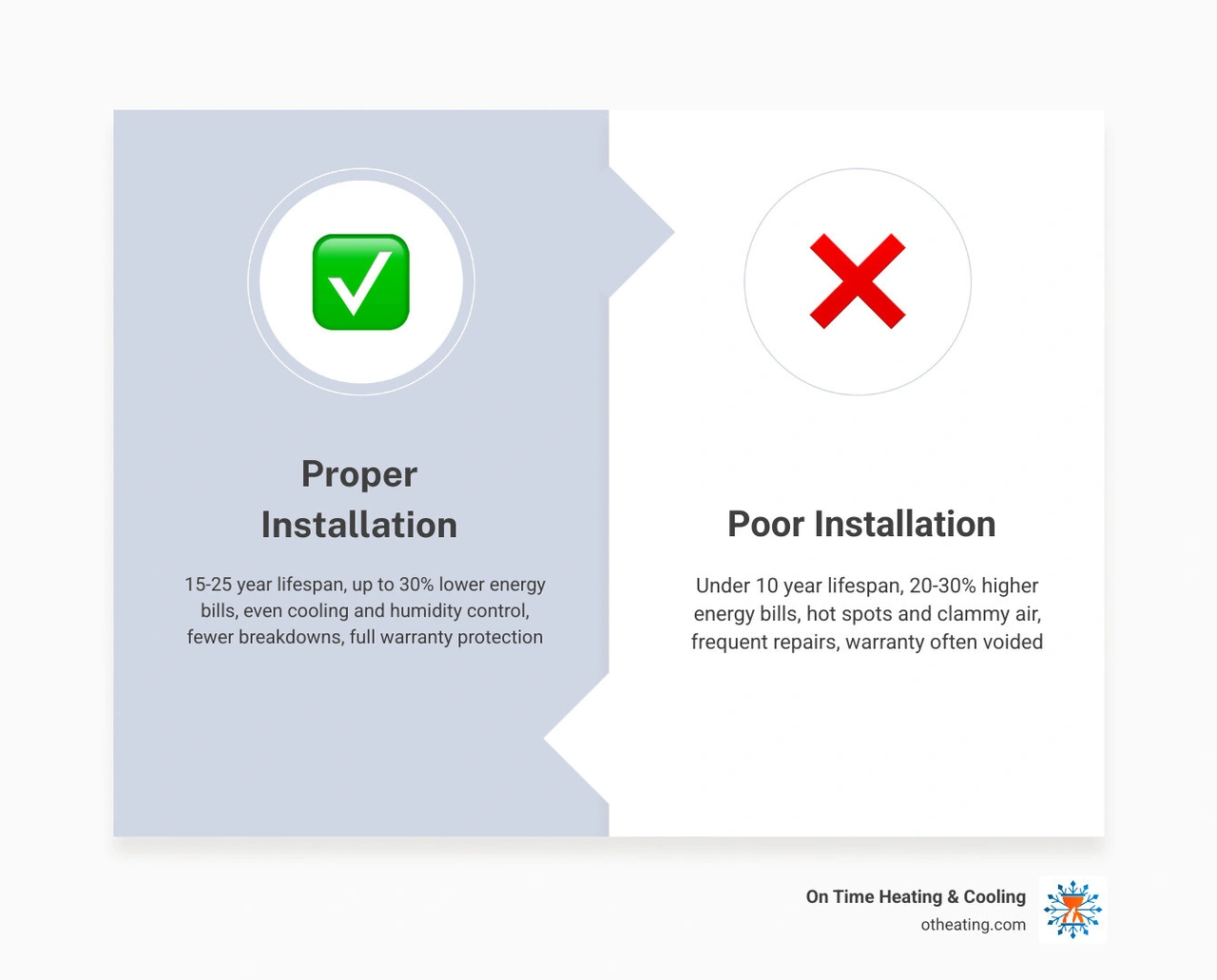
Here's a quick summary of how installation quality affects your AC system over time:
| Factor | Proper Installation | Poor Installation |
|---|---|---|
| Energy efficiency | Up to 30% lower energy use | 20-30% higher energy bills |
| System lifespan | 15-25 years | Under 10 years |
| Comfort | Even cooling, good humidity control | Hot spots, clammy air |
| Repairs | Fewer breakdowns | Frequent, recurring issues |
| Warranty | Fully protected | Often voided |
Most homeowners spend a lot of time comparing brands and efficiency ratings before buying a new AC unit — and that makes sense. But even a top-rated system from a premium manufacturer can underperform for years if it wasn't set up correctly on day one. Poor ductwork, wrong sizing, incorrect refrigerant levels, or a badly placed thermostat can quietly drain your energy budget and wear out your equipment long before it should be replaced.
With air conditioning accounting for up to 50% of a home's summer electricity use, getting the installation right isn't just a technical detail — it's a long-term financial decision that affects every cooling season ahead.
At On Time Heating & Cooling, we see the real-world impact of installation quality every day — especially for homeowners in Menomonee Falls and across Southeast Wisconsin, where summer humidity and heat demand a system that's dialed in from the start.
This guide walks through every major installation factor and explains exactly how each one shapes your comfort, your bills, and your system's lifespan over the years.
Why How Proper AC Installation Affects Long-Term Performance Starts on Day One
A new AC system does not earn its long life automatically. It has to be installed correctly from the beginning. That means proper load calculations, startup testing, airflow checks, refrigerant verification, drainage setup, electrical safety checks, and compliance with manufacturer instructions and local codes.
In other words, installation day is not just "put the box in and turn it on." It is the foundation for the next 10, 15, or even 20-plus years.
If you want a closer look at what a quality install involves, see our guides on the AC installation process and the steps to follow for quality AC installation.
The most common installation mistakes that create years of problems
The biggest installation mistakes are usually not dramatic. They are the quiet kind that keep showing up on utility bills and repair visits later.
Common examples include:
- Choosing equipment that is too large or too small
- Reusing leaky, undersized, or poorly insulated ductwork
- Failing to seal air leaks at duct connections
- Charging the system with too much or too little refrigerant
- Skipping airflow testing and balancing
- Leaving loose electrical connections
- Installing the unit out of level
- Setting up condensate drainage incorrectly
- Placing the thermostat where it gets false temperature readings
Any one of these can reduce efficiency. Several together can turn a brand-new AC into a high-maintenance headache. The system may still run, but it will not run the way it was designed to.
Why high-quality equipment still underperforms when installation is wrong
Homeowners are often surprised by this: a premium AC can still cool poorly if the installation is sloppy.
That happens because efficiency ratings are based on proper setup. If airflow is off, refrigerant charge is wrong, or ducts are leaking, the equipment cannot reach its published performance. Instead, you may get:
- Short cycling
- Constant running
- Uneven room temperatures
- Weak airflow
- Sticky indoor air from poor dehumidification
- Extra strain on the compressor and blower
- Greater risk of warranty problems
It is a little like buying great running shoes and then tying the laces together. The equipment may be good, but the setup is working against it.
System Sizing: The Foundation of Efficiency, Comfort, and Lifespan
Correct sizing is one of the clearest examples of how proper AC installation affects long-term performance. A system should be selected based on the home itself, not just square footage or the size of the old unit.
A proper load calculation considers:
- Home layout
- Insulation levels
- Window size and sun exposure
- Air leakage
- Ceiling height
- Occupancy
- Local climate and humidity
- Duct system capability
This is why "my neighbor has a 3-ton unit, so I probably need one too" is not a sizing method. It is a guess wearing work boots.
For more on matching the system to the house, visit Ensuring AC Installation Meets Homes Needs and Top Benefits of Professional AC Installation.
How proper AC installation affects long term performance through correct sizing
When the system is sized correctly, it runs in balanced cycles. That gives you several long-term benefits:
- Better energy efficiency
- More stable indoor temperatures
- Better humidity removal
- Less wear on major components
- Fewer repair issues
- Longer equipment life
Research consistently shows that properly installed HVAC systems can reduce energy consumption by up to 30% compared to poorly installed systems. Correct sizing is a huge reason why.
A right-sized system does not have to sprint and stop all day. It runs long enough to cool the home evenly, remove moisture, and shut down at the right time.
What happens when an AC system is too large or too small
Both oversizing and undersizing cause problems, just in different ways.
| Issue | Oversized AC | Undersized AC |
|---|---|---|
| Runtime | Short cycles on and off | Runs too long or nonstop |
| Comfort | Uneven cooling, clammy air | Struggles to keep up |
| Humidity control | Poor moisture removal | Can improve removal but overworks system |
| Energy use | Wasteful starts and stops | High use from constant operation |
| Wear and tear | Heavy stress from repeated cycling | Heavy stress from nonstop load |
| Long-term risk | Compressor wear, poor comfort | Premature failure during peak heat |
An oversized system cools the thermostat area too quickly and shuts off before it removes enough humidity. That is why some homes feel cold but still sticky. An undersized unit has the opposite problem: it keeps grinding away, especially during the hottest days in places like Menomonee Falls, Brookfield, Sussex, and the surrounding Southeast Wisconsin communities.
Either mistake can shorten lifespan significantly. Research suggests proper sizing and installation can extend equipment life by 5 to 10 years compared to poorly installed systems.
Ductwork, Airflow, and Refrigerant: The Hidden Drivers of Long-Term Cooling
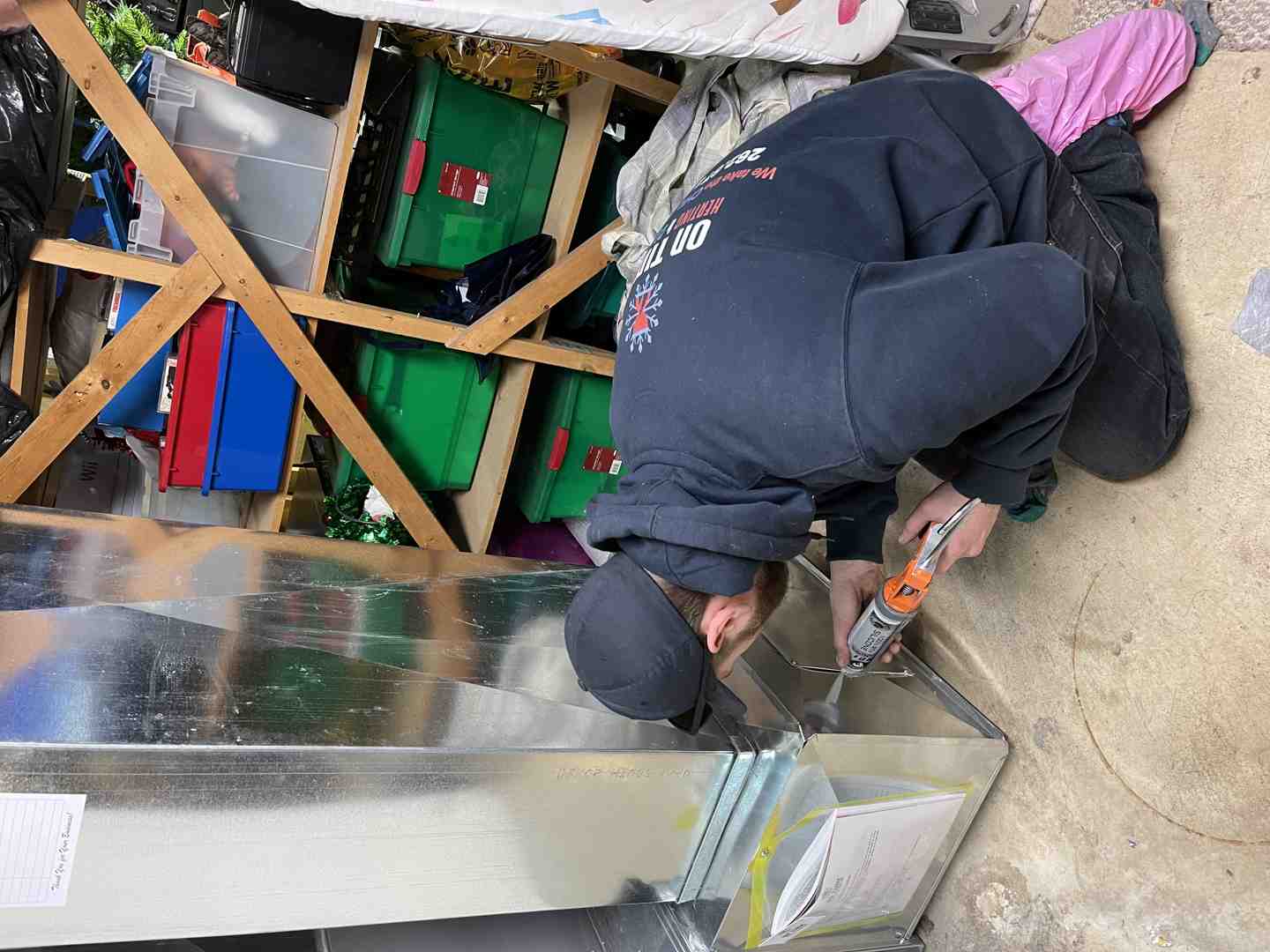
If sizing is the foundation, ductwork and airflow are the roads the cooling has to travel. And if those roads are full of potholes, the system works harder every day.
These details are easy for homeowners to overlook because they are mostly hidden. But they strongly affect comfort, efficiency, and durability. You can learn more in Why Professionals Excel at AC Installation and How Our Experts Ensure AC Installation.
How correct ductwork design and sealing protect performance over the years
Ducts need to be the right size, properly connected, well sealed, and insulated where needed. Otherwise, cooled air leaks out before it reaches your living spaces.
Problems with bad ductwork include:
- Lost cooling capacity
- Hot and cold spots
- Whistling or weak vents
- Higher static pressure
- Dust pulled in from attics, crawlspaces, or basements
- Longer runtimes and higher energy use
- More strain on blower components
Leaky ductwork can have a major effect on performance. Research points to 20% to 30% losses in cooling efficiency from duct leakage and airflow issues. Over time, that means your AC keeps paying the price for mistakes made during installation.
Good duct sealing also helps indoor air quality. When ducts leak on the return side, they can pull in dust, insulation particles, and allergens that were never meant to circulate through your home.
How proper AC installation affects long term performance with airflow and refrigerant accuracy
Airflow and refrigerant charge work together. If either is wrong, the system cannot transfer heat properly.
Professional charging is not guesswork. It involves measuring to manufacturer specifications, often using subcooling and superheat readings. When refrigerant is incorrect:
- Cooling output drops
- Energy use rises
- Evaporator coils may freeze
- Compressor strain increases
- Component life gets shorter
The same goes for airflow balancing. If some rooms get too much air and others too little, the system becomes uncomfortable and inefficient. Poor airflow can lead to frozen coils, weak vent performance, hot spots, and excessive wear.
Correct refrigerant charge and balanced airflow are a big reason professionally installed systems cool more evenly and stay efficient longer.
Why drainage setup and outdoor unit placement also matter
Drainage and placement do not get much attention until something goes wrong. Usually with water. And usually at the worst possible time.
A properly installed AC should have:
- A correctly pitched condensate drain line
- Secure drain connections
- Proper overflow protection where needed
- Adequate clearance around the outdoor unit
- Good condenser airflow
- Placement that allows service access and reduces debris buildup
Bad drainage can lead to water leaks, mold growth, corrosion, and shutdowns. Poor condenser placement can choke airflow and reduce heat rejection, which makes the unit run hotter and less efficiently.
These are not cosmetic details. They directly affect reliability and long-term condition.
Thermostat Placement, Calibration, and Indoor Air Quality Over Time
A thermostat is small, but it has a big job. It tells the entire system when to run and when to stop. If it gets bad information, your AC makes bad decisions all day long.
For related reading, see Maximizing Comfort with AC Installation and Maintaining Your Air Conditioner Post Installation.
How thermostat placement affects comfort, cycling, and efficiency
The best thermostat location is typically on an interior wall in a central area, away from direct sunlight, supply vents, windows, kitchens, and other heat sources.
If the thermostat is installed in a bad location, it may think the house is hotter or cooler than it really is. That can cause:
- Short cycling
- Long runtimes
- Uneven temperatures
- Higher energy use
- Unnecessary wear on components
For example, a thermostat in direct afternoon sun may trigger cooling when the rest of the house is comfortable. One placed near a supply vent may shut the system off too early. Either way, comfort suffers.
Calibration matters too. Even a well-placed thermostat should be checked so the temperature reading and system response are accurate over time.
How installation quality shapes indoor air quality and humidity control
This is one of the most overlooked parts of how proper AC installation affects long-term performance.
AC is not just about temperature. It also manages humidity and affects how air moves through the home. Proper installation helps by supporting:
- Better moisture removal
- Correct filter fit
- Cleaner airflow
- Lower dust infiltration
- Reduced allergen circulation
- Less risk of microbial growth from standing water or excess moisture
Oversized systems are especially bad for humidity control because they cool too fast and shut off too soon. Leaky ducts can pull pollutants into the air stream. Poor drainage can create moisture problems that encourage mold and mildew.
In Southeast Wisconsin, where summer humidity can be just as uncomfortable as the heat, proper installation plays a major role in keeping the home feeling dry, healthy, and comfortable year after year.
Warranty Protection, Building Codes, Safety, and Fewer Future Breakdowns
A quality installation protects more than comfort. It protects your warranty, your equipment, and your home.
Manufacturer instructions exist for a reason. So do building and electrical codes. They are there to help ensure the system operates safely and as designed. If installation cuts corners, the long-term consequences can be expensive and frustrating.
For more on this topic, read Why Professional Home AC Installation is Crucial.
Why code compliance and manufacturer specifications are critical for system longevity
Many manufacturers require professional installation and adherence to specifications to preserve warranty coverage. That includes things like:
- Correct electrical requirements
- Proper refrigerant charge
- Required airflow
- Approved matching components
- Safe condensate handling
- Correct clearances and venting
If those requirements are ignored, a warranty claim may be denied. That is a painful time to discover that "close enough" was not close enough.
Code-compliant installation also supports system longevity by reducing electrical stress, moisture problems, and unsafe operating conditions.
How professional installation helps prevent breakdowns and costly repairs later
Poor installation often causes repeat problems that look unrelated but all trace back to the same bad setup.
Professional installation helps prevent:
- Compressor strain from wrong charge or poor airflow
- Blower damage from high static pressure
- Breaker trips from wiring issues
- Frozen coils from low airflow
- Water damage from clogged or mispitched drains
- Premature component failure from short cycling
It also creates a strong baseline for maintenance. When the system starts out correct, tune-ups are more effective and recurring issues are easier to avoid.
Warning signs of a poor AC installation include:
- Higher-than-expected energy bills
- Hot and cold spots around the home
- Persistent humidity
- Short cycling
- Weak airflow from vents
- Noisy operation or vibration
- Frequent breaker trips
- Water near the indoor unit
- Repeated repairs on a relatively new system
If you notice several of these, it is worth having the installation evaluated.
Safety risks improper installation can create in a home
Improper AC installation is not just inefficient. It can be unsafe.
Potential risks include:
- Loose electrical connections that overheat
- Short circuits or breaker trips
- Refrigerant leaks
- Water leaks that damage ceilings, walls, or floors
- Mold growth from chronic moisture
- Corrosion around equipment
- Emergency shutdowns during heavy cooling demand
Professional installation reduces those risks through proper wiring, secure connections, correct drainage, safe refrigerant handling, and full startup testing.
Frequently Asked Questions about How Proper AC Installation Affects Long-Term Performance
Can poor AC installation really raise energy use for years?
Yes. Research shows improper installation can increase energy bills by 20% to 30% due to airflow problems, duct leakage, bad sizing, and inefficient operation. Since AC can account for up to half of summer electricity use, those losses add up every cooling season.
Poor installation does not usually create just one bad month. It creates a long-term penalty.
What are the signs my AC may have been installed incorrectly?
Common signs include:
- High energy bills
- Uneven temperatures from room to room
- Short cycling
- Weak airflow
- Persistent humidity
- Strange noises
- Water leaks
- Frequent repairs
- A system that never seems quite comfortable
Sometimes homeowners assume that is just how central AC works. It is not. A properly installed system should cool evenly, control humidity well, and run without constant drama.
Does proper installation still matter if I keep up with maintenance?
Absolutely. Maintenance is essential, but it cannot fully undo a poor installation.
Think of installation as the foundation and maintenance as the upkeep. Good maintenance helps the system stay efficient, but it works best when the AC was sized correctly, charged correctly, wired correctly, and connected to a sound duct system in the first place.
When installation is right, maintenance is simpler, recurring problems are fewer, and long-term performance is much better.
Conclusion
When homeowners ask us about how proper AC installation affects long-term performance, the answer is simple: it affects almost everything.
It influences energy efficiency, humidity control, indoor comfort, repair frequency, equipment lifespan, warranty protection, and household safety. Proper installation can reduce energy use by up to 30%, help systems last years longer, and prevent the chain reaction of issues that starts with one shortcut on day one.
For homeowners in Menomonee Falls and throughout Southeast Wisconsin, that matters. Our summers may not last forever, but they are long enough to make a poorly installed AC unforgettable.
At On Time Heating & Cooling, we believe homeowners deserve reliable comfort backed by careful workmanship, clear communication, and the kind of punctual service our name promises. If you want to learn more about our HVAC support, visit our services page. You can also explore how system upgrades support long-term property value in How a New HVAC System Increases Home Value.
The best time to protect your AC's long-term performance is before installation mistakes have years to settle in.
Related Articles
 Installation
Step-by-Step Guide to What to Expect During AC Replacement
Learn what to expect during AC replacement with this step-by-step guide covering preparation, installation, testing, and post-install walkthrough.
Read Article Installation
5 Expert Tips for Choosing the Best HVAC System for Your Wisconsin Home
Discover the best hvac setup for southeastern wisconsin weather: 5 expert tips on high-efficiency systems, dual-fuel hybrids & more for Zone 6A homes.
Read Article Installation
Everything to Know About Pewaukee Home Heat Pump Setup
Discover home heat pump installation in Pewaukee, WI: efficiency, cold-climate tech, incentives & pro setup for year-round comfort.
Read ArticleNeed HVAC help?
Whether you need a repair, maintenance, or a new installation, our expert team is here to help.