6 Signs Your Dryer Vent Needs Professional Cleaning
Discover the 6 signs your dryer vent needs professional cleaning to prevent fire hazards and boost efficiency.
Shane Herro
Owner & Lead Tech

Discover the 6 signs your dryer vent needs professional cleaning to prevent fire hazards and boost efficiency.
Why Knowing the Signs Your Dryer Vent Needs Professional Cleaning Could Prevent a House Fire
The signs your dryer vent needs professional cleaning are easier to spot than most homeowners realize — and catching them early could prevent a fire, lower your energy bill, and extend the life of your dryer.
Here are the 6 most common warning signs to watch for:
- Clothes take more than one cycle to fully dry
- The dryer or laundry feels excessively hot after a cycle
- You notice a burning smell while the dryer is running
- The laundry room feels humid or muggy during operation
- Lint is visibly accumulating near the exterior vent or behind the dryer
- It has been over a year since your last professional vent cleaning
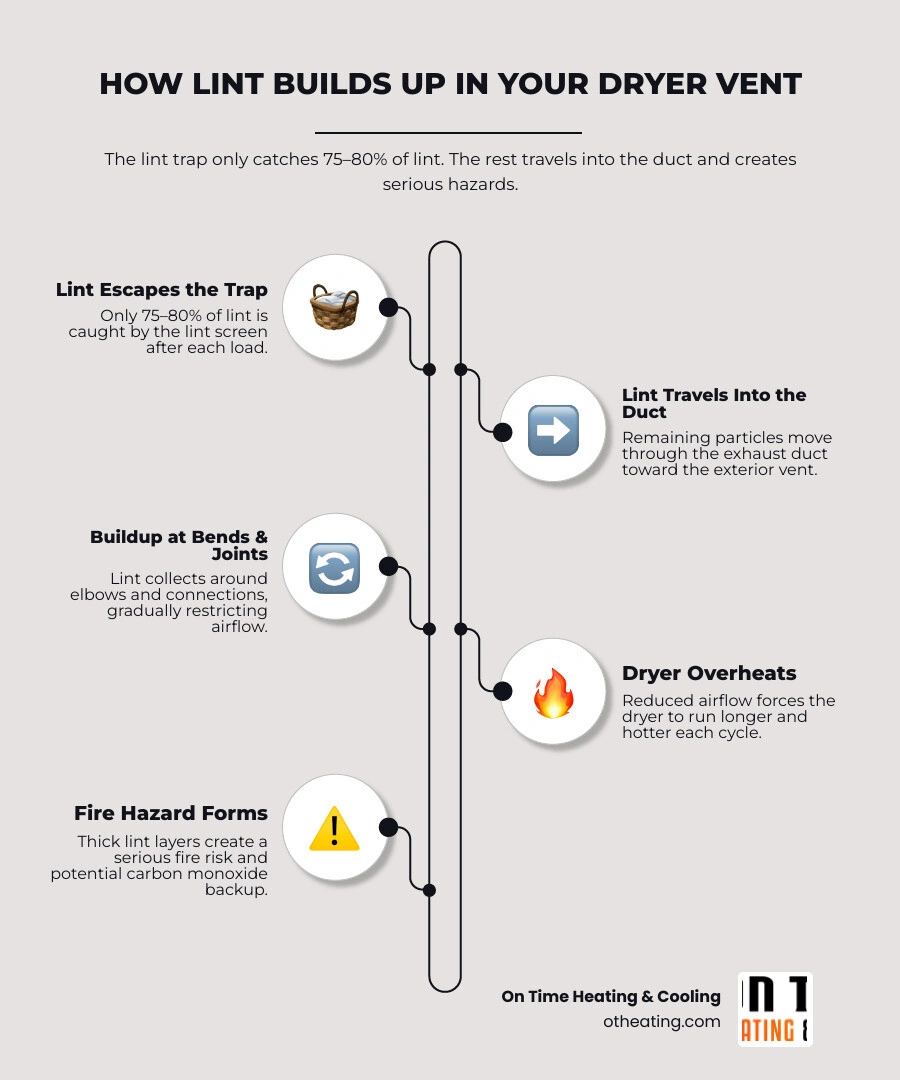
Most homeowners in Menomonee Falls, WI think cleaning the lint trap after every load is enough. It isn't. The lint trap only catches about 75–80% of lint produced during a cycle. The rest travels into the exhaust duct, where it quietly builds up around bends and joints — restricting airflow, forcing your dryer to work harder, and creating a serious fire hazard over time.
According to the National Fire Protection Association, clothes dryers are involved in roughly 15,970 U.S. home fires per year when combined with washing machines, with dryers accounting for 92% of those fires. The leading cause? Failure to clean the vent system.
Cleaning the lint screen is a good habit. But it is not dryer vent cleaning — and that distinction matters a great deal for your home's safety.
Signs your dryer vent needs professional cleaning word list:
- clean a dryer vent duct
- dryer vent cleaning benefits and fire prevention
- how often should you have your dryer vent cleaned
The Hidden Dangers: Signs Your Dryer Vent Needs Professional Cleaning
While a dryer that takes forever to dry a load of towels is incredibly frustrating, the true consequences of a clogged dryer vent go far beyond mere inconvenience. When lint accumulates in your dryer's exhaust system, it transforms your quiet laundry room workhorse into a ticking clock of hidden hazards.
The primary danger is fire. Dryer lint is essentially high-grade kindling. It is highly combustible, made up of fine fibers from your clothes (especially synthetic materials) that can easily ignite at temperatures as low as 210°F. When airflow is restricted, heat builds up inside the dryer cabinet and the vent duct. If the temperature spikes, this accumulated lint can ignite inside the walls of your home, allowing a fire to spread rapidly before you even notice smoke.
The statistics surrounding this issue are stark:
- According to the National Fire Protection Association (NFPA), clothes dryers and washing machines caused an average of 15,970 U.S. home fires each year, with dryers accounting for a staggering 92% of those incidents. These fires result in an average of 13 deaths, 440 injuries, and $238 million in property damage annually.
- FEMA and the U.S. Fire Administration (USFA) report that nearly 2,900 home clothes dryer fires are reported every single year. These fires cause an estimated 5 deaths, 100 injuries, and $35 million in property loss.
- Multiple safety agencies agree that the failure to clean the system is the leading cause of these fires, accounting for roughly one-third (31% to 34%) of all dryer-related structure fires in residential buildings.
- In Canada, safety estimates link lint buildup to approximately 15,000 dryer fires across the country annually.
The dangers aren't limited to fire. Neglecting your dryer vent system also poses serious health risks to your family. If you own a gas dryer, a clogged vent duct can cause toxic carbon monoxide (CO) to back up into your living spaces instead of venting safely outdoors. Because carbon monoxide is colorless and odorless, this creates a life-threatening scenario.
Furthermore, a blocked vent traps gallons of water vapor inside the ductwork. This excess moisture cannot escape, leading to condensation that seeps into your walls and ceiling. Over time, this damp environment breeds mold and mildew, which can release airborne spores into your home, resulting in respiratory issues, heightened allergies, and poor indoor air quality.
To protect your household from these preventable disasters, it is essential to prioritize proactive maintenance. You can read more about safeguarding your home in our guide on Dryer Vent Fire Prevention and learn about the dual advantages of safety and efficiency in our article on Dryer Vent Cleaning Benefits and Fire Prevention.
6 Warning Signs to Watch For
Your dryer is a highly communicative appliance. When its breathing pathways are restricted by lint, pet hair, and debris, it will exhibit clear symptoms. Recognizing these warning signs early not only keeps your household safe but also prevents your energy bills from skyrocketing and keeps your appliance out of the landfill.
When a vent is clogged, your dryer has to run longer and hotter, which can increase its energy consumption by up to 30%. This extra strain also dramatically cuts the lifespan of your machine. While a well-maintained dryer should easily last 10 to 13 years, a unit forced to run with a restricted vent often burns out its heating element or motor in just 5 to 7 years.
Understanding The Benefits of Regular Vent Cleaning is the first step toward taking control of your home's utility costs and safety. Let's break down the specific warning signs into performance-based issues and physical red flags.
Performance Issues: Signs Your Dryer Vent Needs Professional Cleaning
If your dryer's performance has taken a nosedive, don't immediately assume you need to buy a brand-new appliance. More often than not, the issue is a clogged duct.
- Extended Drying Times: This is usually the very first indicator that something is wrong. A normal, mixed load of laundry should take between 30 and 50 minutes to dry. If your clothes are still damp after a full 60-minute cycle, or if you regularly have to run a load of towels twice, your vent is likely choked with lint. Testing shows that dryers with restricted ducts run 20 to 30 minutes longer per load. For an average household doing five loads a week, this adds up to 150 extra run hours annually!
- A Humid, Sauna-Like Laundry Room: When hot, moisture-laden air cannot escape through the exterior vent, it has to go somewhere. It will leak out of the transition hose connections and back into your home. If your laundry room suddenly feels hot, humid, or muggy while the dryer is running, or if you notice condensation forming on the walls or windows, your exhaust system is blocked.
- Musty-Smelling Clothes: When moisture is trapped inside the dryer drum due to poor airflow, your clothes are essentially steamed instead of dried. This trapped moisture quickly leads to a damp, musty odor on your fabrics. You might also notice that black t-shirts or dark clothes come out covered in fine fuzz or lint because the system lacks the airflow necessary to carry those loose fibers away.
Just as a clogged dryer vent ruins appliance performance, dirty pathways elsewhere in your home can hurt your overall comfort. Discover how similar issues impact your heating and cooling systems by reading about How Dirty Ducts Affect Your HVAC Performance.
Physical Warnings: Signs Your Dryer Vent Needs Professional Cleaning
Some warning signs are physical and require immediate, decisive action to prevent mechanical failure or a fire.
- Excessive Heat: If the top of your dryer cabinet is burning hot to the touch, or if your clothes feel scorching hot when you pull them out of the drum, your system is overheating. The dryer’s internal safety sensors may even trigger the unit to shut off mid-cycle to prevent a fire.
- A Burning Smell: If you smell a hot, dusty, metallic, or plastic-burning odor while a cycle is running, stop the dryer immediately! This is a major red flag indicating that lint inside the vent run or the dryer cabinet is scorching. Unplug the machine, turn off the gas line (if applicable), and call in a professional right away. Do not attempt to run the machine again until it has been thoroughly inspected and cleaned.
- Exterior Vent Flap Issues: Take a quick walk outside while your dryer is running. Is the exterior vent flap opening wide, releasing a strong, warm stream of air? If the flap barely moves, is stuck closed, or if you see thick mats of lint clinging to the outside hood, you have a severe blockage.
- Critter Invasions: Birds, mice, and squirrels love the warmth of a dryer vent. If your exterior vent flap doesn't close properly because of lint buildup, pests may build nests inside the duct. If you see twigs, straw, or nesting material sticking out of your vent cap, it's time for a professional blowout.
- Over a Year Since Last Service: Even if your dryer seems to be running fine, lint accumulates silently. If it has been more than 12 months since your last professional service, you are overdue. Learn more about setting up a safe maintenance schedule in our article on How Often Should You Have Your Dryer Vent Cleaned.
Professional vs. DIY Dryer Vent Cleaning
Many homeowners wonder if they can tackle dryer vent cleaning as a weekend DIY project. While vacuuming out the immediate area behind your dryer and cleaning your lint screen are excellent habits, attempting to clean an entire in-wall duct system yourself can actually make the problem worse.
Without professional tools, homeowners often use cheap wire brushes or flexible plastic rods that can easily snap off inside the wall, leaving you with a permanent obstruction. Even worse, DIY attempts often pack and compact the lint into tight, solid blocks at the elbows and bends of the ductwork, completely shutting down airflow.
| Feature | DIY Dryer Vent Cleaning | Professional Dryer Vent Service |
|---|---|---|
| Equipment Used | Standard household vacuum, basic hand brushes, or cheap retail brush kits. | Heavy-duty rotary brushes, specialized agitation tools, and high-powered vacuums. |
| Reach & Scope | Typically limited to the first 3 to 5 feet behind the dryer and the exterior cap. | Cleans the entire length of the duct run, including deep, hard-to-reach in-wall sections. |
| Risk of Damage | High risk of puncturing flexible foil ducts or breaking brush rods inside the wall. | Zero risk; technicians use professional-grade, flexible tools designed for ductwork. |
| Safety Inspections | Cannot inspect for hidden gas leaks, carbon monoxide risks, or structural code violations. | Includes full system inspection, checking transition materials, and verifying strong airflow. |
| Time & Convenience | Can take hours of frustrating labor, pulling heavy appliances, and cleaning up a major mess. | Completed cleanly and efficiently in 45 to 90 minutes. |
The physical layout of your home's ductwork plays a massive role in whether professional service is required. The International Residential Code (IRC) states that a dryer exhaust duct run should not exceed 35 feet, and that limit must be reduced by 5 feet for every 90-degree elbow and 2.5 feet for every 45-degree bend. Vents that run upward to a roof cap, travel through crawlspaces, or feature multiple sharp turns accumulate lint at an accelerated rate and are impossible to clean thoroughly without professional rotary brush systems.
Additionally, professionals inspect the transition duct materials connecting your dryer to the wall. If your home still uses flexible vinyl (plastic) or thin accordion-style foil hoses, a professional will recommend replacing them immediately. These materials kink easily, trap lint in their ridges, melt under high heat, and are banned by modern building codes and major appliance manufacturers. Upgrading to rigid or semi-rigid metal ducting is one of the single best ways to protect your home. For more safety guidelines, check out our Dryer Vent Cleaning Safety Tips for Homeowners.
Frequently Asked Questions About Dryer Vent Maintenance
Keeping your home's exhaust systems clear is a fundamental part of routine home maintenance. Below are answers to some of the most common questions homeowners ask about keeping their dryer vents safe and efficient.
How often should a dryer vent be professionally cleaned?
At a minimum, you should have your dryer vent professionally cleaned once a year. However, certain households should increase this frequency to every 6 to 9 months. You should schedule more frequent cleanings if you:
- Have a large family that runs more than 5 loads of laundry per week.
- Own pets that shed heavy amounts of fur, which easily bypasses the lint screen.
- Have a long, complex duct run with multiple elbows or a vent that exits through the roof.
- Frequently use fabric softeners or dryer sheets, which leave an invisible, sticky residue inside the duct that acts like glue for passing lint.
To help you stay on top of your home's maintenance calendar, consult our guide on When to Schedule Vent Cleaning.
Can a clogged dryer vent cause carbon monoxide poisoning?
Yes. If you have a gas-powered dryer, a clogged exhaust vent is a major carbon monoxide hazard. Gas dryers burn fuel to produce heat, and the resulting combustion byproducts — including deadly, odorless carbon monoxide — must be safely exhausted outside. If the duct is blocked by lint, these gases have nowhere to go and will back up into your laundry room and living areas. If you own a gas dryer, installing a carbon monoxide detector in your laundry room and keeping the vent clean is non-negotiable for family safety.
How does a clogged vent affect my dryer's lifespan?
A clogged vent forces your dryer to work twice as hard to do its job. Because the hot, moist air cannot escape, the dryer must run for longer periods, causing the motor and heating element to run continuously at elevated temperatures. This extreme heat degrades the internal wiring, wears out the drum belt, and eventually burns out the heating element or thermal fuse. While a clean dryer can easily last over a decade, a neglected unit with restricted airflow will often suffer catastrophic mechanical failure in just 5 to 7 years, forcing an expensive premature replacement.
Conclusion
Recognizing the signs your dryer vent needs professional cleaning is a simple but incredibly powerful way to protect your home, lower your monthly energy bills, and keep your appliances running like new. From extended drying times to hot-to-the-touch dryer cabinets, these warning signs are your system's way of asking for help before a minor clog turns into a major safety hazard.
At On Time Heating & Cooling, we are proud to provide top-quality dryer vent, duct, and HVAC maintenance services across Southeast Wisconsin, including Menomonee Falls, Waukesha, Brookfield, Sussex, Hartland, Delafield, and surrounding communities. We combine old-school customer service with modern, professional practices to ensure your home remains safe and comfortable.
When you choose us, you are choosing a team committed to absolute punctuality, factory-trained technicians, and transparent, fair service. For year-round peace of mind, ask about our On The Dot Club membership, which provides priority service, exclusive discounts, and regular maintenance tune-ups.
Don't wait for a warning sign to turn into an emergency. Contact us today to schedule your professional dryer vent service!
Book Your Professional Vent Cleaning Service Today with On Time Heating & Cooling
Related Articles
 Maintenance
Melting the Mystery of Frozen AC Units
Fix ice forming on your ac unit causes and what to do. Learn how to defrost your system and prevent costly damage today.
Read Article Maintenance
How to Stop AC Running Constantly in Wisconsin Heat Waves
Discover why your AC runs constantly during Wisconsin heat waves and learn proven fixes to restore comfort and cut energy costs.
Read Article Maintenance
5 Common AC Repairs and What Causes Them
Discover the most common AC repairs and what causes them in Brookfield WI homes, plus DIY checks and repair-or-replace tips from local pros.
Read ArticleNeed HVAC help?
Whether you need a repair, maintenance, or a new installation, our expert team is here to help.