Heat Pump Advantages Over Traditional HVAC: Efficiency & Costs Guide
Discover heat pump advantages over traditional HVAC with energy-efficient year-round comfort for Wisconsin homes.
Shane Herro
Owner & Lead Tech

Discover heat pump advantages over traditional HVAC with energy-efficient year-round comfort for Wisconsin homes.
Why Heat Pump Advantages Over Traditional HVAC Matter for Wisconsin Homeowners in 2026
Understanding the heat pump advantages over traditional HVAC systems can help you make a smarter, longer-lasting decision for your home's comfort — especially here in Menomonee Falls and the surrounding Southeast Wisconsin area, where winters are real and energy bills can climb fast.
Here's a quick look at how heat pumps stack up against traditional systems:
| Feature | Heat Pump | Traditional HVAC (Furnace + AC) |
|---|---|---|
| Heating & cooling | One system does both | Two separate systems required |
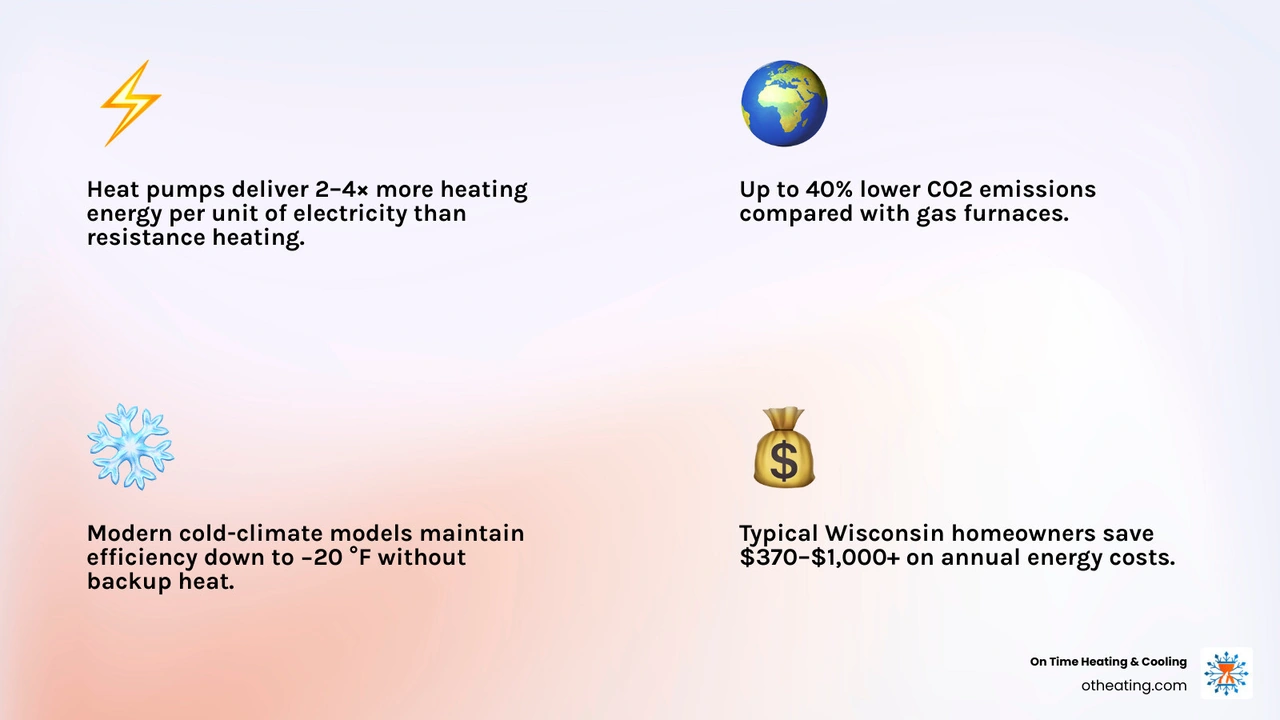
| Energy efficiency | 2–4x more efficient than electric resistance | Limited by combustion or resistance heating |
| Carbon emissions | Up to 40% less CO2 vs. gas furnaces | Higher emissions from fossil fuel use |
| Cold climate performance | Modern models work down to -20°F or lower | Gas furnaces excel in extreme cold |
| Annual savings potential | $370–$1,000+ depending on current fuel type | Higher ongoing fuel costs typical |
| Lifespan | ~15–20 years with proper maintenance | ~15–20 years for furnace and AC separately |
| Available incentives | Federal tax credits + state rebates | Little to no federal rebate support |
The numbers tell a compelling story. More than 5 million heat pumps were sold in the U.S. in 2024 — outselling traditional gas furnaces for the first time. Homeowners are paying attention, and for good reason. A modern heat pump moves heat rather than generating it through combustion, which is what makes it so much more efficient. For every unit of electricity it uses, it can deliver two to four units of heat energy in return.
For Wisconsin homeowners weighing whether to stick with a separate furnace and air conditioner or make the switch, this guide walks through everything you need to know — from how these systems work to what they cost to run and what today's cold-climate models can actually handle.
Related content about heat pump advantages over traditional hvac:
What is a Heat Pump and How Does it Differ from Traditional HVAC?

When we talk about traditional HVAC, we usually mean a "split system": a gas or oil furnace for those freezing January nights in Waukesha and a separate central air conditioner for our humid July afternoons. A heat pump, however, is a bit of a "multi-tool" for your home.
At its core, a heat pump is an electrically driven device that extracts heat from one place and moves it to another. During the summer, it works exactly like your air conditioner, pulling heat from inside your home and pumping it outdoors. The magic happens in the winter thanks to a component called a reversing valve. This valve flips the flow of refrigerant, allowing the system to pull heat energy from the outdoor air—even when it's cold outside—and move it into your living room.
To understand how does a heat pump work, think of your refrigerator. Your fridge doesn't "create" cold; it removes heat from the insulated box and releases it into your kitchen. A heat pump does the same for your entire house.
Because it moves heat rather than creating it through combustion (burning gas or oil), it is incredibly efficient. While even the best gas furnaces are limited to about 98% efficiency, a new heat pump system can operate at 200% to 400% efficiency. In technical terms, we measure this using SEER2 for cooling and HSPF2 for heating. In 2026, these ratings are higher than ever, ensuring you get the most comfort for every watt of electricity used.
Key Heat Pump Advantages Over Traditional HVAC Systems
Choosing a heat pump isn't just about following a trend; it's about measurable improvements in how your home feels and functions. Here are the primary heat pump advantages over traditional HVAC that we see making a difference for our customers:
1. Superior Energy Efficiency
As mentioned, heat pumps are 2 to 4 times more efficient than traditional electric resistance heating. By moving heat instead of making it, they can deliver three times the heat energy as the electric power that goes into them. This is a game-changer for energy efficient heat pump Oconomowoc WI installations where homeowners are looking to slash their utility bills.
2. Year-Round Versatility
Why maintain two complex machines when one can do the job? A heat pump replaces both your furnace and your central AC unit. This single-system footprint simplifies your mechanical room and your maintenance schedule. It’s a primary reason why replace heating system with a heat pump has become such a popular conversation in 2026.
3. Reduced Carbon Footprint
If you’re looking to go green, heat pumps are the way to go. Air-source heat pumps can trim household carbon dioxide emissions by about 40% compared to gas furnaces. As our local electrical grid in Southeast Wisconsin continues to integrate more renewable energy, your home's heating and cooling will only get cleaner over time.
4. Enhanced Comfort and Air Quality
Traditional furnaces often provide "blasts" of hot air that can lead to hot and cold spots. Modern heat pumps, especially those with variable-speed compressors, provide more consistent temperatures and better humidity control. They run more frequently at lower speeds, which also means they are much quieter and provide better air filtration.
Performance in Cold Climates: Is a Heat Pump Right for Wisconsin?
The most common question we hear in places like Sussex and Hartland is: "But will it work when it's -10°F?"
The answer in 2026 is a resounding yes. Modern cold-climate heat pumps are engineered specifically for northern environments. These units use advanced variable-speed compressors and "flash injection" technology to extract heat even when the mercury drops well below zero. In fact, many models now maintain 100% capacity at 5°F and continue to operate efficiently down to -20°F.
However, we know Wisconsin winters can be brutal. That’s why we often recommend a hybrid or dual-fuel setup. This is one of the best HVAC setup for southeastern wisconsin weather options. In this configuration, the heat pump handles the heating for about 85-95% of the year. When an extreme polar vortex hits, the system automatically switches to a backup gas furnace or electric heat strips to ensure your family stays warm no matter what.
For those looking to switch to heat pump system Sussex home, these hybrid systems offer the "best of both worlds"—maximum efficiency for most of the winter and total peace of mind during the coldest nights. You can learn more about these specific heat pump benefits for wisconsin homeowners on our blog.
Long-Term Value, Incentives, and Maintenance
While the technology is impressive, the financial side is often what seals the deal. In 2026, the incentives for choosing a heat pump are significant.
Incentives and Rebates
Thanks to federal programs like the Inflation Reduction Act, homeowners can qualify for tax credits of up to $2,000 annually for heat pump installations. Additionally, state-level rebates in Wisconsin can further reduce the initial investment. When you factor in that the average U.S. household can save $370 per year—and those switching from oil or propane can save closer to $1,000—the long-term value becomes clear.
Maintenance and Lifespan
A well-maintained heat pump should last about 15 to 20 years, which is comparable to a traditional furnace or central AC. However, because the heat pump works year-round, bi-annual inspections are crucial. At On Time Heating & Cooling, we offer the On The Dot Club, which provides priority service, discounts, and the regular tune-ups needed to keep your system running at peak efficiency.
Choosing the Right Style
Whether you have existing ductwork or not, there is a solution.
- Ducted Heat Pumps: Perfect for replacing a traditional furnace and AC using your existing vents.
- Mini-Splits: Ideal for older homes in Menomonee Falls or the Lake Country area that don't have ducts. You can compare central air vs mini split for the lake country area homes to see which fits your architecture better. For more details on the financial side, check out our mini split vs central AC cost comparison.
Frequently Asked Questions about Heat Pump Advantages Over Traditional HVAC
What are the primary heat pump advantages over traditional HVAC for energy savings?
The biggest advantage is the electricity-to-heat ratio. Traditional electric resistance heaters have a 1:1 ratio—one unit of electricity equals one unit of heat. Heat pumps can deliver a 3:1 or even 4:1 ratio. This drastically reduces your dependency on expensive fuels and leads to much lower monthly utility bills, especially if you are currently using propane, oil, or standard electric baseboards.
Can a heat pump effectively replace both my furnace and air conditioner?
Absolutely. One of the most underrated heat pump advantages over traditional HVAC is the space-saving benefit. Instead of having a bulky furnace inside and an AC unit outside, you have one streamlined system. This simplifies your home's mechanical footprint and means you only have one system to service. When comparing central AC vs ductless mini split comparison, many homeowners find that the heat pump's ability to do both jobs is its strongest selling point.
How do heat pump advantages over traditional HVAC change in extreme sub-zero temperatures?
In the past, heat pumps struggled when it got really cold. However, 2026 models use "flash injection" and variable-speed inverters to remain effective in sub-zero temperatures. While their efficiency (COP) does drop as it gets colder, they are still remarkably effective. For those extreme Wisconsin nights where temperatures stay below -20°F for days, a backup heat source (like electric strips or a gas furnace in a dual-fuel setup) ensures you never lose comfort.
Conclusion
The heat pump advantages over traditional HVAC are more than just marketing—they are rooted in superior physics and modern engineering. Whether you're in Menomonee Falls, Brookfield, or Oconomowoc, moving to a heat pump system offers a path toward lower bills, a smaller carbon footprint, and a more comfortable home.
At On Time Heating & Cooling, we pride ourselves on being punctual and providing factory-trained expertise to every home we visit. We understand the unique demands of Southeast Wisconsin weather and are here to help you find the perfect system for your needs. We even offer free second opinions for diagnostics to ensure you're getting the best advice possible.
Ready to see if a heat pump is the right fit for your home? Our team is available 24/7 for emergency support and is always ready to provide the high-quality, "on time" service you deserve.
Schedule your professional HVAC consultation today or join our On The Dot Club to ensure your system stays in peak condition for years to come!
Related Articles
 Heat Pumps
A Simple Guide to How Your Heat Pump Actually Works
Discover how does a heat pump work! Learn its core principles, components, and efficiency for year-round comfort in Menomonee Falls.
Read Article Heat Pumps
Wisconsin Winters Meet Their Match with High Efficiency Heat Pumps
Discover heat pump benefits for Wisconsin homeowners: cold-climate efficiency, rebates, installation tips & year-round savings!
Read Article Heat Pumps
The Best Commercial Heat Pump Solutions for Waukesha Enterprises
Discover efficient commercial heat pump installation in Waukesha, WI. Cut costs, boost ROI & conquer WI winters. Expert service now!
Read ArticleNeed HVAC help?
Whether you need a repair, maintenance, or a new installation, our expert team is here to help.