

%202%20(1).svg)
.svg)

The Great Cooling Debate and Why Your Ducts Might Be Dragging You Down
Written by
On Time Heating & Cooling
Published on
April 17, 2026
The Central AC vs Ductless Mini Split Comparison Every Homeowner Should Read First
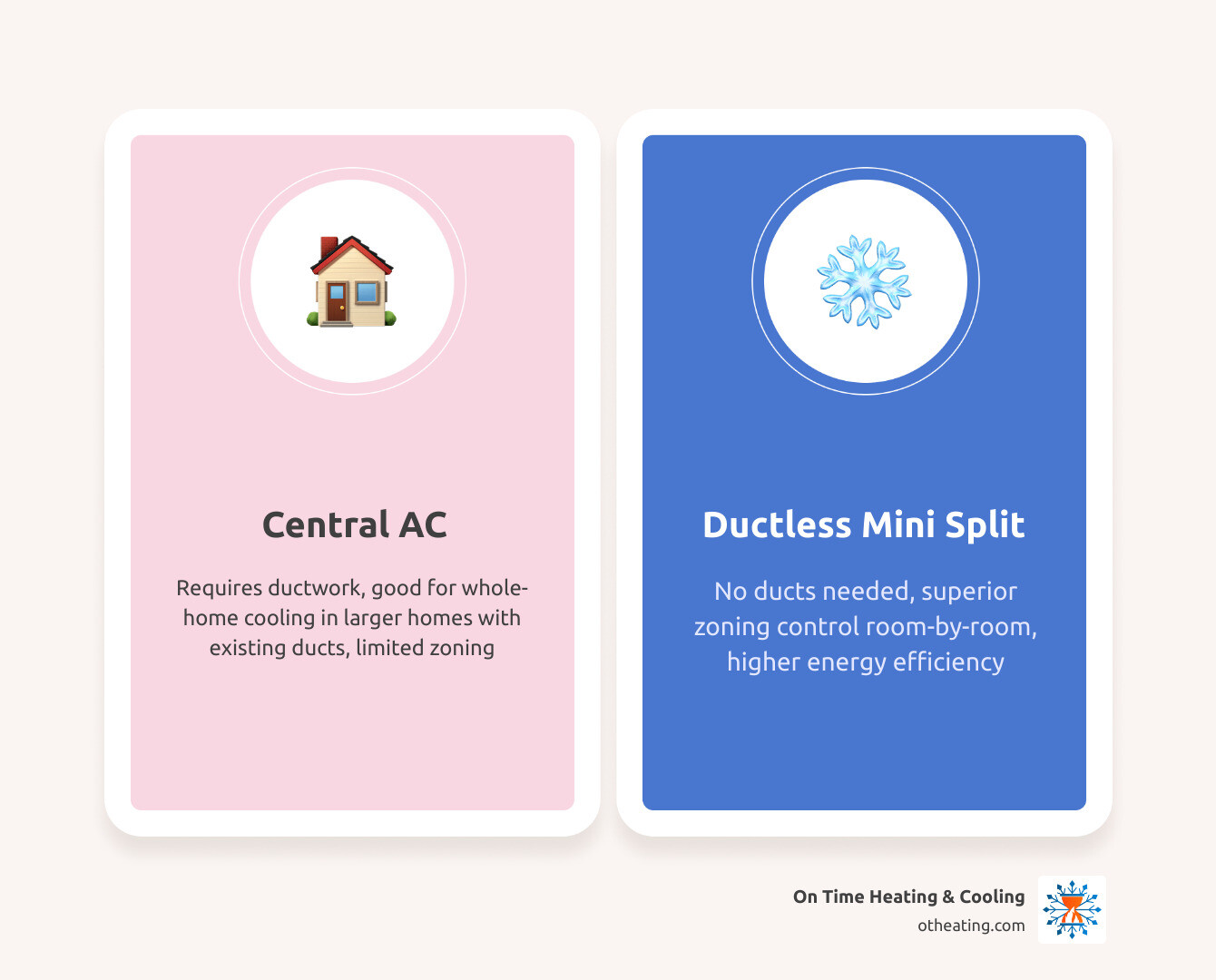
A central ac vs ductless mini split comparison comes down to a few key factors: whether your home already has ductwork, how many rooms you need to cool, and how much energy efficiency matters to you.
Here's a quick breakdown:
| Factor | Central AC | Ductless Mini Split |
|---|---|---|
| Requires ductwork | Yes | No |
| Best for | Larger homes with existing ducts | Homes without ducts, additions, zoned cooling |
| Energy efficiency | Good (lower SEER2 ratings) | Better (higher SEER2 ratings) |
| Zoning control | Limited (add-ons required) | Built-in, room by room |
| Installation disruption | Higher if new ducts needed | Minimal (small wall penetration) |
| Heating capability | Typically cooling only | Most units heat and cool |
| Upfront cost | Lower with existing ducts | Higher for multi-zone setups |
If you live in Menomonee Falls or anywhere in Southeast Wisconsin, you already know the summers are no joke. When your home starts feeling like a sauna in July, the last thing you want is to discover your cooling system has been quietly losing a third of its output through leaky ducts.
That's the reality for many homeowners here. Duct systems can lose anywhere from 20% to 30% of conditioned air through gaps, leaks, and poor insulation — meaning your system works harder while your home stays warmer than it should. Meanwhile, ductless mini-split technology has matured significantly, offering high-efficiency zoned cooling without a single duct in sight.
Neither system is a universal winner. The right choice depends entirely on your home's layout, your existing infrastructure, and how you actually use your living space. This guide breaks it all down so you can make a confident, informed decision.
Understanding the Central AC vs Ductless Mini Split Comparison
When we look at the core of any central ac vs ductless mini split comparison, we have to look at how these systems actually move heat. Both systems are "split," meaning they have an outdoor condenser unit and an indoor component. They both use refrigerant lines to carry heat out of your home, but the way they deliver that cool relief to your living room is where the paths diverge.
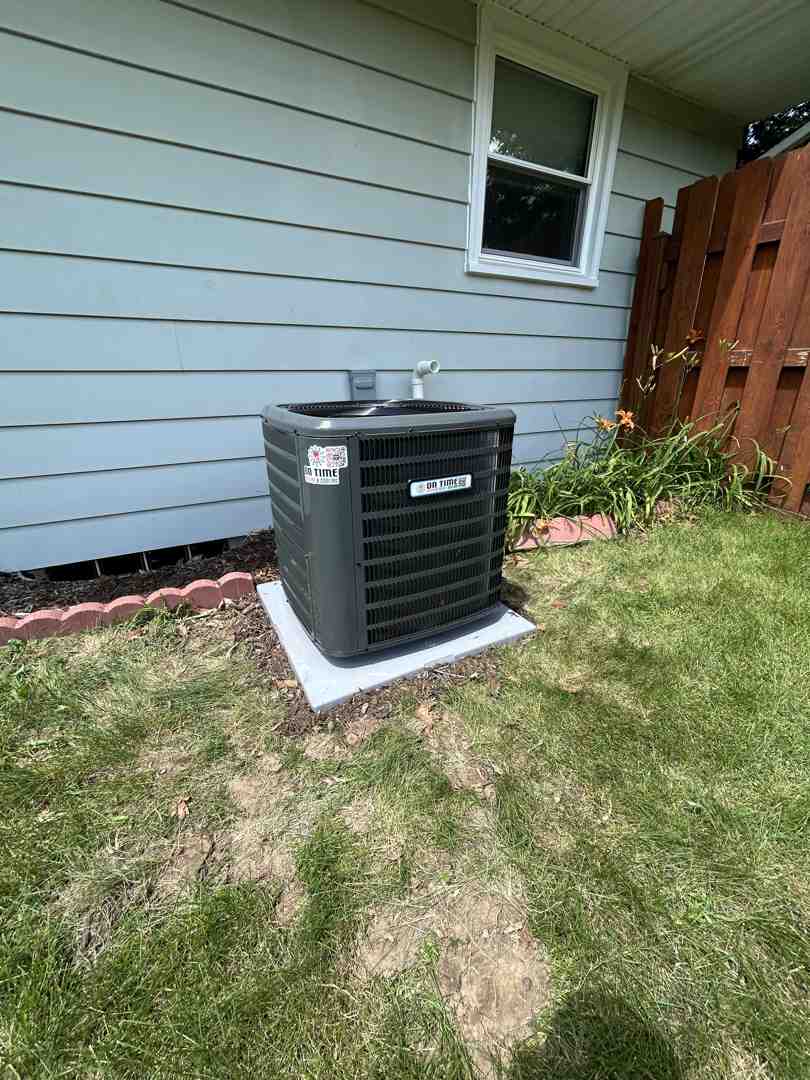
A central system is the "all-in-one" approach. It uses a single, powerful indoor evaporator coil (usually sitting on top of your furnace) to cool a massive amount of air at once. A large blower fan then pushes that air through a network of hidden ducts. It’s like a whole-house audio system where one giant amplifier sends sound to every room through built-in wires.
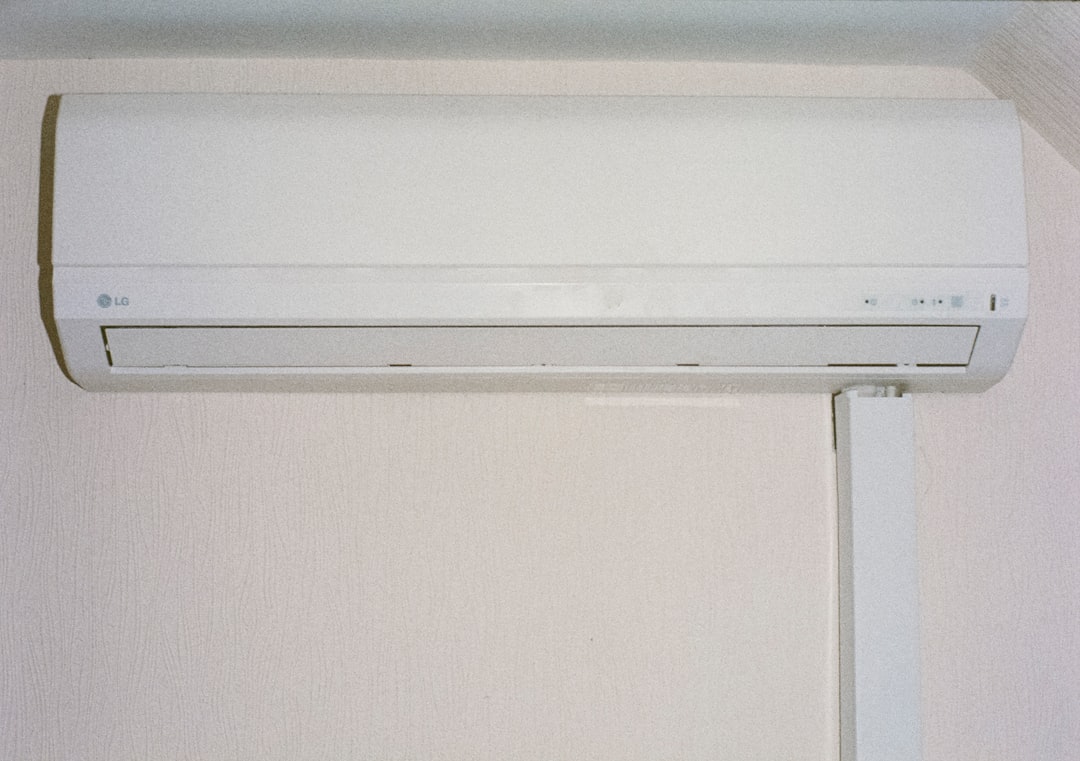
On the other hand, a ductless mini-split is more like having high-end Bluetooth speakers in every room. Each indoor unit (often called a "head") contains its own evaporator coil and fan. These heads are connected to the outdoor unit by small refrigerant lines and power cables that only require a three-inch hole in the exterior wall. Because there are no ducts, there is no place for the air to get lost on its way to you.
For more information on how these systems operate, you can explore Air Conditioning Basics or learn more about the broader world of HVAC technology.
Key Differences in a Central AC vs Ductless Mini Split Comparison
The most visible difference lies in the indoor air handlers. In a central AC setup, you see nothing but floor or ceiling vents. It is aesthetically "invisible," which many homeowners in historic areas of Waukesha or Mequon prefer. However, this means you are cooling the entire house to one temperature, controlled by a single thermostat. If you’re sleeping in the master bedroom, you’re also paying to cool the guest room, the dining room, and the hallways.
Ductless systems use wall-mounted units, though ceiling cassettes and floor-mounted options are also available in 2026. The superpower here is targeted cooling. Each room has its own thermostat. If you like your bedroom at 68 degrees but want the home office at 74, a mini-split handles that effortlessly. This level of air conditioning services provides a personalized comfort level that central air simply cannot match without expensive motorized dampers and complex bypass ductwork.
Efficiency Gains in a Central AC vs Ductless Mini Split Comparison
Efficiency is measured by the Seasonal Energy Efficiency Ratio 2 (SEER2). In April 2026, the standards have climbed, but ductless systems still lead the pack. While a high-end central AC might reach a SEER2 of 21 or 22, premium ductless mini-splits can soar past 30, with some units even hitting 42 SEER2.
A major reason for this gap is inverter technology. Traditional central AC units are often "on or off"—they blast at 100% capacity until the house is cool, then shut down. Mini-splits use variable-speed compressors that "sip" energy, slowing down or speeding up just enough to maintain the temperature. Think of it like a car on cruise control versus one that constantly slams on the gas and the brakes.
In our Menomonee Falls climate, where humidity can be just as oppressive as the heat, these variable speeds are excellent at removing moisture from the air. If you are considering an upgrade, a professional Mini Split Installation could significantly lower your monthly utility bills compared to an aging central unit.
The Hidden Impact of Ductwork on Home Comfort
We often tell our neighbors in Southeast Wisconsin that their AC isn't the problem—it's the "delivery man." Your ductwork is responsible for carrying the comfort you pay for, but it often fails at the job.
Statistics show that the average home loses 20% to 30% of its conditioned air through leaks and gaps in the ductwork. If your ducts run through a hot attic or a damp crawlspace, that loss can be even higher. This isn't just a waste of money; it's a major cause of Common AC Problems, such as uneven cooling and poor indoor air quality. When ducts leak, they don't just let cool air out—they can also suck dust, insulation fibers, and allergens in, distributing them throughout your home.
Why Your Ducts Might Be Wasting Energy
Several factors turn your ducts into energy vampires:
- Airflow Resistance: Long runs, sharp turns, and undersized pipes create static pressure that forces your blower motor to work harder and wear out faster.
- Insulation Gaps: If the insulation around your ducts has fallen off or was never installed properly, the air inside warms up before it ever reaches your vents.
- Dust Accumulation: Over decades, dust buildup can actually restrict airflow, much like a clogged artery.
Maintaining these hidden pathways is vital for HVAC health, but in many older homes in places like Cedarburg or Oconomowoc, the ducts are simply beyond simple repair. This is often when a ductless system becomes the most logical choice.
Choosing the Right System for Your Southeast Wisconsin Home
Every home in our service area is unique. A 1920s farmhouse in Hartland has very different needs than a modern open-concept home in Brookfield.
| Home Type | Recommended System | Why? |
|---|---|---|
| Older Homes (No Ducts) | Ductless Mini Split | Avoids the massive disruption and expense of cutting into historic plaster walls. |
| New Construction | Central AC | Easier to design efficient ductwork from scratch for whole-home uniformity. |
| Room Additions/Garages | Ductless Mini Split | Perfect for spaces that weren't included in the original HVAC design. |
| Finished Basements | Ductless Mini Split | Basements often have low ceilings where bulky ductwork won't fit. |
| Large Multi-Story Homes | Hybrid Approach | Use central for the main floor and mini-splits for "hot" upstairs bedrooms. |
For those choosing to stick with their existing infrastructure, regular Mini Split Maintenance (or central AC maintenance) is the only way to ensure these systems reach their expected lifespan.
When to Opt for a Hybrid Cooling Approach
You don't always have to choose just one. Many of our customers in Waukesha County use a hybrid approach. If you have a central system that works fine for the main floor but leaves the upstairs master suite or a sunroom feeling like a desert, adding a single-zone mini-split can solve the problem without overtaxing your main unit.
This is especially popular for "problem rooms" like finished attics or home offices where high-powered computers generate extra heat. By installing a Mini Split Installation in just that one room, you gain precise control where you need it most.
Maintenance and Longevity: Keeping Your System Running in 2026
Whether you go with a central AC or a ductless setup, neither is "set it and forget it." In 2026, modern refrigerants and high-tech sensors require expert care to keep everything running at peak performance.
Central AC systems typically require a filter change every 30 to 90 days. Ductless systems, however, have permanent filters inside the wall units that you should wash every few weeks. Because mini-splits don't have the "buffer" of a large duct system, a dirty filter can cause the indoor coil to freeze up much faster than in a central unit.
Most systems are designed to last 15 to 20 years, but we’ve seen premium brands last up to 25 years when they receive annual professional tune-ups. Our factory-trained technicians focus on checking refrigerant levels, cleaning coils, and ensuring the condensate drains are clear—a common failure point for mini-splits if not properly maintained. You can find more tips on Mini Split Maintenance to keep your investment protected.
Frequently Asked Questions about Home Cooling
Can mini-splits provide heating during Wisconsin winters?
Absolutely. Most ductless systems sold in 2026 are actually "cold-climate heat pumps." They can reverse the cooling process to pull heat from the outdoor air and move it inside. While older models struggled when the temp dropped below freezing, modern units can maintain high efficiency even when it’s 5°F outside. In Southeast Wisconsin, they are fantastic for spring and fall "shoulder seasons," allowing you to keep your gas furnace off longer.
Which system is quieter for bedrooms and home offices?
Ductless mini-splits are the undisputed champions of quiet. Because the noisy compressor is outside and the indoor fan is designed for whisper-quiet operation, most units run at 19 to 26 decibels. For context, a whisper is about 30 decibels. Central AC isn't necessarily "loud," but you will often hear the "whoosh" of air moving through the vents and the mechanical clunk of the blower motor starting up.
How does zoning improve comfort in multi-story homes?
Zoning is the "holy grail" of home comfort. In a typical two-story home in New Berlin, the upstairs is often 5 to 10 degrees warmer than the downstairs because heat rises. With a central system, you’re stuck. With a multi-zone ductless system, the upstairs units can work harder while the downstairs units stay in a low-power mode. This eliminates hot spots and ensures that everyone in the family can sleep at their preferred temperature.
Conclusion
The central ac vs ductless mini split comparison isn't about finding a "better" technology; it’s about finding the right fit for your specific lifestyle in Southeast Wisconsin. If you have a home with healthy, well-insulated ducts and you want a system that stays out of sight, central AC is a tried-and-true winner. But if you’re tired of high energy bills, hot and cold spots, or the thought of tearing up your walls to install ducts, the ductless path offers a high-tech, high-efficiency alternative.
At On Time Heating & Cooling, we pride ourselves on our punctuality and our deep roots in the Menomonee Falls community. Our factory-trained technicians are ready to help you evaluate your home's unique needs, from Mequon down to Muskego. We don't just fix air conditioners; we build long-term relationships through honest, reliable service.
Don't let leaky ducts or an outdated system drag down your comfort this summer. Schedule your professional cooling assessment today and let us help you find the perfect cooling solution for your home.
.svg)
.svg)
.svg)
Monday to Sunday:
24/7
24/7
Payments By:

review us on:
©
on time heating & cooling All rights reserved.
Designed & Developed By :
.svg)