In-Depth Guide to How Allergens Accumulate Inside Your Ductwork
Learn how allergens accumulate inside your ductwork and discover proven strategies to reduce buildup for cleaner indoor air.
Shane Herro
Owner & Lead Tech

Learn how allergens accumulate inside your ductwork and discover proven strategies to reduce buildup for cleaner indoor air.
Why Understanding How Allergens Accumulate Inside Your Ductwork Can Change Your Home's Air Quality
How allergens accumulate inside your ductwork is simpler than most homeowners realize — and the answer explains why so many people in Menomonee Falls, WI sneeze, cough, or wake up congested even with the windows shut tight.
Here is a quick breakdown of how it happens:
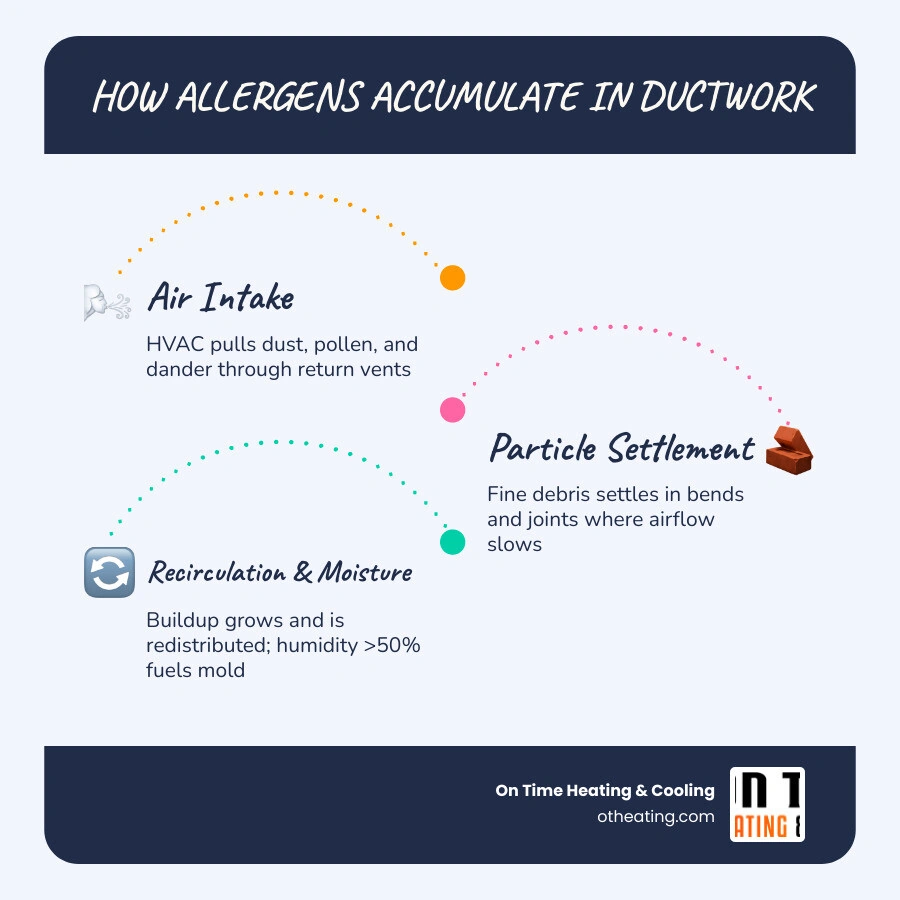
- Air gets pulled in — Your HVAC system draws air from every room through return vents, picking up dust, pet dander, pollen, and mold spores along the way.
- Particles settle on duct surfaces — Not everything makes it through the filter. Fine particles land on the inner walls of your ductwork, especially in bends, joints, and plenums where airflow slows.
- Buildup grows over time — Each heating or cooling cycle adds another layer. Without regular cleaning, a duct system can collect 10 to 20 pounds of debris over five or more years.
- The system recirculates what it collects — Your HVAC cycles air through your home 5 to 7 times per day, redistributing that settled debris — including dust mite waste, mold spores, and dander — into every room.
- Moisture makes it worse — Humidity above 50% encourages mold growth and dust mite colonies to thrive inside the ductwork, compounding the problem.
The result is that your home's air ducts quietly act as a reservoir, storing and releasing allergens every time you turn on the heat or air conditioning. The EPA notes that indoor air can be 2 to 5 times more polluted than outdoor air, and recirculated duct contaminants are a major reason why.
If your allergy symptoms seem to flare up the moment your furnace or AC kicks on, your ductwork is likely part of the problem — not the outdoor air.
The Science of How Allergens Accumulate Inside Your Ductwork
To truly understand how these microscopic invaders turn your heating and cooling system into an allergen distribution center, we have to look at the physics of indoor airflow. Your home’s ductwork is essentially a network of highways. But unlike a smooth concrete highway, the interior of your ducts is full of friction, static electricity, and sharp turns.
When your HVAC system is running, it moves air at high speeds. However, as that air travels through the system, it encounters bends, junctions, and transitions. In these areas, the airflow naturally slows down, creating pockets of low pressure and turbulence. When the air slows down, it loses the energy required to keep heavy or sticky microscopic particles suspended. As a result, those particles drop out of the air stream and settle onto the bottom and sides of the duct walls.
Additionally, many homes throughout Waukesha County utilize flexible corrugated ductwork. While flex ducts are convenient for installation, their ribbed, accordion-like walls are absolute magnets for airborne debris. Every single ridge acts as a tiny shelf where dust, hair, and pollen can rest.
Static electricity also plays a massive role. As air constantly rushes over the sheet metal or fiberglass lining of your ducts, it creates a static charge. This charge acts like a magnet, pulling lightweight particles out of the passing air and holding them tightly against the duct walls. Over months and years, this microscopic cling wrap of dust grows thicker, creating a sticky, textured surface that traps even more passing debris.
If you want to understand the full anatomy of your home's ventilation system and how these dynamics play out from the furnace to the register, check out our Air Duct Cleaning Complete Guide.
The Role of Dust Mites and Pet Dander
Once a baseline layer of dust is established inside your ducts, it ceases to be just inert dirt. It becomes an active ecosystem. The primary residents of this dark, warm ecosystem are dust mites. Dust mites are microscopic arachnids (measuring just 0.2 to 0.3 millimeters) that do not bite or burrow into human skin, but they thrive in areas where dead skin cells and organic debris accumulate.
Because the average person sheds millions of dead skin cells daily, and our pets shed constant streams of fur and skin flakes, your return air grilles act like giant vacuums, sucking this organic feast straight into the dark recesses of your system. To understand how these pet-related particles behave once they are pulled into your system, read our detailed look at How Pet Dander Affects Home Ventilation.
A single gram of typical house dust can contain anywhere from 100 to 500 dust mites. These colonies find the dark, insulated, and temperature-controlled environment of your ductwork to be the perfect breeding ground. The real allergy trigger isn't the mites themselves, but their waste. A single dust mite produces approximately 20 fecal pellets per day. In an uncleaned duct system harboring a colony of just one million mites, this translates to 20 million allergen-loaded particles being generated daily.
These fecal pellets contain potent digestive proteins (specifically known as Der p 1 and Der f 1) that trigger an IgE-mediated immune response in sensitive individuals. When inhaled, these proteins cause your immune system to release histamines, leading to inflammation, mucus production, and classic allergy flare-ups.
How Mold and Pollen Settle in HVAC Systems
While dust mites and dander represent the biological hazards generated inside the home, mold and pollen introduce external and environmental threats to your ductwork.
Pollen enters your home on your clothes, through open windows, or via tiny structural gaps. Once inside, these lightweight grains are easily swept up by return vents. Because pollen is relatively heavy compared to fine dust, it quickly settles in the bends and junctions of your ducts. Once trapped in the dark, pollen doesn't simply disappear; it can remain preserved inside your ductwork for months, meaning you could be breathing in spring tree pollen during a freezing Wisconsin winter.
Mold introduces an entirely different level of concern. Mold spores are constantly floating in the air, but they require two things to colonize and grow: a food source (like the organic dust lining your ducts) and moisture. Unfortunately, your air conditioning system naturally creates moisture. As warm, humid air passes over your system's cold evaporator coil, water condenses on the metal.
If your system has poor airflow, a clogged condensate drain pan, or leaks in the ductwork that let in humid attic or basement air, that moisture will migrate into the duct lining. This creates a perfect storm. When mold spores land on damp, dusty duct surfaces, they can germinate and form thriving colonies in as little as 24 to 48 hours. If you suspect your system is harboring these biological colonies, look out for the indicators outlined in our guide on Signs of Mold Growth in Your Air Duct System.
Health Risks of Circulating Duct Contaminants
When your HVAC system turns on, it doesn't just push conditioned air into your rooms; it acts as a leaf blower inside your dusty ducts. The average person breathes about 11,000 liters of air per day, and when that air is constantly recirculated through dirty vents, your respiratory system is forced to filter out a steady stream of airborne debris.
For residents in Sussex and surrounding areas, this constant exposure can lead to chronic, low-grade irritation that many mistake for a permanent cold. To see a deeper analysis of how these airborne particles specifically impact local households, you can read about How Dirty Air Ducts Impact Health in Sussex.
The health risks are particularly severe for vulnerable groups, including children, the elderly, and anyone with compromised respiratory systems. Children are especially at risk because they breathe 50% more air per pound of body weight than adults, meaning they inhale a proportionally higher dose of recirculated allergens.
When dust mite waste, mold spores, and pet dander are constantly blown into bedrooms and living spaces, they cause continuous airway inflammation. This can lead to:
- Asthma Flare-ups: Microscopic particles can penetrate deep into the lungs, triggering bronchospasms and severe asthma attacks.
- Sinus Infections: Constant irritation of the nasal passages prevents sinuses from draining properly, leading to chronic sinusitis.
- Skin Irritations: Airborne mold spores and dust mite proteins landing on the skin can trigger or worsen eczema, hives, and mysterious rashes.
- Sleep Disruption: Congestion and coughing caused by nighttime allergen circulation prevent deep, restorative sleep.
Removing this reservoir of irritants is often the single most effective environmental change you can make for your family's physical well-being. For a comprehensive look at the physiological benefits of source removal, explore our article on Why Air Duct Cleaning Improves Health.
Identifying Symptoms Linked to How Allergens Accumulate Inside Your Ductwork
How do you know if your home’s ductwork has reached a tipping point and is actively making you sick? There are several telltale signs that point directly to your ventilation system rather than general outdoor allergies:
- The HVAC Startup Burst: If you start sneezing, coughing, or experiencing itchy, watery eyes within 15 to 30 minutes of your heating or cooling system turning on, your ducts are likely releasing a concentrated burst of settled particles.
- Endless Dusting: If you find yourself wiping down your furniture only for a thin layer of grey dust to reappear within 24 hours, your ducts are likely continuously shedding accumulated debris.
- Musty Odors: A distinct, stale, or musty smell when the air starts blowing is a strong indicator of mold or mildew growth near the coils or inside the duct lining.
- Unexplained Eczema or Rashes: If family members experience skin irritation that improves when they leave the house for a few days but flares up when they return, indoor air quality is a likely culprit.
If these symptoms sound all too familiar, cleaning your system can provide immediate and lasting relief. Learn more about the direct connection between clean vents and breathing easier in our guide on How Duct Cleaning Improves Allergy and Asthma Symptoms.
Effective Strategies to Prevent Allergen Buildup
Preventing the accumulation of allergens in your ductwork requires a multi-layered approach. You cannot completely stop dust, dander, and pollen from entering your home, but you can prevent them from settling and colonizing your HVAC system.
The first and most critical line of defense is moisture control. Because mold and dust mites require high humidity to survive and reproduce, keeping your home's relative humidity below 50% is essential. During our hot, humid Wisconsin summers in communities like Brookfield and Pewaukee, running your air conditioning system is vital. Ensure your system's condensate pan drains perfectly and that your coils are kept clean.
The second line of defense is high-efficiency filtration. Standard, inexpensive fiberglass filters are designed only to protect the furnace equipment from large dust bunnies; they do absolutely nothing to protect your lungs or keep fine allergens out of your ducts. Upgrading to a pleated filter with a Minimum Efficiency Reporting Value (MERV) of 11 to 13 will trap microscopic particles before they ever have a chance to enter the ductwork.
To help you choose the right level of protection, we have put together a comparison of standard filters versus high-efficiency pleated options:
| Filter Type | MERV Rating | Target Particles Captured | Recommended Replacement | Best For |
|---|---|---|---|---|
| Standard Fiberglass | MERV 1–4 | Large dust clumps, lint, carpet fibers | Every 30 days | Basic equipment protection only |
| Basic Pleated | MERV 5–8 | Mold spores, hair, cement dust | Every 60–90 days | Standard homes with no pets or allergies |
| High-Efficiency Pleated | MERV 11–13 | Pet dander, dust mite waste, pollen, auto emissions | Every 30–45 days (peak season) | Homes with pets, allergy, or asthma sufferers |
| True HEPA (Bypass System) | MERV 17–20 | Bacteria, tobacco smoke, microscopic allergens | Every 6–12 months | Severe respiratory illnesses |
That high-MERV filters are thicker and restrict airflow more than cheap filters. Always consult with us to make sure your system can handle the increased static pressure without straining the blower motor.
To understand how keeping your system clean and well-filtered stops biological contaminants from taking root in the first place, read our detailed article on How Duct Cleaning Prevents Mold Growth in Your HVAC System.
Long-Term Maintenance to Stop How Allergens Accumulate Inside Your Ductwork
To keep your system running cleanly year after year, establish a consistent maintenance routine:
- Schedule Annual HVAC Inspections: Professional tune-ups ensure your coils are clean, your condensate lines are clear, and your blower motor is operating efficiently.
- Seal Your Ducts: Leaky ducts in unconditioned spaces like crawlspaces or attics pull in dirty, humid, and unfiltered air. Sealing joints with professional mastic sealant or metal-backed tape prevents this dirty air bypass.
- Vacuum Registers Regularly: Use a HEPA-filtered vacuum to clean your supply and return grilles weekly to prevent surface dust from being pulled back into the system.
- Groom Pets Frequently: Brush your pets outdoors or in a designated area, and vacuum pet bedding weekly in hot water (at least 130°F) to minimize the amount of dander entering your air currents.
By combining proper filtration, moisture control, and regular maintenance, you can dramatically improve the air you breathe. For more tips on optimizing your home's air, check out our guide on How Clean Ducts Improve Indoor Air Quality.
Frequently Asked Questions About Duct Allergens
Does duct cleaning actually reduce allergy symptoms?
Yes, but it is most effective when treated as part of a comprehensive indoor air quality strategy. Simply vacuuming out the vents without upgrading your filters or addressing moisture issues will only offer temporary relief. True, professional duct cleaning utilizes a complete source-removal method, which physically extracts the reservoir of dust mite waste, pollen, and dander from your home.
By removing this buildup, you stop the continuous cycle of allergen recirculation, allowing your indoor air to clear. To learn more about how this service can specifically help your household find relief, read about the Duct Cleaning Benefits for Allergy Sufferers.
How often should air ducts be cleaned for allergen control?
While the National Air Duct Cleaners Association (NADCA) generally recommends duct cleaning every 3 to 5 years, households with severe allergy sufferers, asthmatics, or multiple shedding pets should consider having their systems inspected and cleaned every 2 to 3 years.
If you have recently completed a home renovation, moved into a previously owned home, or experienced a pest infestation, scheduling a cleaning immediately is highly recommended to protect your family's health. For more details on establishing the right schedule for your home, see Air Duct Cleaning Benefits for Your Home.
Can I clean my own air ducts to remove allergens?
We strongly advise against attempting to clean your own ductwork. Standard household vacuums and shop vacs simply do not have the power or the specialized HEPA filtration required to safely clean ducts.
Without professional negative-pressure equipment, DIY attempts usually end up disturbing settled dust and spreading millions of fine allergen particles directly into your living spaces, making your allergies significantly worse. Furthermore, using rigid tools or brushes can tear flexible ductwork or damage internal components, leading to costly repairs.
Conclusion
Understanding how allergens accumulate inside your ductwork is the first step toward taking control of your home’s health. Over time, your HVAC system naturally collects pet dander, pollen, mold spores, and dust mites, turning your ventilation network into a slow-release reservoir of respiratory irritants.
At On Time Heating & Cooling, we are dedicated to helping families throughout Menomonee Falls, Sussex, Waukesha, Brookfield, and the surrounding Southeast Wisconsin communities breathe easier. Our team of factory-trained technicians combines modern indoor air quality solutions with a commitment to old-school customer service and punctuality. As proud members of the "On The Dot Club," we ensure your system is maintained, clean, and operating at peak efficiency.
Don't let your HVAC system circulate years of accumulated dust and dander. Schedule professional duct cleaning today and take the first step toward a cleaner, healthier, and fresher home.
Related Articles
 general
Seasonal Home Maintenance Checklist: Decoding Furnace Startup Smells and Noises
Read Article general
Furnace Options Comparisons For Homeowners: What On Time Heating & Cooling Reviews Reveal
Read Article general
Why Does My Furnace Smell Like Burning Dust? A Waukesha Homeowner's Guide to Fall Startup
Read ArticleNeed HVAC help?
Whether you need a repair, maintenance, or a new installation, our expert team is here to help.