A Simple Guide to How Your Heat Pump Actually Works
Discover how does a heat pump work! Learn its core principles, components, and efficiency for year-round comfort in Menomonee Falls.
Shane Herro
Owner & Lead Tech

Discover how does a heat pump work! Learn its core principles, components, and efficiency for year-round comfort in Menomonee Falls.
What Every Menomonee Falls Homeowner Should Know About Heat Pumps
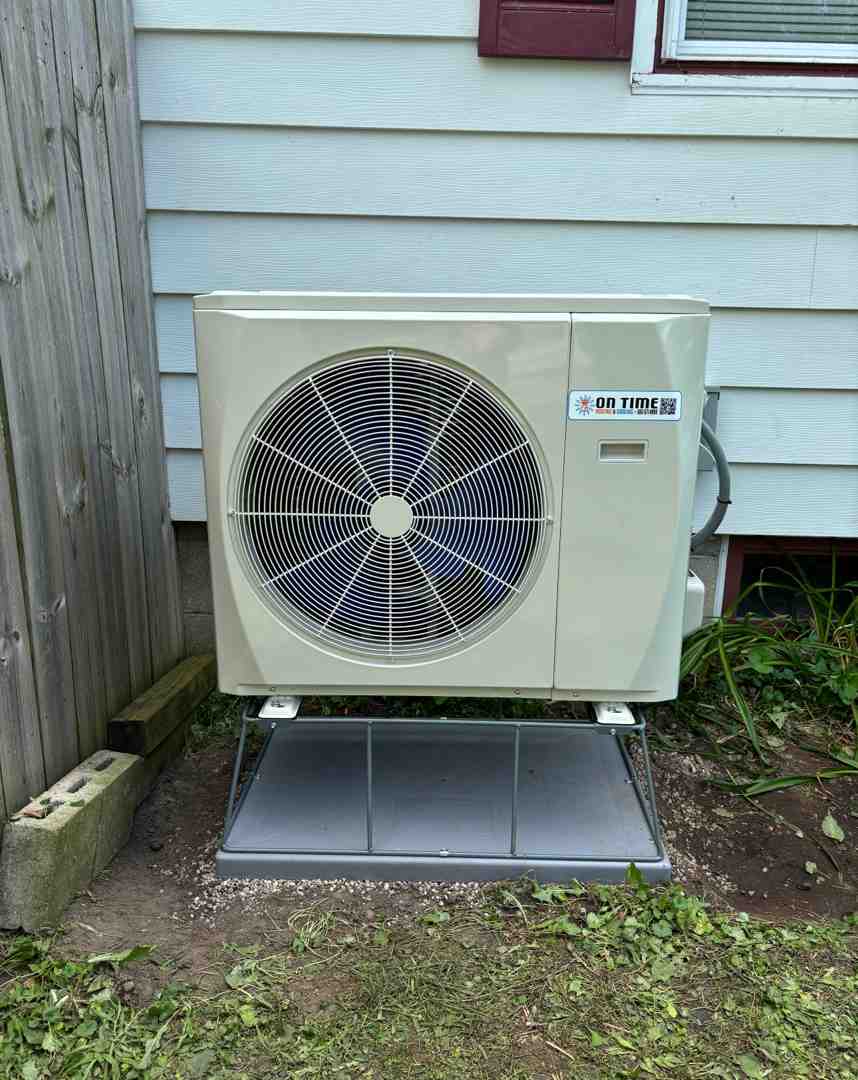
How does a heat pump work is one of the most common questions homeowners ask before upgrading their home comfort system — and for good reason. Heat pumps are very different from traditional furnaces or air conditioners, yet they can do both jobs in a single unit.
Here is the short answer:
A heat pump does not generate heat. It moves heat from one place to another.
- In winter, it pulls heat energy from the outdoor air and transfers it inside your home
- In summer, it reverses the process, pulling heat out of your home and releasing it outside
- It uses a refrigerant that cycles through four key components: an evaporator, a compressor, a condenser, and an expansion valve
- For every 1 kWh of electricity used, a heat pump can deliver up to 4.5 kWh of heating or cooling energy
- This makes modern heat pumps 3 to 5 times more energy-efficient than a conventional gas boiler
Think of it like a refrigerator for your whole house — except it can run in both directions. Your fridge pulls heat out of the inside and dumps it into your kitchen. A heat pump does the same thing, just on a much larger scale and with the ability to flip directions based on the season.
For homeowners in Menomonee Falls, WI, understanding how this technology works can help you make smarter decisions about your heating and cooling system — whether you are replacing an old furnace, adding cooling, or just trying to lower your energy bills.
The sections below break down every part of the process in plain language, from the refrigerant cycle to cold-weather performance.
The Core Principle: How Does a Heat Pump Work?
To understand how does a heat pump work, we have to look at a fundamental law of thermodynamics: heat naturally flows from a warm place to a cold place. A heat pump uses a small amount of mechanical energy to reverse this natural flow, "pumping" heat uphill from a cold area to a warm one.
This is made possible by a special substance called refrigerant. Refrigerant has a incredibly low boiling point, meaning it can turn from a liquid into a gas even when it is freezing outside. By changing the pressure of this refrigerant, the system can force it to absorb heat from the outdoor air (even in a Wisconsin January!) and release that heat inside your living room.
Because the system is moving existing heat rather than burning fuel to create it, the efficiency is off the charts. While a high-efficiency gas furnace might be 96% efficient, a heat pump can operate at 300% to 400% efficiency. This massive leap in performance is a primary reason why replace heating system with a heat pump has become such a popular topic in April 2026.
The Four Main Components of the Refrigerant Cycle
A heat pump isn't just one big "magic box." It is a synchronized team of mechanical parts that work together to manipulate the refrigerant. If one of these parts falters, you'll notice a drop in comfort, which is how heat pump repair improves efficiency by restoring the delicate balance of the cycle.
Here are the "Big Four" components you'll find in every system:
- The Evaporator Coil: Located in the outdoor unit during winter, this is where the cold, liquid refrigerant meets the outdoor air. Because the refrigerant is colder than the air, it absorbs heat and evaporates into a low-pressure gas.
- The Compressor: This is the heart of the system. It takes that low-pressure gas and squeezes it tightly. When you compress a gas, its temperature skyrockets. This turns the refrigerant into a very hot, high-pressure vapor.
- The Condenser Coil: Now the hot gas travels to the indoor unit. As indoor air blows across the coil, the refrigerant releases its heat into your home. As it loses heat, it condenses back into a high-pressure liquid.
- The Expansion Valve: Before the refrigerant heads back outside, it passes through this valve, which acts like a nozzle. It drops the pressure rapidly, causing the temperature of the liquid to plummet so it can start the cycle over again.
Switching Modes: Heating vs. Cooling
One of the coolest things about a heat pump (pun intended) is its versatility. Unlike a furnace, which only knows how to heat, a heat pump is a year-round solution. The secret weapon that allows this is the reversing valve.
This valve acts like a traffic cop for the refrigerant. When you adjust your thermostat, the reversing valve flips the direction of the refrigerant flow. In an instant, your "heater" becomes an "air conditioner." This level of room temperature control with heat pump technology provides a seamless transition between the volatile spring and fall seasons we experience in Southeast Wisconsin.
How does a heat pump work in cooling mode?
In the summer, the heat pump functions exactly like a standard central air conditioner. It uses the indoor coil as the evaporator to soak up heat from your hallways and bedrooms. This process also provides excellent dehumidification, as moisture in the air condenses on the cold indoor coils and is drained away.
If you notice your home feels humid or the air isn't as crisp as it used to be, these are common signs you need heat pump repair from technicians. Keeping the cooling side of the cycle clean ensures your home stays a sanctuary during those humid July afternoons in Pewaukee or Brookfield.
How does a heat pump work in freezing temperatures?
Many people worry that heat pumps can't handle a real Wisconsin winter. While older models struggled, 2026-era cold climate technology has changed the game. Modern units can extract heat from the air even when temperatures drop well below zero.
However, when it is very cold and damp, frost can build up on the outdoor coils. To handle this, the system occasionally enters a defrost cycle. It briefly reverses into "cooling mode" to send warm refrigerant to the outdoor coils to melt the ice. If you see steam rising from your outdoor unit or notice it struggling in the snow, you might be facing heat pump defrost cycle problems that require a professional look to prevent the unit from icing over completely.
Efficiency Metrics and System Types
When shopping for a system, you'll see a lot of acronyms. Understanding these helps you gauge exactly how much you'll save on your monthly bills.
- COP (Coefficient of Performance): This is the ratio of heat delivered to the energy consumed. A COP of 4.0 means you get 4 units of heat for every 1 unit of electricity you pay for.
- SEER2 (Seasonal Energy Efficiency Ratio): This measures cooling efficiency over a typical summer. Higher numbers mean better savings.
- HSPF2 (Heating Seasonal Performance Factor): This measures heating efficiency over the winter. In our region, a high HSPF2 is critical.
There are two main types of systems we typically see in areas like Oconomowoc and Waukesha:
| Feature | Air-Source Heat Pump | Ground-Source (Geothermal) |
|---|---|---|
| Heat Source | Outdoor Air | Underground Earth/Water |
| Installation | Easier/Lower Upfront | Complex/Higher Upfront |
| Efficiency | High (COP 2-5) | Extreme (COP 3-6) |
| Best For | Most residential retrofits | Large properties/New builds |
For many homeowners, an energy efficient heat pump Oconomowoc WI usually refers to the air-source variety because they are much easier to install in existing neighborhoods while still providing massive energy savings.
Frequently Asked Questions about Heat Pump Mechanics
Do heat pumps work in Southeast Wisconsin winters?
Yes! Modern "Cold Climate Heat Pumps" are designed specifically for regions like ours. They use variable-speed compressors that can ramp up their output when the mercury drops. Many homeowners in New Berlin or Mequon choose a "dual fuel" setup, where the heat pump handles the bulk of the heating, and a high-efficiency gas furnace kicks in only during the absolute coldest sub-zero nights.
How long does a typical heat pump system last?
A well-maintained heat pump typically lasts between 15 and 20 years. Because these units run year-round (heating in winter, cooling in summer), they do work hard. The key to longevity is regular maintenance. Understanding how we handle heat pump repair shows that catching small issues like refrigerant leaks or worn fan motors early can add years to your system's life.
Can I use my existing ductwork for a new heat pump?
In most cases, yes. If you currently have a central furnace and AC, a new heat pump system can usually be "dropped in" to replace them using your existing ducts. For homes without ducts (like those with older boiler systems in historic parts of Waukesha), we often recommend ductless mini-splits, which provide the same heat pump technology without the need for bulky metal vents.
Conclusion: Putting Technology to Work for Your Home
Understanding how does a heat pump work reveals why this technology is the future of home comfort. By moving heat instead of creating it, these systems offer a level of efficiency and environmental friendliness that traditional furnaces simply can't match.
At On Time Heating & Cooling, we pride ourselves on being the punctual, factory-trained experts that Menomonee Falls families trust. Whether you are curious about expert heat pump installation: what to know or you want a detailed walkthrough of what to expect during heat pump installation, our team is here to help.
We serve the entire Southeast Wisconsin area, from the quiet streets of Sussex to the bustling neighborhoods of New Berlin and beyond. If you're ready to see how a heat pump can transform your home's comfort and your energy bills, we're ready to provide the top-tier service you deserve.
For more information on how we can help you upgrade your home, visit our professional HVAC services in Menomonee Falls page today. We’ll make sure your transition to modern heating is smooth, efficient, and—most importantly—on time.
Related Articles
 Heat Pumps
Heat Pump Advantages Over Traditional HVAC: Efficiency & Costs Guide
Discover heat pump advantages over traditional HVAC with energy-efficient year-round comfort for Wisconsin homes.
Read Article Heat Pumps
Wisconsin Winters Meet Their Match with High Efficiency Heat Pumps
Discover heat pump benefits for Wisconsin homeowners: cold-climate efficiency, rebates, installation tips & year-round savings!
Read Article Heat Pumps
The Best Commercial Heat Pump Solutions for Waukesha Enterprises
Discover efficient commercial heat pump installation in Waukesha, WI. Cut costs, boost ROI & conquer WI winters. Expert service now!
Read ArticleNeed HVAC help?
Whether you need a repair, maintenance, or a new installation, our expert team is here to help.