How to Clean Your Dryer Vent in 5 Simple Steps
Learn how often should you have your dryer vent cleaned to prevent fire hazards and boost efficiency in Menomonee Falls.
Shane Herro
Owner & Lead Tech

Learn how often should you have your dryer vent cleaned to prevent fire hazards and boost efficiency in Menomonee Falls.
How Often Should I Have My Dryer Vent Cleaned in Menomonee Falls?
Knowing how often should you have your dryer vent cleaned could be one of the most important home safety decisions you make this year. According to the National Fire Protection Association, nearly 14,000 dryer fires occur in the U.S. every year — and the leading cause isn't a faulty appliance. It's simply a failure to clean. For homeowners in Menomonee Falls, WI, that's not a statistic to brush off.
Here's a quick answer based on your situation:
| Household Type | Recommended Cleaning Frequency |
|---|---|
| Average household (1-2 people, light use) | Once every 1-2 years |
| Standard family (3-4 people, regular use) | Once per year |
| Large family (5+ people, heavy use) | Every 6 months |
| Pet owners or heavy lint producers | Every 6 months |
| Long or complex vent runs (multiple bends) | Every 6-9 months |
Most households should have their dryer vent professionally cleaned at least once a year — that's the recommendation from both the U.S. Consumer Product Safety Commission and major dryer manufacturers. But your specific setup may call for more frequent service.
Beyond fire risk, a clogged vent quietly reduces dryer efficiency, shortens your dryer's lifespan, and wears out your clothes faster. Most homeowners don't realize there's a problem until their dryer starts taking two full cycles to dry a single load.
This guide walks you through exactly how often you should clean your dryer vent, the warning signs to watch for, and when to call a professional.
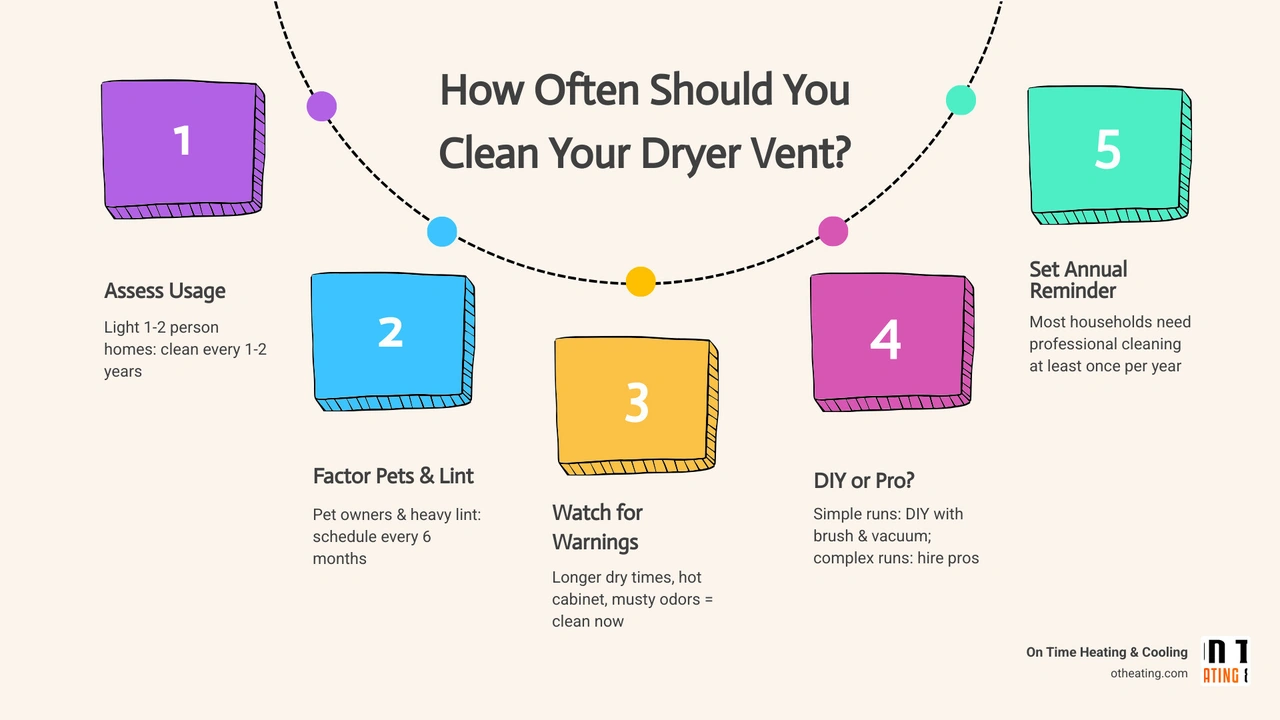
Discover more about how often should you have your dryer vent cleaned:
How Often Should You Have Your Dryer Vent Cleaned?
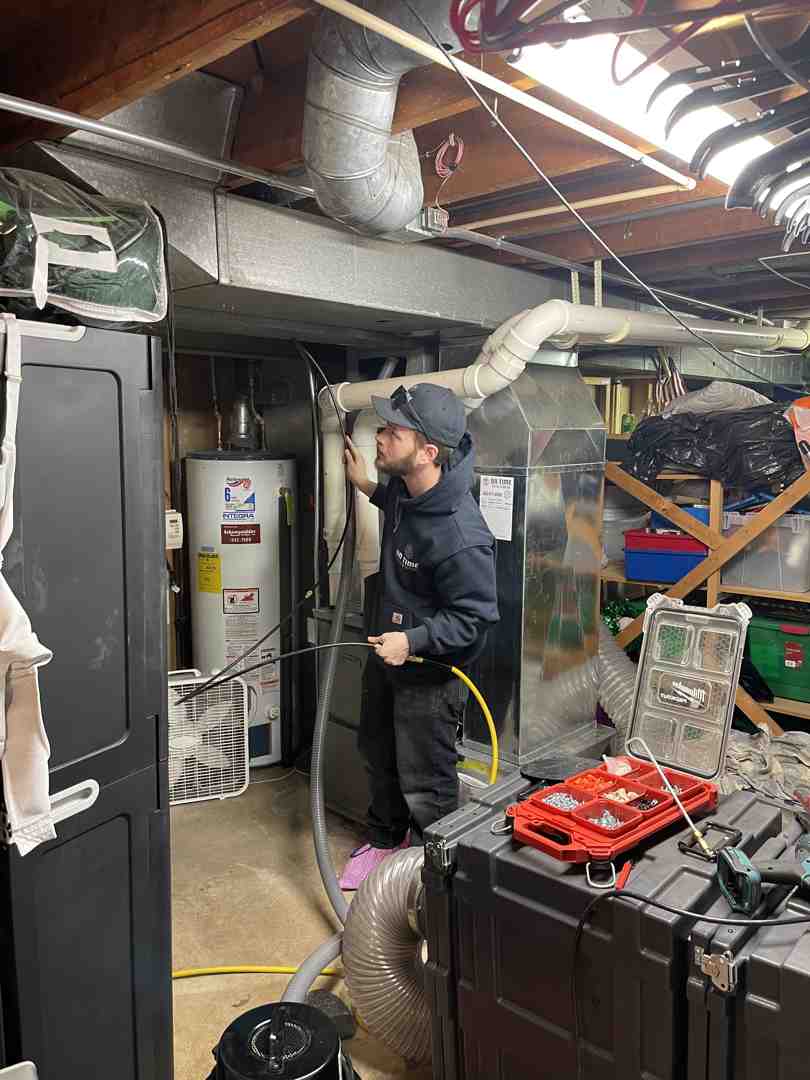
When it comes to home maintenance, we often focus on the things we can see. We sweep the kitchen floor, wipe down the countertops, and clean out the refrigerator. But behind your heavy, metal clothes dryer lies a hidden pathway that quietly collects highly flammable debris with every single load of laundry you run.
While the general rule of thumb is to schedule a professional cleaning at least once per year, this is not a one-size-fits-all timeline. Safety organizations, HVAC professionals, and appliance manufacturers all agree that annual maintenance is the bare minimum required to maintain peak efficiency and prevent devastating home fires. However, your actual cleaning schedule depends on a variety of unique variables inside your home.
When evaluating how often should you have your dryer vent cleaned, you have to look beyond the calendar. Airflow velocity is the true metric of a healthy dryer vent system. When a vent is clean, air flows freely at a high speed, carrying moisture and heat out of your home. As lint accumulates along the duct walls, it creates friction, slowing down the airflow and forcing your dryer to work twice as hard.
Over time, this restricted airflow causes excessive heat buildup inside the dryer drum and the transition hose. Under these conditions, even a small spark from the dryer's heating element can ignite the dry, highly combustible lint, leading to a dangerous fire. To understand the deeper benefits of keeping these pathways clear, you can read about the benefits of regular vent cleaning.
Additionally, many homeowners don't realize that some dryer manufacturers actually require proof of regular, professional vent cleaning to keep the appliance's warranty valid. If your heating element burns out because your vent was choked with lint, the manufacturer may deny your warranty claim, leaving you to coordinate repairs without warranty coverage.
Regular maintenance is just as important for your dryer as it is for the rest of your home's ventilation systems. If you've been wondering when to schedule other critical duct services, check out our guide on when should you get your air ducts cleaned to keep your entire home's indoor air quality in top shape.
How Often Should You Have Your Dryer Vent Cleaned Based on Household Size?
The sheer volume of laundry your household produces is one of the biggest factors in how quickly lint builds up in your ductwork. A single person living in a condo in Sussex will naturally produce far less lint than a family of five with active kids in Waukesha.
If you are running multiple loads of laundry back-to-back throughout the week, your dryer vent is working overtime. Heavy fabrics like bath towels, denim jeans, and thick winter blankets shed massive amounts of fiber during the drying cycle. While your lint screen catches a portion of these fibers, a significant amount escapes into the exhaust system.
For standard families of three to four people, an annual professional cleaning is usually sufficient. However, for larger households running five or more loads a week, we highly recommend scheduling a cleaning every six months. This prevents lint from reaching critical levels that choke your appliance's airflow. For a deeper look at how this impacts your family's safety, explore the details on dryer vent cleaning benefits and fire prevention.
How Often Should You Have Your Dryer Vent Cleaned if You Have Pets?
If you share your home with furry family members, your dryer vent maintenance schedule needs to be much more aggressive. Dogs and cats shed constantly, and their hair clings tightly to clothing, blankets, and pet beds. When you wash and dry these items, a massive amount of pet hair and dander gets pulled into the dryer's exhaust system.
Pet hair is heavier and coarser than clothing fibers, and it doesn't travel through the vent as easily. Even worse, when pet hair combines with the sticky residue left behind by fabric softeners and dryer sheets, it creates a thick, felt-like mat that adheres to the inside of your ductwork. This sticky accumulation traps even more lint, rapidly compounding the blockage.
If you have multiple pets, we strongly advise having your dryer vent inspected and cleaned every six months to keep your home safe from fire hazards. Learn more about protecting your home from these specific pet-related risks by reading about dryer vent fire prevention.
Warning Signs and Dangers of a Clogged Dryer Vent
A clogged dryer vent rarely happens overnight. It is a gradual process, but your dryer will drop several subtle clues when it is struggling to breathe. Recognizing these warning signs early can save you from a major appliance breakdown, unnecessary energy waste, or a devastating home fire.
The most common warning signs of a clogged dryer vent include:
- Longer Drying Times: If a standard load of laundry that used to take 40 minutes now takes 70 to 90 minutes to dry completely, your vent is likely restricted.
- Excessive Heat: If the top of your dryer cabinet is burning hot to the touch, or if your clothes come out of the cycle feeling hot enough to burn your hands, heat is not escaping properly.
- Musty or Burning Odors: A musty smell indicates that moisture is trapped inside the vent, while a faint burning odor is a critical warning sign that lint is overheating inside the appliance.
- The Vent Hood Flap Test: Walk outside while your dryer is running. If the exterior vent hood flap is barely opening, or if you see visible lint sticking to the outside opening, your airflow is severely restricted.
When you ignore these warning signs, the consequences can be serious. A choked dryer has to run twice as long, which increases energy use and puts unnecessary strain on your appliance.
Furthermore, the extra strain on your dryer causes internal components like the heating element, thermal fuse, and motor to wear out prematurely. Instead of lasting its intended 15 to 20 years, a neglected dryer may fail in half that time.
The heat also takes a toll on your wardrobe, causing fabrics to shrink, colors to fade, and fibers to degrade much faster. To avoid these issues, it helps to understand common vent cleaning mistakes and prevention, as well as the broader benefits of professional air duct cleaning.
| Feature | Clean Dryer Vent | Clogged Dryer Vent |
|---|---|---|
| Average Drying Time | 35 to 45 minutes | 70 to 90+ minutes |
| Energy Consumption | Standard / Highly Efficient | Elevated due to longer cycles |
| Appliance Temperature | Warm to the touch | Dangerously hot / Overheating |
| Fire Risk | Extremely Low | High (Leading cause of home dryer fires) |
| Appliance Lifespan | 15 to 20 years with care | 5 to 10 years due to component strain |
| Clothing Wear & Tear | Minimal | High (Shrinking, fiber damage, fading) |
How to Clean Your Dryer Vent: DIY Steps vs. Professional Service
Many homeowners wonder if they can tackle dryer vent cleaning as a do-it-yourself weekend project. The answer depends heavily on the layout of your home and the complexity of your vent run.
If your laundry room is located against an exterior wall and has a short, straight transition duct of less than five feet, a DIY cleaning is relatively straightforward. However, if your laundry room is in the center of your home, on a second floor, or has a long duct run with multiple 90-degree bends, professional cleaning is highly recommended.
Longer, winding ducts require specialized rotary brushes and high-powered vacuum extraction systems to safely remove packed lint without damaging the duct seams.
If you have a simple, short vent run and want to perform regular maintenance between professional visits, follow these five steps:
Step 1: Disconnect the Power and Gas
Safety must always come first. Before moving your dryer or touching any connections, unplug the electrical cord from the wall. If you have a gas dryer, turn off the gas supply valve to prevent any accidental leaks while you are working behind the machine.
Step 2: Pull the Dryer Away and Disconnect the Duct
Gently slide the dryer away from the wall to give yourself room to work. Disconnect the transition duct (the flexible hose) from both the back of the dryer and the wall connection. Be extremely careful not to crush or puncture the duct, especially if it is made of flexible foil.
Step 3: Vacuum the Lint Trap and Internal Connections
Use a narrow vacuum attachment or a specialized flexible lint wand to clean deep inside the dryer's internal lint trap housing. Vacuum the connection port on the back of the dryer where the transition duct attaches, as lint often packs tightly into this junction.
Step 4: Use a Rotary Vent Cleaning Brush
Insert a flexible rotary duct cleaning brush into the wall portion of the vent. Link the flexible rods together as you feed the brush deeper into the duct, rotating it slowly (preferably with a cordless drill on a low speed setting) to dislodge lint from the pipe walls. Follow behind the brush with a vacuum to collect the loose debris.
Step 5: Clean the Exterior Vent Hood and Reconnect Everything
Go outside and inspect the exterior vent termination hood. Clear away any lint buildup, bird nests, or debris blocking the damper flap. Once clean, return inside, carefully reattach the transition duct to the wall and dryer, slide the appliance back into place, plug it in, and run an empty cycle for 5 minutes to blow out any remaining loose lint.
To help you gather the right supplies for this project, here is a list of essential tools:
- A specialized dryer vent cleaning brush kit (with extendable, flexible rods)
- A cordless drill (to spin the rotary brush gently)
- A shop vacuum with a long, flexible hose attachment
- Heavy-duty foil duct tape (never use plastic duct tape or screws, which catch lint)
- Safety glasses and a dust mask (to protect against flying lint and dander)
While DIY kits are great for light maintenance, they have limitations. Homeowners often make the mistake of pushing lint deeper into the vent, creating a solid, compacted plug at a bend in the pipe. Even worse, low-quality DIY rods can snap inside the wall, leaving you with a blocked vent and a repair visit.
Our professional technicians use commercial-grade negative air machines and reverse-spinning whips that safely extract lint without putting stress on your ductwork. To learn more about our process, check out clean a dryer vent duct, see exactly what we do during vent cleaning, and discover the role of our technicians in vent cleaning.
Frequently Asked Questions About Dryer Vent Maintenance
Can I use a leaf blower to clean my dryer vent?
We strongly advise against using a leaf blower to clean your dryer vent. While it might seem like a quick and satisfying shortcut, leaf blowers generate an immense amount of air pressure that is not designed for residential ductwork.
This extreme pressure can easily burst the seams of your transition duct inside the wall, causing moist air and highly flammable lint to blow directly into your wall cavities or attic. Furthermore, leaf blowers lack the mechanical brushing action needed to scrape sticky lint off the duct walls, often packing loose lint tighter into corners and elbows instead of clearing it out.
Does the lint trap catch all debris?
No, even the most efficient lint screens only capture about 90% to 95% of the lint produced during a drying cycle. The remaining 5% to 10% of fine fibers bypass the screen entirely, traveling into the dryer's internal chassis and out into the exhaust vent system.
Over a year of regular use, this small percentage adds up to a massive amount of accumulated debris inside your walls. This is why cleaning your lint screen after every load is essential, but still does not replace the need for regular, comprehensive vent cleaning.
Is plastic or foil venting safe for my home?
Plastic and thin foil flexible transition ducts are highly dangerous and are no longer compliant with modern building codes in almost all municipalities, including Southeast Wisconsin. Plastic and foil are highly flammable; if a lint fire starts, these materials will quickly melt and allow the fire to spread directly into your home.
Additionally, flexible plastic and foil ducts sag easily, creating low spots where condensation and lint collect to form stubborn clogs. You should always replace these outdated materials with rigid or semi-rigid metal venting, which has a smooth interior that maximizes airflow and resists fire. To see how proper duct materials fit into a safer home ventilation system, read about our air duct cleaning process.
Conclusion
At On Time Heating & Cooling, we are proud to serve our neighbors throughout Menomonee Falls, WI, and the surrounding Southeast Wisconsin communities, including Waukesha, Brookfield, Pewaukee, New Berlin, and Oconomowoc. Our commitment to punctuality, factory-trained technicians, transparent and fair service, 24/7 emergency support, and homeowner-focused care ensures that your home maintenance is handled safely, efficiently, and on schedule. Members of our On The Dot Club can also enjoy benefits such as priority service, discounts, and tune-ups, and we offer free second opinions for diagnostics.
If you have noticed that your clothes are taking longer to dry, or if you simply cannot remember the last time your exhaust path was cleared, do not wait for a warning sign to turn into an emergency. Protect your home, improve dryer efficiency, and extend the lifespan of your appliances by letting our professional technicians take care of the hard work for you.
Schedule Professional Dryer Vent Services with On Time Heating & Cooling today and experience the peace of mind that comes with a safer, more efficient home!
Related Articles
 Maintenance
Melting the Mystery of Frozen AC Units
Fix ice forming on your ac unit causes and what to do. Learn how to defrost your system and prevent costly damage today.
Read Article Maintenance
How to Stop AC Running Constantly in Wisconsin Heat Waves
Discover why your AC runs constantly during Wisconsin heat waves and learn proven fixes to restore comfort and cut energy costs.
Read Article Maintenance
5 Common AC Repairs and What Causes Them
Discover the most common AC repairs and what causes them in Brookfield WI homes, plus DIY checks and repair-or-replace tips from local pros.
Read ArticleNeed HVAC help?
Whether you need a repair, maintenance, or a new installation, our expert team is here to help.