

%202%20(1).svg)
.svg)

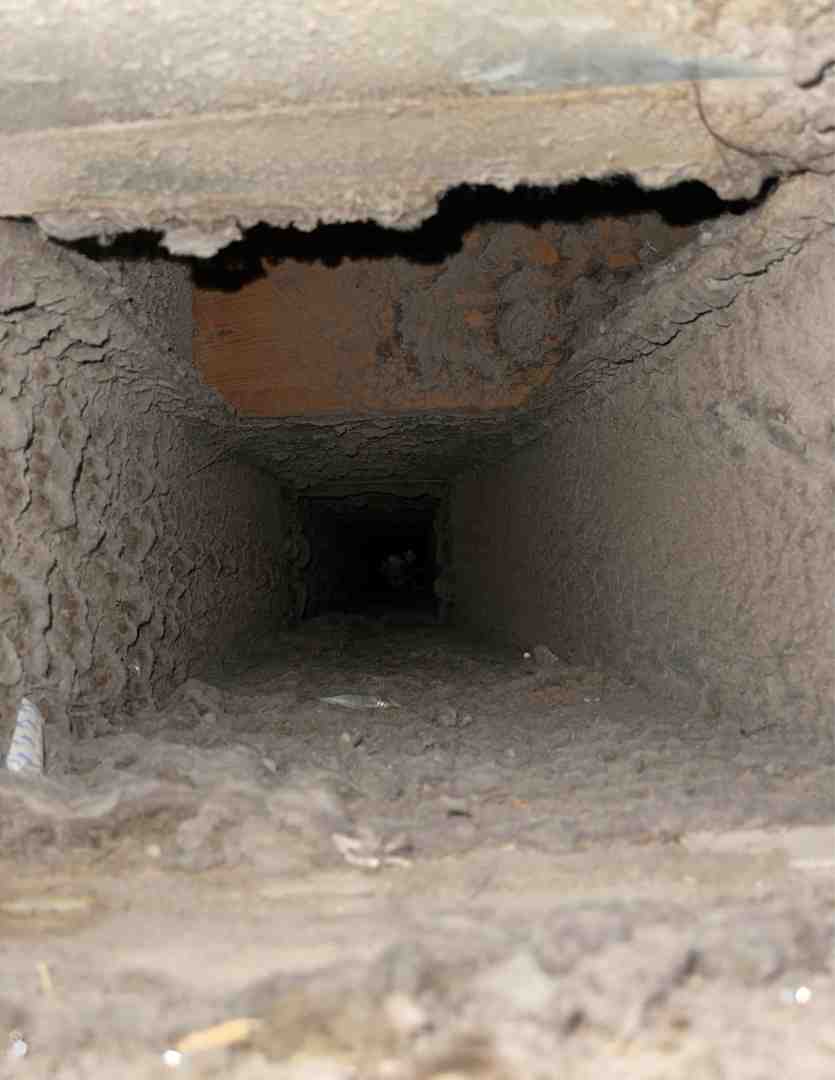
How Dust and Debris in Your Ducts Choke Your Airflow
Written by
On Time Heating & Cooling
Published on
June 26, 2026
Why Dirty Ductwork Is Quietly Costing You Comfort and Energy
How dirty ductwork affects your HVAC performance is one of the most overlooked problems in home comfort — and it starts long before you notice anything wrong. Most homeowners in Menomonee Falls and across Southeast Wisconsin never think about their ducts. They stay hidden behind walls, above ceilings, and beneath floors. But every time your system runs, air is moving through those passages — and whatever is built up inside goes along for the ride.
Here is a quick look at the core ways dirty ducts hurt your system:
- Restricted airflow — Dust and debris narrow the passages air travels through, forcing your system to work harder to move the same volume of air
- Higher energy bills — Systems with dirty ducts can use 15–25% more energy than systems with clean, clear ductwork
- Uneven temperatures — Blocked duct runs mean some rooms get plenty of airflow while others stay too warm or too cold
- Added wear on components — The blower motor and compressor take on extra strain when airflow is restricted, which shortens system lifespan
- Worse indoor air quality — Dust, allergens, mold spores, and other particles build up in ducts and recirculate through your living space every time the system kicks on
The EPA notes that indoor air can be up to five times more polluted than outdoor air, and dirty ductwork is one of the key contributors. The average home also accumulates roughly 40 pounds of dust per year — much of which finds its way into the HVAC system over time.
This guide breaks down exactly what happens inside your ducts, what warning signs to look for, and what actually helps — so you can make smart decisions about your home's comfort and air quality.
How Dirty Ductwork Affects Your HVAC Performance
Dirty ductwork acts like plaque in an artery. Not glamorous, but very effective at causing trouble.
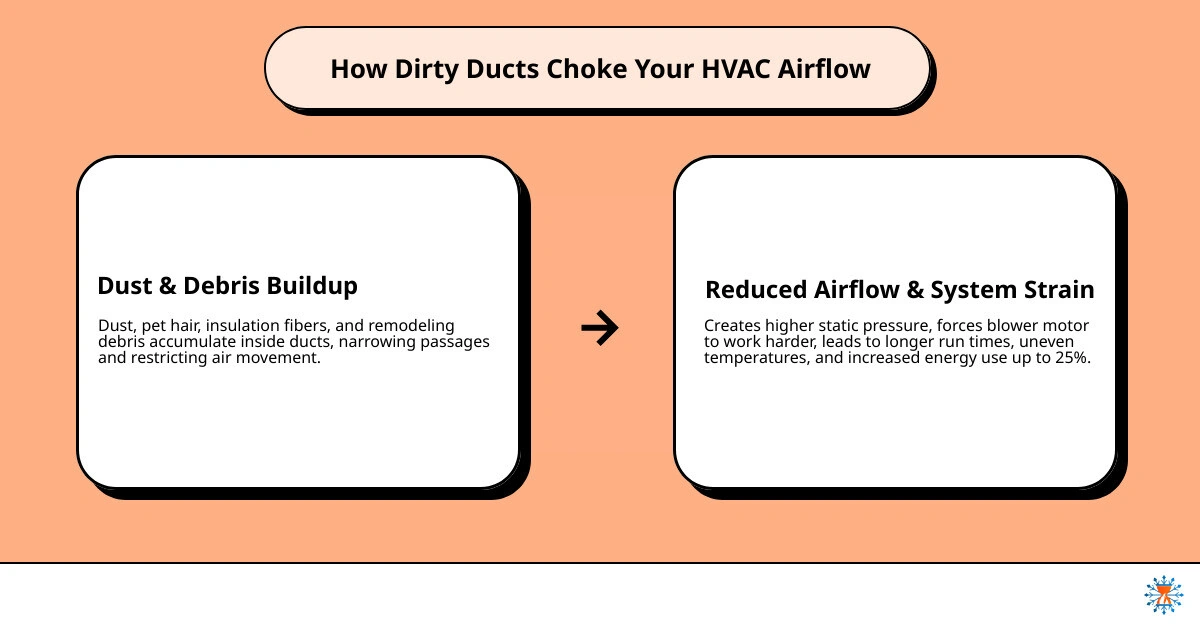
Your HVAC system is designed to move a certain amount of air through return ducts, across equipment, and back out through supply vents. When dust, pet hair, insulation fibers, remodeling debris, or moisture-related buildup collect inside that path, airflow gets choked down. That creates higher static pressure, longer run times, and more stress on the parts that keep your home comfortable.
In real homes across Menomonee Falls, Waukesha, Brookfield, Sussex, Pewaukee, and nearby Southeast Wisconsin communities, this often shows up as a comfort problem first. One bedroom feels stuffy. The living room cools quickly. The upstairs never seems right. Then the energy use creeps up, filters get dirty faster, and the system seems like it is always running.
How dirty ductwork affects your HVAC performance by reducing airflow
Air needs open pathways. Dirty ducts reduce those pathways.
Even a layer of dust along duct walls adds resistance. Bigger issues like pet hair, construction debris, or clumps of dust near bends and branch lines can narrow the passage even more. Research commonly points to airflow losses around 20% in dirty systems, and when airflow drops by that amount, your heating or cooling system may need to run much longer to do the same job.
That means:
- Air coming from vents may feel weak
- Rooms take longer to heat or cool
- The thermostat is satisfied more slowly
- Your system cycles for longer periods
This is one reason dirty systems can use 15% to 25% more energy than cleaner ones. The equipment is still trying to deliver comfort, but it has to push against more resistance to get there.
How dirty ductwork affects your HVAC performance through added system strain
Airflow problems do not stay inside the ducts. They spread to the rest of the system.
When air cannot move easily, the blower motor works harder. Longer runtimes can also put more strain on the compressor during cooling season. Over time, that extra effort can increase wear, raise the risk of overheating, and contribute to preventable breakdowns.
In simple terms, dirty ductwork can make a healthy HVAC system act older than it is.
That added strain may lead to:
- More frequent cycling or longer cycles
- Reduced efficiency
- Extra wear on the blower assembly
- Higher chance of motor or compressor stress
- Shorter overall system life
Well-maintained HVAC equipment can reduce energy consumption by 20% to 50%, but that only happens when airflow and key components are kept in good shape.
Why some rooms feel comfortable while others never do
Not every dirty duct problem affects the whole house evenly.
Your duct system branches out to different rooms. If one branch line has more buildup than another, or if debris collects near a particular run, you can end up with uneven airflow. That is when one room feels great and another feels like it missed the memo.
This can create:
- Hot spots in summer
- Cold spots in winter
- Weak airflow in far bedrooms
- Temperature differences from room to room
Dirty ducts are not the only cause of uneven comfort, but they are a common one. Leaks, bad balancing, insulation issues, and closed dampers can also contribute. Still, if comfort is inconsistent, ductwork deserves a close look.
What Makes Air Ducts Get Dirty in the First Place?
Ducts do not get dirty overnight. They collect contamination little by little from everyday life.
The average home gathers about 40 pounds of dust each year. Some of that settles on furniture. Some lands under the couch where it begins its long career. And a lot of it gets pulled into the HVAC system through return vents.
The main causes of dirty ductwork in HVAC systems
Several common issues lead to dirty ducts:
- Household dust from skin cells, fabric fibers, and tracked-in dirt
- Pet hair and dander
- Pollen entering from outdoors
- Overdue filter changes
- Poor filter fit that allows air to bypass the filter
- Leaky return ducts that pull in attic, crawl space, or basement dust
- Construction or remodeling debris
- Smoke residue
- Moisture that helps dust stick and supports mold growth
- Rodents or insects inside duct runs
One important point from EPA guidance: some dust sticks to duct surfaces and may not immediately blow back into the living space. But if there is excessive buildup, active debris release, mold growth, or pest contamination, that moves from harmless-looking to important very quickly.
Homes that usually see faster duct contamination
Some homes naturally load up ductwork faster than others.
You may need more frequent inspection if your home has:
- Multiple pets
- Family members with allergies or asthma
- Recent remodeling or drywall work
- Older ductwork
- Smokers in the home
- Crawl space or attic duct runs
- Heavy HVAC use during Wisconsin winters and humid summers
- High dust levels from nearby roads or frequent foot traffic
In Southeast Wisconsin, homes often run heating for long stretches and rely heavily on cooling during sticky summer weather. More system use means more air moving, which means more opportunities for dust and debris to circulate and collect.
Signs Your Ductwork May Be Hurting Comfort, Air Quality, and Efficiency
Dirty ductwork is easy to ignore because you usually cannot see most of it. The clues tend to show up around vents, on furniture, in airflow, or in how your home feels.
Common signs that indicate dirty ductwork
Watch for these warning signs:
- Visible dust buildup around supply or return vents
- Dark streaks on vent covers or nearby walls
- Weak airflow from some registers
- Rooms that never seem to match the thermostat setting
- Musty, stale, or dusty smells when the system runs
- Filters loading up unusually fast
- Dust settling quickly after cleaning
- More airborne particles in sunlight
- Rising utility usage without another clear cause
These signs do not guarantee dirty ducts are the only issue, but together they make a strong case for inspection.
Here is a simple checklist:
- Dust puffing from vents when the system starts
- Uneven heating or cooling
- Persistent odors from registers
- Allergy symptoms that flare up indoors
- Vents that look dirty soon after cleaning
- System running longer than usual
How dirty ducts affect indoor air quality and health
This is where ductwork stops being just an HVAC issue and becomes a household comfort issue.
Dirty ducts can collect and recirculate:
- Dust
- Pollen
- Pet dander
- Mold spores
- Bacteria and other particles
- Debris from pests
When those pollutants are repeatedly pushed through the home, they may aggravate allergies, asthma, sinus irritation, coughing, itchy eyes, headaches, and poor sleep. Children, older adults, and anyone with respiratory sensitivity usually feel it first.
That does not mean every dusty duct causes illness. The EPA is careful here: duct cleaning has not been conclusively shown to prevent health problems in all homes. But it does make sense to address duct contamination when there is visible mold, pests, excessive debris, or particles actively entering the home.
For more on this side of the issue, see how clean ducts improve indoor air quality.
When dirty ductwork is not the only problem
Sometimes dirty ducts are part of the problem, not the whole story.
Other issues that can mimic or worsen dirty duct symptoms include:
- A clogged air filter
- Dirty evaporator coils or blower components
- Leaky ducts
- Closed or blocked dampers
- Undersized or failing blower motors
- Poor insulation
- Thermostat placement problems
This matters because cleaning ducts alone may not fix comfort or efficiency if the actual bottleneck is somewhere else. In fact, the EPA notes that cleaning mechanical components such as coils, fans, and heat exchangers can have a more direct effect on efficiency than cleaning duct surfaces alone.
What Cleaning and Maintenance Really Help Most
The smart approach is not "clean everything just because." It is "inspect, confirm the issue, then solve the right problem."
That matters because routine duct cleaning is not universally recommended on a fixed schedule for every home. The EPA takes an as-needed approach rather than a blanket one.
| Issue | Likely Effect on HVAC | What Helps Most |
|---|---|---|
| Light dust inside ducts | Often limited direct impact | Good filtration and maintenance |
| Excessive debris restricting airflow | Lower airflow and longer runtimes | Professional cleaning and inspection |
| Mold growth | Air quality concerns and odor | Moisture control and targeted cleaning |
| Pest activity in ducts | Contamination and odor | Pest removal, sealing, cleaning |
| Dirty blower, coils, or fan | Efficiency loss and equipment strain | Whole-system cleaning and service |
When homeowners should consider professional duct cleaning according to the EPA
According to EPA guidance, homeowners should consider professional duct cleaning when there is clear evidence of a real problem, such as:
- Visible mold growth inside hard-surface ducts or on HVAC components
- Rodent or insect infestation
- Ducts clogged with excessive dust or debris
- Particles actually being released into the home from registers
- Heavy post-renovation contamination
The EPA also advises homeowners to verify the problem before cleaning. If mold is suspected, it is wise to confirm that it really is mold, since dirt and staining can be mistaken for it. And if cleaning is done, the provider should address the entire affected system, not just a small section of duct.
How often air ducts should be cleaned and what changes the schedule
There is no single magic number for every house.
A common rule of thumb is every 3 to 5 years, but that should be adjusted based on conditions in the home. Some households can go longer without needing service. Others should schedule inspections sooner.
Factors that may justify more frequent attention include:
- Pets that shed heavily
- Ongoing allergy or asthma concerns
- Recent remodeling
- Water intrusion or moisture issues
- Past pest activity
- Older homes with dirtier duct systems
- Inconsistent filter changes
- Heavy year-round HVAC use
In other words, frequency depends less on the calendar and more on what is happening in your home and your system.
The role of regular HVAC maintenance in preventing dirty duct issues
Routine HVAC maintenance is one of the best ways to keep duct problems from snowballing.
Good maintenance includes:
- Replacing filters regularly, often every 1 to 3 months depending on the filter and the home
- Making sure filters fit properly so air does not bypass them
- Inspecting return ducts for leaks
- Cleaning key equipment components
- Checking drain pans and moisture conditions
- Watching for signs of mold or biological growth
- Addressing airflow problems early
This is why duct care and HVAC maintenance go together. A clean duct system will not stay clean for long if the filter is neglected or if return leaks keep sucking in attic dust.
For a broader look at prevention, read our HVAC maintenance ultimate guide and how air duct cleaning improves your HVAC.
Benefits of Cleaner Ducts and the Myths Homeowners Should Know
Clean ducts can absolutely help in the right situation. The trick is being honest about what they can do and what they cannot.
What clean ducts can do for HVAC performance and comfort
When ducts are genuinely dirty and restricting airflow, proper cleaning can improve:
- Air circulation
- Room-to-room comfort
- System response time
- Dust movement through the home
- Odor issues related to debris or contamination
- Strain on HVAC components
Homeowners often notice steadier temperatures, cleaner vents, and less of that "why is this room always different?" frustration.
Cleaner ducts are especially helpful when paired with full-system care. If filters, blower components, and coils are also maintained, the HVAC system can move air more easily and operate more predictably.
Related reading:
Myths and unresolved issues about duct cleaning
This topic has more myths floating around than dust in a neglected return vent.
Here are the big ones:
- Myth: Every home needs routine duct cleaning on a fixed schedule.
Reality: The EPA does not recommend blanket routine cleaning for all homes. It recommends cleaning as needed based on evidence.
Myth: Duct cleaning alone always boosts efficiency.
Reality: There is limited evidence that cleaning duct surfaces by themselves significantly improves efficiency. Cleaning coils, fans, and other mechanical components often has a more direct effect.
Myth: Any dust inside ducts is dangerous.
Reality: Some dust stays stuck to surfaces and may not enter living spaces right away. The concern rises when there is heavy buildup, active release, mold, or pests.
Myth: More chemicals make ducts cleaner.
Reality: Homeowners should be cautious about chemical biocides and sealants. EPA guidance is especially careful about their use in insulated duct systems.
Myth: DIY vent vacuuming equals full duct cleaning.
- Reality: Cleaning a vent cover is helpful, but it is not the same as inspecting and cleaning the full duct system safely.
Why inspection matters before any cleaning is recommended
Inspection is what separates a useful service from guesswork.
A proper evaluation may include:
- Looking for visible contamination
- Checking for airflow restrictions
- Inspecting duct material and condition
- Identifying leaks or disconnected sections
- Watching for moisture issues
- Verifying whether contamination is isolated or system-wide
This matters because the right solution might be cleaning, sealing, filter correction, blower service, moisture control, or a combination of those steps.
If you want a deeper overview of the process, our air duct cleaning complete guide explains what homeowners should know before scheduling service.
Conclusion: Protect Airflow and Comfort in Menomonee Falls and Nearby Homes
If your home in Menomonee Falls, Waukesha, Brookfield, Sussex, Hartland, Delafield, Pewaukee, New Berlin, Germantown, or nearby Southeast Wisconsin communities has uneven rooms, dusty vents, musty airflow, or a system that seems to run forever, your ductwork may be part of the problem.
How dirty ductwork affects your HVAC performance comes down to a simple chain reaction: buildup reduces airflow, restricted airflow adds strain, added strain raises energy use and wear, and your comfort suffers along the way.
The good news is that homeowners do not have to guess. With the right inspection and routine maintenance, we can identify whether the issue is dirty ducts, leaky ducts, dirty HVAC components, filter problems, or a mix of several factors.
At On Time Heating & Cooling, we believe in punctual service, clear communication, and practical solutions that fit real homes in Southeast Wisconsin. If you are ready to improve airflow, indoor air quality, and overall comfort, learn more about our duct cleaning service and take the next step toward a cleaner, better-performing HVAC system.
.svg)
.svg)
.svg)
Monday to Sunday:
24/7
24/7
Payments By:

review us on:
©
on time heating & cooling All rights reserved.
Designed & Developed By :
.svg)