When Should You Replace Your AC in Wisconsin: In-Depth Guide
Learn when should you replace your AC in Wisconsin with this expert guide covering lifespan, warning signs, and replacement tips for Southeast Wisconsin homes.
Shane Herro
Owner & Lead Tech

Learn when should you replace your AC in Wisconsin with this expert guide covering lifespan, warning signs, and replacement tips for Southeast Wisconsin homes.
When Should You Replace Your AC in Wisconsin? What You Need to Know First
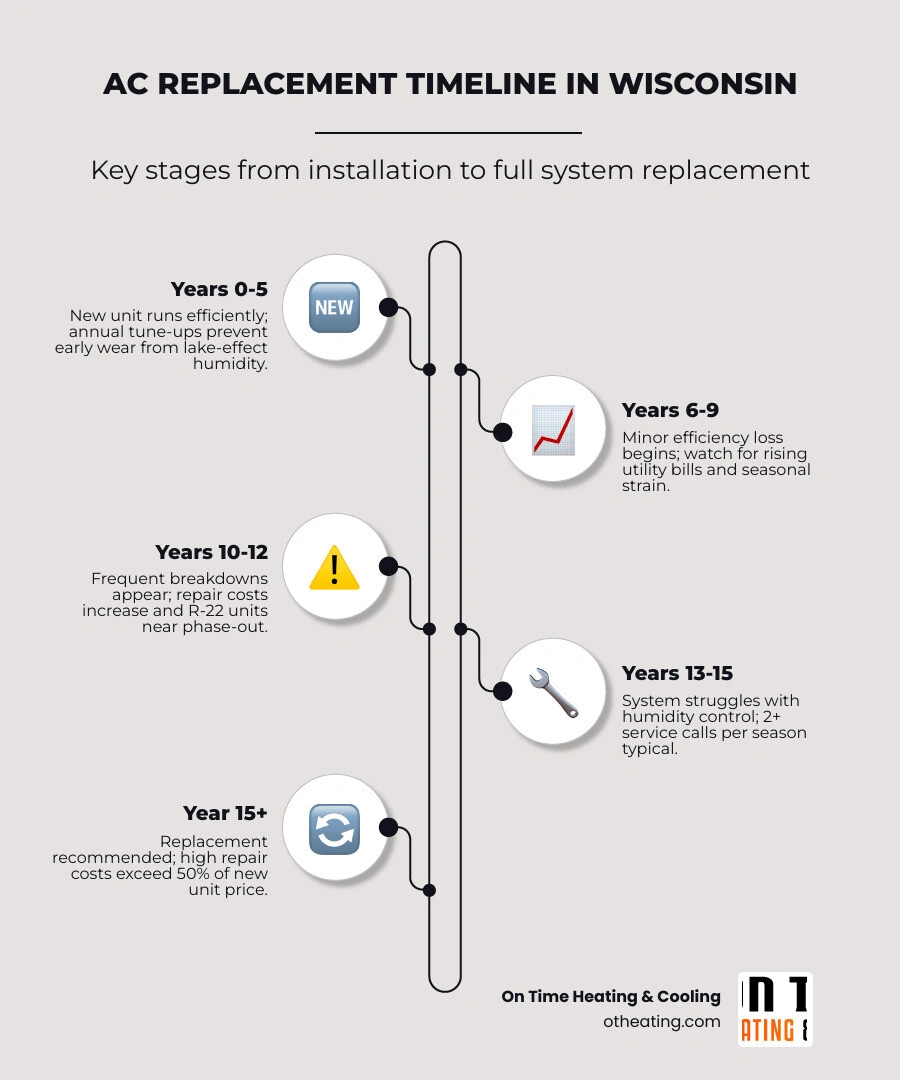
When should you replace your AC in Wisconsin is one of the most common questions homeowners in Menomonee Falls, Waukesha, and across Southeast Wisconsin ask — especially when a heatwave hits and the system starts struggling. The short answer: most central air conditioners last 10 to 15 years, and several clear warning signs tell you when repair no longer makes sense.
Here is a quick reference to help you decide:
| Situation | Recommended Action |
|---|---|
| AC is under 10 years old, minor issue | Repair |
| AC is 10-12+ years old with rising bills | Evaluate replacement |
| Repair cost exceeds 30-50% of replacement cost | Replace |
| Unit uses R-22 refrigerant | Replace |
| Frequent breakdowns (2+ per season) | Replace |
| Major component failure on aging unit | Replace |
Wisconsin's climate is harder on cooling systems than many homeowners realize. The combination of humid summers near Lake Michigan, sudden temperature spikes, and long winter dormancy puts serious stress on AC equipment every year. A unit that might last 15 to 18 years in a drier climate can wear out significantly sooner here in Southeast Wisconsin.
Whether your system is limping through its 12th summer or you just got hit with a repair bill that made you pause, this guide walks you through every factor you need to weigh — from refrigerant phase-outs and energy efficiency ratings to timing your replacement before an emergency forces your hand.
When should you replace your ac in wisconsin further reading:
- how long does an ac last in wisconsin
- how seasonal extremes affect ac lifespan
- how to extend the life of your ac in the midwest
Typical Lifespan of a Wisconsin Air Conditioner
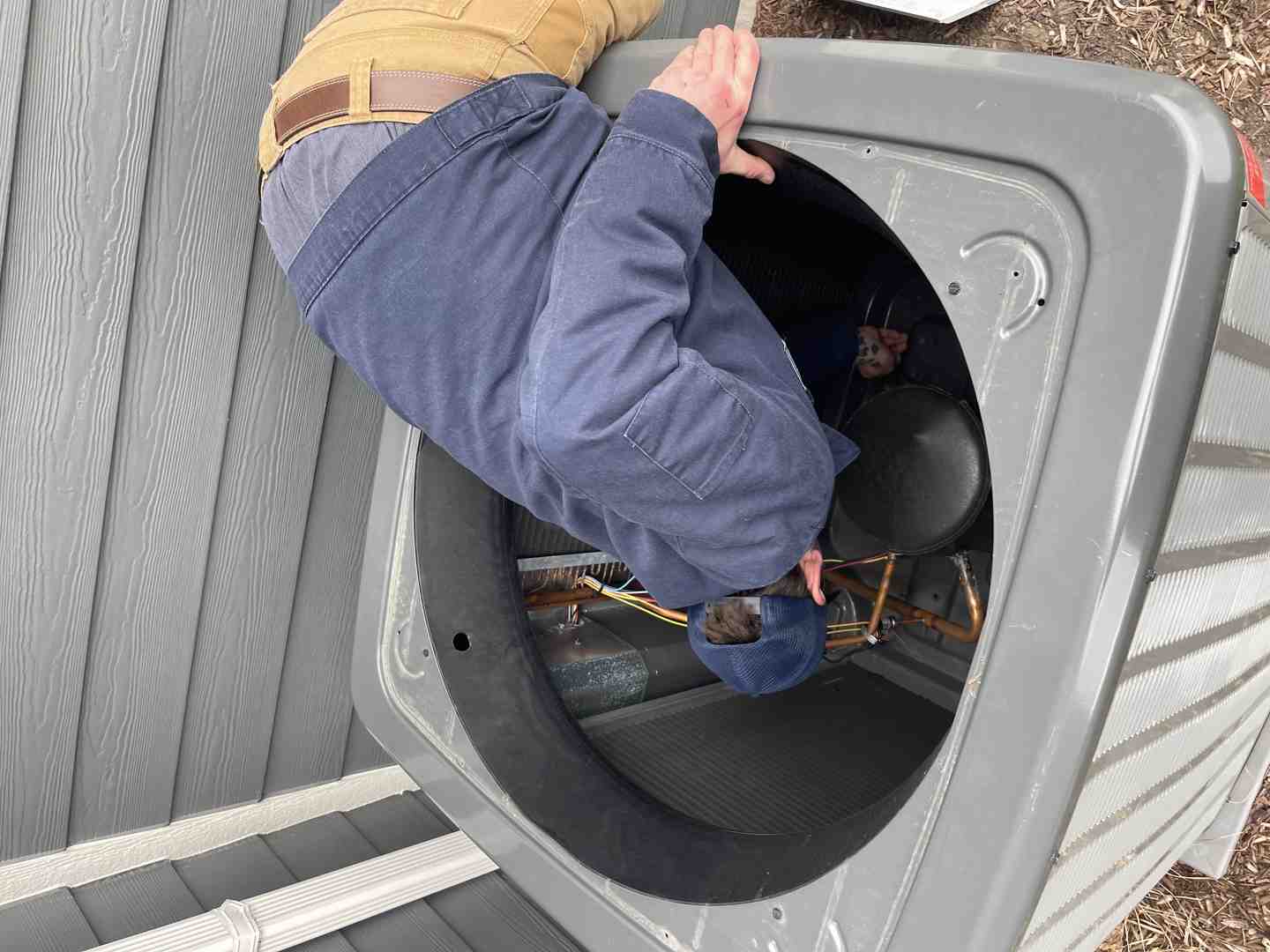
While the national average lifespan for a central air conditioning unit is often cited as 15 to 20 years, local conditions in Southeast Wisconsin paint a different picture. In our region, homeowners should realistically expect a service life of 10 to 12 years for air conditioners and heat pumps.
Our unique Midwest climate plays a major role in this accelerated timeline. Unlike southern states where air conditioners run almost continuously for nine months of the year, Wisconsin systems sit completely idle during our long, freezing winters. While you might think this dormancy would preserve the equipment, it actually introduces a different set of challenges.
When a mechanical system sits unused for six months, lubricants settle, seals can dry out, and outdoor electrical components are exposed to extreme freezing temperatures, heavy snow, and ice. When spring finally arrives, the sudden transition to high summer humidity forces these dormant systems to go from zero to one hundred overnight. To learn more about how our local weather shapes your equipment's longevity, read our detailed breakdown on How Long Does an AC Last in Wisconsin.
Key Factors Affecting Lifespan in Southeast Wisconsin
Several environmental and physical factors dictate exactly how long your cooling system will keep your home comfortable:
- Condensation and Humidity Buildup: Our proximity to Lake Michigan brings intense summer humidity. Your air conditioner is responsible for removing moisture from the air as well as cooling it. This constant dehumidification process creates significant condensation inside the indoor cabinet, which can lead to premature rust, corrosion of the evaporator coil, and clogged condensate drain lines.
- Winter Exposure: Heavy snow accumulation, ice dams, and freezing temperatures can physically damage the outdoor condenser unit. Falling icicles from rooflines can dent cabinets or damage fan blades, while salt and moisture from winter winds accelerate the deterioration of aluminum coils.
- Lack of Consistent Maintenance: Because our cooling season is relatively short, it is easy to skip annual maintenance. However, running a system with dirty coils or clogged filters causes the compressor to run hotter and work harder, shaving years off its operating life.
- Sizing Discrepancies: Many older homes in historic neighborhoods across Southeast Wisconsin have systems that were improperly sized during installation. An oversized unit will short-cycle (turn on and off too rapidly), which wears out the compressor prematurely. An undersized unit will run constantly, burning through electrical components.
Warning Signs: When Should You Replace Your AC in Wisconsin?
It is rarely a single catastrophic failure that tells you it is time to upgrade. Usually, an aging air conditioner drops clues over several seasons. Recognizing these warning signs early can save you from a stressful, hot weekend waiting for emergency service during a July heatwave.
If you are noticing that your home feels sticky even when the AC is running, or if you are constantly adjusting the thermostat to stay comfortable, your system is likely sending you a message. For a closer look at these subtle indicators, explore our guide on the Signs Home Needs a New AC System.
Let's look at the most common indicators that your cooling system is reaching the end of its reliable service life:
- Inconsistent Temperatures and Weak Airflow: If some rooms in your home feel like iceboxes while others remain warm and humid, your system is struggling to distribute air evenly. This is often a sign of a failing blower motor or a compressor that can no longer pump refrigerant efficiently.
- Unusual Noises or Odors: Squealing, grinding, or rattling noises coming from your outdoor condenser indicate failing bearings, a bad fan motor, or a compressor on its last legs. Musty smells point to mold growth inside the dark, damp evaporator coil area, while burning smells indicate electrical malfunctions.
- Frequent Breakdowns: If you have had to call a technician twice or more in a single summer for minor repairs—like replacing blown capacitors, fixing contactors, or patching small leaks—your system is entering a phase of cascading failures.
Recognizing Efficiency Loss and Rising Utility Bills
As air conditioners age, they naturally lose efficiency. Mechanical wear, dirty internal components, and minor refrigerant loss mean the system must run longer to achieve the same level of cooling.
If you notice your electric bills climbing month-over-month compared to the same period in previous years—even though your cooling habits and the outdoor temperatures have remained relatively consistent—your AC is likely wasting energy. Modern systems are engineered to operate at peak efficiency, whereas an older, degraded system might only be delivering a fraction of its original cooling capacity while consuming maximum power.
Additionally, Southeast Wisconsin utility rates have seen steady upward adjustments, meaning an inefficient air conditioner will impact your wallet even more severely. When a system begins short-cycling or running continuously without lowering the indoor humidity, it is a clear sign that the equipment is no longer viable.
The Impact of Phased-Out Refrigerants on Older Systems
Environmental regulations have fundamentally changed how we handle older air conditioning repairs. If your cooling system was installed before 2010, it almost certainly uses R-22 Freon. The U.S. Environmental Protection Agency (EPA) fully phased out the production and import of R-22. Because the supply of R-22 is extremely limited, repairing a system with a refrigerant leak has become incredibly expensive.
Furthermore, the industry has transitioned away from R-410A (the refrigerant that replaced R-22) in new equipment manufactured after 2025. This means that while R-410A remains available for servicing existing systems, parts and refrigerant costs for these units will steadily rise over the coming decade.
If your older unit develops a leak in the evaporator coil or compressor, investing in a temporary recharge of phased-out refrigerant is rarely a smart financial decision. Upgrading to a modern system utilizing eco-friendly refrigerants like R-454B or R-32 ensures long-term parts availability and protects you from soaring repair costs.
Repair vs. Replacement: Making the Right Decision
When faced with a sudden breakdown, you must decide whether to patch the current system or make the investment in a brand-new unit. It helps to look at this decision through a structured financial lens rather than reacting in a moment of frustration.
Consider how long you plan to stay in your home, the remaining warranty coverage on your current system, and the overall reliability of your equipment. To weigh these variables side-by-side, check out our comprehensive resource, Should I Repair or Replace My HVAC System.
Applying the 5,000 Rule to Determine When Should You Replace Your AC in Wisconsin
A reliable industry standard for navigating this choice is the 5,000 Rule. This simple mathematical formula helps homeowners determine when a repair is no longer financially sound.
To apply the rule, multiply the age of your air conditioner by the estimated cost of the repair:
Age of System (Years) x Cost of Repair = Decision Factor
- If the result is under 5,000, repairing the unit is generally reasonable.
- If the result is over 5,000, your money is better spent on a replacement.
For example, if you have a 12-year-old system that needs a compressor replacement:
12 years x $1,200 repair cost = 14,400
Because 14,400 is well over the 5,000 threshold, replacing the unit is the more sensible long-term financial decision. Conversely, if a 5-year-old system needs a basic capacitor replaced:
5 years x $250 repair cost = 1,250
In this scenario, a quick repair makes perfect sense, especially since the system may still be protected under its manufacturer's parts warranty.
Evaluating SEER2 Ratings and Environmental Standards to Decide When Should You Replace Your AC in Wisconsin
Energy efficiency is measured by the Seasonal Energy Efficiency Ratio (SEER). In recent years, the Department of Energy transitioned to a stricter testing standard known as SEER2.
Older air conditioners operating in Southeast Wisconsin homes may have SEER ratings as low as 10 or 13. By comparison, modern entry-level systems start at 13.4 SEER2 (equivalent to roughly 14.3 SEER), with high-efficiency variable-speed models reaching well over 20 SEER2. Upgrading from an old, inefficient system to a modern SEER2-compliant unit can slash your cooling energy consumption by 30% to 50%.
Additionally, the federal government offers robust financial incentives to encourage energy-efficient upgrades. Under the Energy Efficient Home Improvement Credit, homeowners can claim a 30% federal tax credit (up to a designated cap) on qualifying high-efficiency air conditioners and heat pumps. When combined with local utility rebates, these incentives significantly lower the net cost of an upgrade. To explore how these efficiency standards translate into everyday comfort and savings, read our guide on When to Consider a Full AC System Upgrade.
Planning Your AC Replacement in Southeast Wisconsin
Replacing an air conditioner is not a one-size-fits-all project. A successful installation requires careful planning, accurate load calculations, and attention to local building codes.
Many older homes in our region require a thorough evaluation of existing ductwork to ensure it can handle the airflow of a modern, high-efficiency system. If your ducts are leaky or undersized, even the best air conditioner will fail to deliver the comfort and savings you expect. For a step-by-step look at what to expect during this process, check out our AC Replacement New Berlin Guide.
Localized Replacement Solutions in Waukesha County
Every community in Southeast Wisconsin has its own architectural styles and local municipal codes. For example, homes in historic sections of Waukesha may have plaster walls and lack existing ductwork, requiring specialized solutions like ductless mini-split systems. Meanwhile, sprawling multi-level homes in Brookfield often benefit from multi-zone cooling systems to eliminate hot second floors.
Local building codes also dictate specific requirements for condensate drainage, electrical disconnect placements, and outdoor unit clearances. Working with a contractor who understands these regional nuances is essential for a seamless installation. We are proud to provide tailored cooling solutions across our entire service area:
- Review our specialized services for Air Conditioning AC Replacement Waukesha WI.
- Learn about our custom comfort solutions for Air Conditioning AC Replacement Brookfield WI.
- Explore options for Air Conditioning AC Replacement Sussex WI.
Proactive Replacement vs. Emergency Summer Breakdowns
The worst time to replace your air conditioner is when it fails completely on a humid, 90-degree afternoon in July. In peak summer, HVAC contractors are flooded with emergency repair calls, meaning you may have to wait days just to get a technician to your home, and even longer for equipment delivery.
Opting for a proactive replacement in the spring or fall offers several key advantages:
- Flexible Scheduling: You can schedule the installation at a time that is convenient for you, rather than reacting to an emergency.
- Thoughtful Decision-Making: You have the time to research different models, evaluate indoor air quality accessories, and choose the perfect system for your budget without the pressure of a boiling hot house.
- Better Comfort and Peace of Mind: You can head into the summer months knowing your home is protected by a reliable, warranty-backed system.
To see how upgrading your system before a crisis improves your daily life, read about How AC Replacement Can Improve Home Comfort.
Frequently Asked Questions About AC Replacement
How does Wisconsin's humidity affect my air conditioner's lifespan?
High humidity forces your air conditioner to work twice as hard. Because humid air holds more heat, the system must run longer cycles to lower the indoor temperature. This constant moisture removal places heavy strain on the evaporator coil and condensate drain system. Over time, this elevated workload accelerates mechanical wear and can lead to premature system failure compared to identical units running in drier climates.
Is it better to replace my furnace and AC at the same time?
In most cases, yes. Your furnace and air conditioner share the same blower motor to distribute air throughout your home. If you connect a brand-new, high-efficiency AC to an old, inefficient furnace blower, you will not achieve the full efficiency or comfort benefits of your new system. Replacing both units simultaneously also saves you money on labor costs, as our team only needs to modify your ductwork and electrical connections once. For more help making this decision, read our guide on Choosing Between Furnace Repair and Replacement.
What are the benefits of upgrading to a high-SEER2 system?
Upgrading to a high-SEER2 system delivers lower energy bills, quieter operation, and superior humidity control. Many high-efficiency systems feature variable-speed compressors, which adjust their cooling output in real-time to match the exact needs of your home. This prevents temperature swings, eliminates hot spots, and pairs perfectly with modern smart thermostats for maximum control over your indoor environment.
Conclusion
Deciding when should you replace your ac in wisconsin does not have to be a stressful guessing game. By keeping an eye on your system's age, tracking your monthly utility bills, and watching for the warning signs of mechanical decline, you can make an informed, proactive decision that protects your home's comfort and your family's budget.
At On Time Heating & Cooling, we are dedicated to helping our neighbors in Menomonee Falls, Waukesha, Brookfield, and throughout Southeast Wisconsin find the perfect comfort solutions. We pride ourselves on our absolute punctuality, transparent and honest diagnostics, and old-school customer service. When you work with our factory-trained technicians, you will never have to worry about high-pressure sales tactics or hidden fees.
For ultimate peace of mind and ongoing system protection, ask us about joining our On The Dot Club membership, which features priority scheduling, exclusive discounts, and annual precision tune-ups to keep your equipment running at peak efficiency.
Are you ready to enjoy worry-free summer comfort? Schedule your professional AC consultation today with the team at On Time Heating & Cooling, or call us to request a free second opinion on any major system diagnostic.
Related Articles
 Maintenance
Melting the Mystery of Frozen AC Units
Fix ice forming on your ac unit causes and what to do. Learn how to defrost your system and prevent costly damage today.
Read Article Maintenance
How to Stop AC Running Constantly in Wisconsin Heat Waves
Discover why your AC runs constantly during Wisconsin heat waves and learn proven fixes to restore comfort and cut energy costs.
Read Article Maintenance
5 Common AC Repairs and What Causes Them
Discover the most common AC repairs and what causes them in Brookfield WI homes, plus DIY checks and repair-or-replace tips from local pros.
Read ArticleNeed HVAC help?
Whether you need a repair, maintenance, or a new installation, our expert team is here to help.