A – Z Guide to How Dryer Vent Cleaning Improves Dryer Efficiency
Discover how dryer vent cleaning improves dryer efficiency, cuts energy use, and prevents fire hazards with professional vent service.
Shane Herro
Owner & Lead Tech

Discover how dryer vent cleaning improves dryer efficiency, cuts energy use, and prevents fire hazards with professional vent service.
Why Dryer Vent Cleaning Is the Key to a More Efficient Home
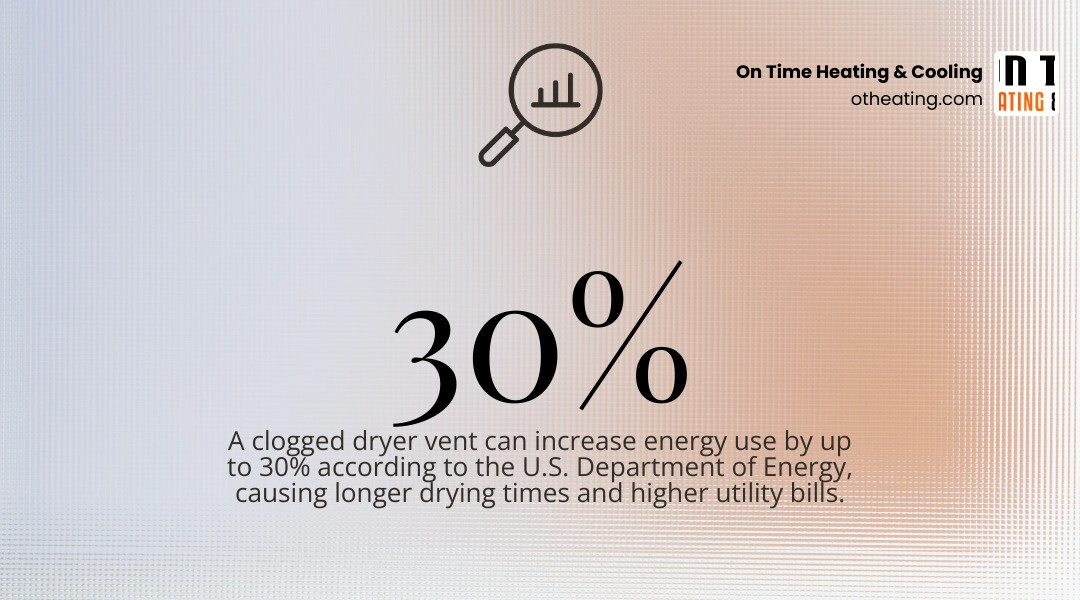
Understanding how dryer vent cleaning improves dryer efficiency is simpler than most homeowners expect — and the impact is immediate. When lint accumulates inside your dryer's exhaust duct, hot moist air can't escape freely. Your dryer has to run longer, work harder, and use significantly more energy just to do the same job. According to the U.S. Department of Energy, a clogged dryer vent can cause your appliance to use up to 30% more electricity or gas per load.
Here's a quick summary of how cleaning your dryer vent improves efficiency:
- Shorter drying times — Restored airflow lets moisture escape quickly, so clothes dry in one cycle
- Lower energy bills — Your dryer doesn't have to compensate for restricted airflow
- Less wear on your appliance — Reduced strain means fewer breakdowns and a longer lifespan
- Safer operation — Cleared vents reduce heat buildup, fire risk, and carbon monoxide concerns
- Better fabric care — Less time tumbling in excess heat means less damage to your clothes
Most homeowners in Menomonee Falls, WI assume that emptying the lint trap after every load is enough. It isn't. The lint trap only captures about 80% of fibers — the rest travels deeper into the vent duct and builds up over time. That hidden buildup is where the real efficiency loss happens, and where real safety risks begin.
At On Time Heating & Cooling, we see this problem regularly across Southeast Wisconsin. Clothes taking 90 minutes to dry. Dryers running multiple cycles per load. Appliances shutting off from overheating. In almost every case, the culprit isn't the dryer itself — it's a vent that hasn't been cleaned in years.
This guide covers everything you need to know about dryer vent cleaning: how it works, what it prevents, and how to know when it's time to call a professional.
Essential how dryer vent cleaning improves dryer efficiency terms:
- clean a dryer vent duct
- dryer vent cleaning benefits and fire prevention
- how often should you have your dryer vent cleaned
What Is Dryer Vent Cleaning vs. Emptying the Lint Trap?
It is incredibly common to confuse the lint screen inside your dryer drum with the actual dryer vent system. However, these two components serve entirely different purposes.
The mesh lint trap inside your dryer is your first line of defense. It is designed to catch larger pieces of fabric fuzz and hair before they enter the exhaust stream. While it does a fantastic job of trapping about 80% of those loose fibers, the remaining 20% escapes past the screen. This fine, lightweight lint travels directly into the internal transition hose and moves down the rigid metal ductwork that heads to the outside of your house.
Over the course of a year, this 20% escape rate adds up to a massive amount of debris. As the warm, moist air cools on its journey outside, the damp lint sticks to the inner walls of your ductwork. It gathers at elbows, settles in long horizontal runs, and clings to the exterior vent flap.
When we talk about professional dryer vent cleaning, we are referring to the thorough removal of this deep buildup throughout the entire length of the ductwork. While cleaning your lint trap is a daily chore you should do after every single load, cleaning the actual ductwork requires specialized tools to clear out the stubborn airflow blockages that collect deep inside the walls of your home. If you want to know how to tackle the basic parts of this process, you can read our step-by-step breakdown on how to clean a dryer vent duct.
How Dryer Vent Cleaning Improves Dryer Efficiency
To understand why a clean vent is so critical, it helps to look at how a dryer actually operates. A clothes dryer is essentially a simple machine that relies on a delicate balance of three elements: heat, airflow, and drum rotation.
When your dryer runs, it heats up the air and tumbles your clothes. As the hot air circulates, it absorbs moisture from the wet fabric. To keep the drying process going, this saturated, humid air must be rapidly pushed out of the dryer and exhausted through the vent line.
If the vent line is restricted by lint, that humid air has nowhere to go. It gets trapped inside the drum, meaning your clothes are essentially spinning in a warm, muggy sauna. Because the moisture cannot escape, the dryer has to run for a second or even third cycle to get the clothes completely dry.
This restricted airflow forces your appliance to work under constant, heavy strain. The motor has to push harder against the backpressure, the heating element stays active for twice as long, and your utility bills climb. The Department of Energy estimates that a clogged dryer uses roughly 30% more energy than a clean one. By clearing the path, you immediately reduce energy consumption, shave money off your monthly power bills, and save valuable time on laundry day. To dive deeper into these mechanical advantages, check out our article on the benefits of regular vent cleaning.
Below is a direct comparison of how a clogged vent limits your appliance compared to a clean, optimized system:
| Performance Metric | Clogged Dryer Vent System | Clean Dryer Vent System |
|---|---|---|
| Average Cycle Time | 70 to 90+ minutes (often requiring multiple runs) | 35 to 50 minutes (consistently dry in one cycle) |
| Energy Consumption | Up to 30% higher electricity or gas usage | Baseline, highly efficient energy consumption |
| Operating Temperature | Excessively hot drum and exterior cabinet | Moderately warm, balanced operating temperatures |
| Fabric Wear & Tear | High (prolonged exposure to heat damages fibers) | Low (minimal heat exposure preserves clothing) |
| Appliance Lifespan | Shortened due to motor and heating element strain | Maximized (less wear on internal components) |
The Hidden Risks of Clogged Dryer Vents
While the drop in efficiency is frustrating for your schedule and your wallet, the safety risks of a clogged dryer vent are far more serious. Neglecting this simple home maintenance task can lead to major safety hazards, including devastating residential fires, dangerous carbon monoxide exposure, and hidden mold growth.
For essential safety advice, take a look at our dryer vent cleaning safety tips for homeowners. Understanding these hazards can help you protect your family and keep your home safe.
How Dryer Vent Cleaning Improves Dryer Efficiency and Prevents Fire Hazards
Did you know that dryer lint is one of the most highly flammable materials found in a home? In fact, it makes an excellent campfire starter because it ignites with the slightest spark.
When a vent is clogged, the restricted airflow causes heat to accumulate rapidly inside the dryer cabinet. The temperature can rise to unsafe levels, overheating the drum and the heating element. When this excess heat meets the highly flammable lint packed inside the ductwork, the risk of ignition climbs sharply.
According to the National Fire Protection Association (NFPA), clothes dryers are responsible for nearly 17,000 home structure fires every year. Shockingly, the leading cause of these fires—accounting for roughly one-third of all incidents—is a failure to clean the dryer vents. Regular maintenance completely removes this fuel source, giving you peace of mind. To understand the relationship between airflow and fire prevention, read more about dryer vent cleaning benefits and fire prevention and learn when to schedule vent cleaning.
Preventing Carbon Monoxide and Mold Risks
For households in communities like Brookfield, WI or Pewaukee, WI that utilize gas dryers, a clogged vent presents a silent, deadly hazard: carbon monoxide (CO) poisoning. Gas dryers produce carbon monoxide as a byproduct of combustion. Under normal operating conditions, this colorless, odorless gas is safely vented outside.
However, if your exhaust duct is blocked by lint, nests, or debris, backdrafting can occur. This forces the toxic gas back into your laundry room and living areas. Keeping your vents completely clear is a crucial step in preventing carbon monoxide hazards.
Additionally, blocked vents trap gallons of water vapor inside the ductwork. If this warm moisture cannot escape to the outdoors, it will condense inside the pipe, creating a damp environment. Over time, this trapped moisture leads to mold and mildew growth inside your walls or ceiling cavities, which can significantly damage your home’s structure and ruin your indoor air quality.
Professional vs. DIY Dryer Vent Maintenance
When homeowners realize their dryer is running inefficiently, they often consider purchasing a cheap DIY vent cleaning kit from a local home improvement store. While these kits can be helpful for short, straight vent runs, they often fall short on more complex systems and can sometimes cause more harm than good.
A professional dryer vent cleaning service is vastly different from a DIY attempt. Professionals use commercial-grade rotary brushes attached to flexible, heavy-duty rods that can navigate multiple 90-degree bends without snapping. Crucially, these tools are paired with high-powered HEPA-filtered vacuum systems that operate under negative air pressure. This setup ensures that all loosened lint is immediately captured and extracted from your home, rather than being pushed further into the duct or blown into your living space.
If a DIY brush is forced too hard around a tight corner inside a wall, it can easily puncture flexible foil ducts or completely disconnect joint connections. When a duct disconnects inside a wall cavity, the dryer will exhaust hot, humid air and lint directly into your home's framing, creating a massive fire and mold hazard that is incredibly difficult to detect. For more insights into why a professional touch makes a difference, explore the benefits of professional vent cleaning and read as our professionals explain vent cleaning.
How Dryer Vent Cleaning Improves Dryer Efficiency Better Than DIY Kits
The primary advantage of professional cleaning is the ability to thoroughly clear complex, long duct runs. Many modern homes in Southeast Wisconsin are designed with laundry rooms located on the second floor or in the center of the house. This layout requires the exhaust duct to travel 20 to 35 feet through walls, floor joists, and attic spaces before terminating on the roof or an exterior wall.
These long runs contain multiple elbows and bends where lint naturally settles and compacts. DIY kits simply cannot reach these areas safely or effectively.
Furthermore, professional technicians don't just guess if the line is clean—we perform comprehensive airflow testing before and after the service. By measuring the static backpressure and air velocity (in cubic feet per minute, or CFM), we can verify that the system has been restored to its original factory specifications. To see how we ensure your system is operating at peak performance, take a look at what we do during vent cleaning.
Frequently Asked Questions about Dryer Vent Cleaning
We receive many questions from homeowners in Waukesha, Germantown, and Oconomowoc about keeping their laundry systems running efficiently. Here are some of the most common questions we answer:
How often should you have your dryer vent cleaned?
For most standard households, we recommend having your dryer vent professionally inspected and cleaned at least once a year. However, this frequency can change based on several factors.
If you have a large family, do multiple loads of laundry every day, or share your home with shedding pets, lint will accumulate much faster. Under these conditions, scheduling a cleaning every six months is highly beneficial. Long, winding duct runs or systems that vent vertically through the roof also require more frequent attention because gravity makes it harder for the dryer to push lint all the way out. For more details on setting the right schedule for your home, read our guide on how often should you have your dryer vent cleaned.
What are the signs that my dryer vent is clogged?
Your dryer will usually give you several warning signs when the vent line is beginning to clog. Keep an eye out for these key symptoms:
- Longer dry cycles — Clothes take more than one standard cycle to dry completely.
- Excessive heat — The dryer's exterior cabinet, laundry room, or dry clothes feel unusually hot to the touch.
- A musty or burning smell — You notice a distinct burning odor or a damp, musty smell in your laundry room.
- Visible lint accumulation — You can see lint spilling out of the duct connections or clogging the exterior vent hood flap.
- The exterior flap doesn't open — The vent flap on the outside of your house stays closed or barely flutters when the dryer is running.
Does cleaning the dryer vent protect my appliance warranty?
Yes, absolutely. Many major appliance manufacturers explicitly state in their warranty terms that the homeowner is responsible for performing regular, proper maintenance. If your dryer breaks down due to overheating caused by a clogged vent, the manufacturer may deny your warranty claim.
Keeping records of annual professional vent cleanings protects your warranty and extends the overall lifespan of your dryer. It keeps internal components like the heating element, thermal fuse, and motor from burning out prematurely.
Conclusion
Regular dryer vent cleaning is not a luxury home service—it is an essential maintenance task that directly impacts your home's safety, your energy bills, and the lifespan of your appliances. By ensuring that hot, moist air can flow freely out of your home, you can significantly reduce drying times, protect your clothing from heat damage, and lower your monthly utility costs.
At On Time Heating & Cooling, we are proud to serve communities across Southeast Wisconsin, including Menomonee Falls, New Berlin, Sussex, Cedarburg, and Mequon. Our commitment to absolute punctuality, combined with our factory-trained technicians and old-school customer service, ensures that your home maintenance tasks are handled correctly the very first time. We can also help you understand how clean vents enhance your HVAC system's overall airflow and efficiency.
Don't let a clogged vent waste your energy, time, and money. Contact us today to join our "On The Dot Club" for routine maintenance, or Schedule Professional Dryer Vent Services to get your system running safely and efficiently.
Related Articles
 Maintenance
Melting the Mystery of Frozen AC Units
Fix ice forming on your ac unit causes and what to do. Learn how to defrost your system and prevent costly damage today.
Read Article Maintenance
How to Stop AC Running Constantly in Wisconsin Heat Waves
Discover why your AC runs constantly during Wisconsin heat waves and learn proven fixes to restore comfort and cut energy costs.
Read Article Maintenance
5 Common AC Repairs and What Causes Them
Discover the most common AC repairs and what causes them in Brookfield WI homes, plus DIY checks and repair-or-replace tips from local pros.
Read ArticleNeed HVAC help?
Whether you need a repair, maintenance, or a new installation, our expert team is here to help.