Melting the Mystery of Frozen AC Units
Fix ice forming on your ac unit causes and what to do. Learn how to defrost your system and prevent costly damage today.
Shane Herro
Owner & Lead Tech

Fix ice forming on your ac unit causes and what to do. Learn how to defrost your system and prevent costly damage today.
Why Ice Forming on Your AC Unit Is a Warning Sign You Shouldn't Ignore
Ice forming on your ac unit causes and what to do is something every homeowner in Menomonee Falls, WI should understand — especially heading into the peak cooling months of Summer 2026. It seems almost impossible: your AC is supposed to fight the heat, so why is it turning into a block of ice? The short answer is that ice on your AC is never normal. It always means something is wrong inside your system, and ignoring it can lead to costly compressor damage or a complete breakdown.
Here is a quick overview of the most common causes and what to do right away:
Common causes of ice on your AC unit:
- Dirty or clogged air filter restricting airflow over the evaporator coil
- Blocked or closed supply and return vents
- Low refrigerant levels due to a leak
- Dirty evaporator coils
- Faulty blower fan or motor
- Thermostat issues causing the system to run too long
- Running the AC when outdoor temperatures drop below 60°F
What to do immediately if you see ice on your AC:
- Turn the AC off at the thermostat right away
- Switch the fan setting to "On" (not "Auto") to help melt the ice
- Check and replace your air filter if it looks dirty or clogged
- Make sure all vents and return grilles are open and unobstructed
- Let the ice melt fully — this can take several hours or overnight
- Call a professional HVAC technician if the problem comes back or if you suspect a refrigerant leak
The science behind it is straightforward. Your AC's evaporator coil absorbs heat from the air inside your home. When something disrupts that process — whether it's a dirty filter cutting off warm airflow or low refrigerant dropping the coil temperature too far — the moisture in the air freezes on contact with the coil instead of draining away. Once that ice builds up, it blocks the coil even further, making the problem worse with every passing minute the system keeps running.

Ice Forming on Your AC Unit Causes and What to Do
When we talk about an air conditioner "freezing up," we aren't talking about a light dusting of frost. We are talking about literal blocks of ice encasing your indoor evaporator coil or thick frost trailing down the copper refrigerant lines leading to your outdoor unit. This ice acts as an insulator, preventing the refrigerant from doing its job: absorbing heat.
The result? Your home stays warm, your energy bills skyrocket as the system works overtime, and you risk permanent damage to the compressor—the "heart" of your AC. If you notice visible frost on the cabinet or the outdoor lines, it is a red flag. Furthermore, as that ice eventually melts, it can lead to significant water leaks, damaging your drywall, ceilings, or furnace components. Understanding ice forming on your ac unit causes and what to do is the first step toward protecting your home and your wallet.
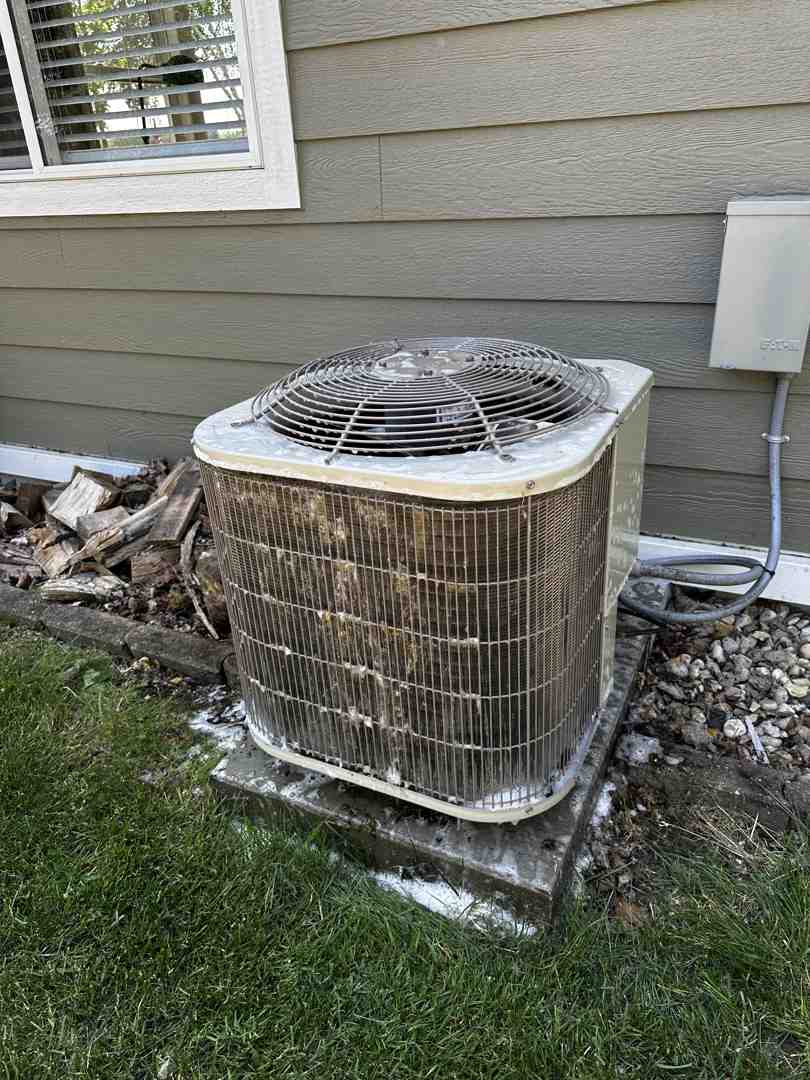
Identifying Ice Forming on Your AC Unit Causes and What to Do Early
You don't always have to see the ice to know there's a problem. Your system will often send out "distress signals" before it completely fails.
- Reduced Airflow: If the air coming out of your vents feels weak or barely there, ice might already be blocking the passages in your evaporator coil.
- Warm Air: If the AC is running but the air is lukewarm, the coils are likely insulated by ice and can no longer absorb heat from your home.
- Strange Noises: Listen for hissing or bubbling sounds, which often indicate a refrigerant leak. You might also hear banging or clanking if ice chunks begin to interfere with the blower fan.
- Short-Cycling: If your unit turns on and off rapidly without reaching the set temperature, it’s struggling to maintain pressure.
- Puddles Near the Furnace: Finding water on the floor around your indoor unit is a classic sign that ice on the coil has started to thaw and has overwhelmed the condensate drain pan.
Professional Solutions for Ice Forming on Your AC Unit Causes and What to Do
While homeowners can handle a filter change, many causes of ice formation require a factory-trained eye. If the ice returns after you've replaced the filter and thawed the system, it's time for professional intervention.
Our technicians at On Time Heating & Cooling use specialized tools for Fixing AC Ice Formation Issues. We perform nitrogen leak testing, where we pressurize the system with dry nitrogen to find pinhole leaks that are invisible to the naked eye. We also handle system calibration, ensuring your thermostat, blower motor, and expansion valve are all working in harmony. Simply "topping off" refrigerant is never the answer; we find the leak, repair it, and ensure the system is charged to exact manufacturer specifications.
Airflow Restrictions: The Number One Culprit
In the HVAC world, airflow is king. If air isn't moving across your evaporator coil, the refrigerant inside stays too cold. Eventually, it drops below 32°F, and the humidity in our Wisconsin air turns into ice.
- Dirty Filters: This is the most common cause of AC Freezing Up. A clogged filter acts like a wall, preventing warm air from reaching the coil. We recommend checking your filter every month and replacing it at least every 90 days—more often if you have pets or high dust levels.
- Blocked Vents and Return Grilles: We often find that homeowners have pushed a couch or a rug over a return vent to save space. This starves the system of air. Follow the 80% vent rule: keep at least 80% of your supply vents open at all times to maintain proper static pressure.
- Blower Motor Failure: If the fan that pushes the air isn't spinning at the right speed (or at all), the coil will freeze almost instantly. This is a common reason Why AC Unit Freezes Up During Spring when systems are first being put to the test after a long winter.
Refrigerant Leaks and Mechanical Failures
Many people think refrigerant is "fuel" that gets used up. In reality, your AC is a closed-loop system. If the refrigerant is low, you have a leak.
When refrigerant levels drop, the pressure inside the evaporator coil also drops. This causes the coil to become much colder than it’s designed to be. As moisture from your home's air hits that super-cooled coil, it freezes. This can lead to "liquid slugging," where liquid refrigerant (instead of vapor) returns to the compressor, causing catastrophic failure.
| Feature | Airflow Issues | Refrigerant Leaks |
|---|---|---|
| Primary Sign | Very weak air from vents | Cold but insufficient air |
| Common Sound | Quiet or struggling fan | Hissing or bubbling |
| Visual Cue | Extremely dirty filter | Oily residue on copper lines |
| Solution | Replace filter/Clean vents | Professional leak repair |
Other mechanical failures can also be the culprit. A faulty thermostat might fail to signal the compressor to shut off, or a failed capacitor might prevent the blower fan from starting while the cooling cycle continues. If you notice oily residue around your refrigerant lines, that’s a sure sign of a leak, as oil circulates with the refrigerant. For these complex issues, Fixing AC Ice Formation Issues requires a certified expert.
Immediate Steps: How to Safely Defrost Your System
If you walk downstairs and see your AC unit looks like a giant popsicle, don't panic, but do act fast.
- System Shutdown: Turn the AC "Off" at the thermostat immediately. Running it while frozen will only damage the compressor.
- Fan-Only Mode: Switch your thermostat fan setting from "Auto" to "On." This keeps the indoor fan running without the cooling cycle, blowing relatively warm air over the ice to speed up the melting process.
- Natural Thawing: Be patient. It can take anywhere from 3 to 24 hours for a heavy ice buildup to melt. Never try to hack away at the ice with a screwdriver or sharp object; you will almost certainly puncture the delicate aluminum fins or copper tubing of the evaporator coil.
- Water Management: As the ice melts, keep an eye on your drain pan. If the ice was thick, the melting water might overflow the pan. Have towels ready and check that your condensate drain line isn't clogged.
- Filter Check: While the system is thawing, replace your air filter. This is the easiest DIY fix for an AC Freezing Up.
Long-Term Prevention and Professional Maintenance
At On Time Heating & Cooling, we believe the best way to deal with a frozen AC is to prevent it from happening in the first place. Serving Menomonee Falls, Waukesha, Brookfield, and the surrounding Southeast Wisconsin areas, we’ve seen how our local humidity and seasonal changes can stress a system.
The most effective prevention is joining our On The Dot Club. Our factory-trained technicians perform annual tune-ups that include cleaning the evaporator and condenser coils, checking refrigerant pressures, and inspecting all electrical components like capacitors and contactors.
Regular maintenance ensures your system is ready for the heat of Summer 2026. We pride ourselves on our punctuality—we know your time is valuable, and we won't leave you waiting in a hot house. Whether you're in New Berlin, Mequon, or Pewaukee, our 24/7 emergency service means we’re always here when you need us most.
Frequently Asked Questions about Frozen AC Units
Can I run my AC while it is frozen?
Absolutely not. Operating a frozen AC is one of the fastest ways to cause permanent compressor failure. The compressor is designed to compress gas, not liquid. When the coils are frozen, the refrigerant doesn't evaporate properly and can return to the compressor as a liquid, causing "slugging" and irreparable harm. If you see ice, shut the system down immediately.
How long does it take to defrost an AC unit?
Thawing time depends on the amount of ice and the ambient temperature inside your home. If you use the "Fan-Only" mode to circulate air, it usually takes about 4 to 6 hours. However, for severe ice buildup, an overnight wait is often necessary to ensure the internal parts of the coil are completely clear before restarting.
Why does my AC freeze up when it is cold outside?
Most central AC systems are not designed to operate when outdoor temperatures are below 60°F. At these lower temperatures, the pressure inside the system drops, which can cause the evaporator coil to fall below the freezing point. This is a common reason Why AC Unit Freezes Up During Spring if you try to run the cooling on a chilly night.
Conclusion
Dealing with ice forming on your ac unit causes and what to do doesn't have to be a mystery. By keeping your filters clean, your vents open, and your system maintained, you can enjoy a comfortable, frost-free home all summer long.
If you’ve discovered ice on your unit and need a reliable, punctual team to get your home back to a comfortable temperature, we are here to help. From Sussex to Muskego and everywhere in between, On Time Heating & Cooling is dedicated to providing Southeast Wisconsin with expert service and peace of mind.
Related Articles
 Maintenance
How to Stop AC Running Constantly in Wisconsin Heat Waves
Discover why your AC runs constantly during Wisconsin heat waves and learn proven fixes to restore comfort and cut energy costs.
Read Article Maintenance
5 Common AC Repairs and What Causes Them
Discover the most common AC repairs and what causes them in Brookfield WI homes, plus DIY checks and repair-or-replace tips from local pros.
Read Article Maintenance
How Duct Cleaning Prevents Mold in Your HVAC System
Learn how duct cleaning prevents mold growth in your hvac system with professional service in Southeast Wisconsin.
Read ArticleNeed HVAC help?
Whether you need a repair, maintenance, or a new installation, our expert team is here to help.