Safety First: Navigating a Home Temperature Crisis
Learn how to stay safe during a heating or cooling emergency: gas leaks, freezes, heat waves, troubleshooting & 24/7 pro tips.
Shane Herro
Owner & Lead Tech

Learn how to stay safe during a heating or cooling emergency: gas leaks, freezes, heat waves, troubleshooting & 24/7 pro tips.
When Your Home Can't Keep Up: Why Knowing How to Stay Safe During a Heating or Cooling Emergency Matters
Knowing how to stay safe during a heating or cooling emergency could be the difference between a stressful night and a life-threatening situation. Extreme heat kills more people each year than any other weather event in the United States — and a sudden furnace failure during a Wisconsin winter brings its own serious risks. For homeowners in Menomonee Falls and across Waukesha County, where temperatures can swing from brutal summer heat waves to dangerous deep freezes, being prepared isn't optional — it's essential.
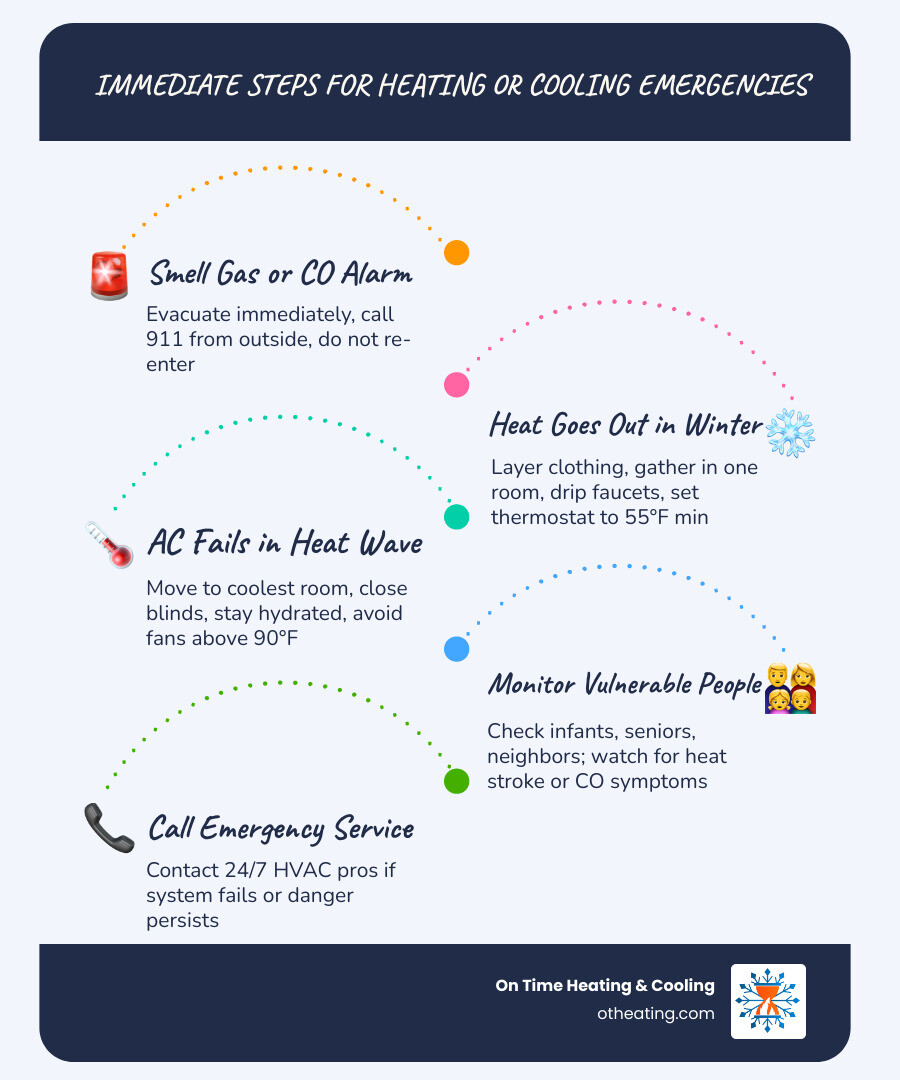
Here's a quick overview of the most important steps to take right now if your heating or cooling system fails:
If you smell gas or your CO alarm sounds:
- Leave the home immediately — do not touch any light switches or electronics
- Call 911 from outside or a neighbor's home
- Do not re-enter until emergency services clear the building
If your heat goes out in winter:
- Layer clothing and gather in one room to conserve warmth
- Use a UL-approved electric space heater, kept 3 feet from anything flammable
- Let faucets drip slowly to prevent pipes from freezing
- Keep your thermostat set to at least 55°F
- Call a 24/7 HVAC emergency service
If your AC fails during a heat wave:
- Move to the coolest room in the house, ideally a lower floor
- Close blinds and curtains to block sunlight
- Stay hydrated — drink water regularly even if you don't feel thirsty
- Avoid using fans if indoor temperatures are above 90°F — they won't cool you down and can accelerate dehydration
- Find a local cooling center if your home becomes dangerously hot
- Check on children, elderly family members, and neighbors
Call 911 immediately if anyone shows signs of heat stroke (body temperature above 103°F, hot dry skin, confusion) or carbon monoxide poisoning (headache, dizziness, nausea).
When your HVAC system fails at the worst possible moment, panic is a natural first reaction. But having a clear, simple plan in place means you can act fast, protect your household, and get the right help on the way — without making the situation worse.
Essential Protocols: How to Stay Safe During a Heating or Cooling Emergency

When we talk about an HVAC emergency, we aren’t just talking about being "uncomfortable." A true emergency involves a direct threat to your health, safety, or the structural integrity of your home. In Southeast Wisconsin, this often means a total system failure during a January deep freeze or a July heat wave.
However, some emergencies are more subtle but far more deadly. Carbon monoxide (CO) is a colorless, odorless gas that can leak from cracked heat exchangers or blocked vents. Because you can't see or smell it, working CO detectors on every level of your home—especially near sleeping areas—are your first line of defense. If that alarm sounds, it is a non-negotiable emergency. Similarly, a furnace that is sparking, smoking, or making loud grinding noises should be shut down immediately via the circuit breaker to prevent a house fire. For those in a crisis, our Emergency Furnace New Berlin WI Guide offers specific local insights on handling these high-stress moments.
How to stay safe during a heating or cooling emergency if you smell gas
Natural gas companies add a chemical called mercaptan to gas lines, which gives it a distinct "rotten eggs" smell. If you catch even a whiff of this inside your home, do not stop to investigate.
- Evacuate immediately: Get every person and pet out of the house.
- Don't touch anything: Do not flip light switches, use the phone, or even open the garage door. A single spark can ignite the gas.
- Call from a distance: Once you are at least 100 feet away, call 911 and your gas utility provider.
- Wait for the "All Clear": Never go back inside until emergency responders tell you it is safe.
Proactive care is the best way to avoid these scares. Our Emergency Furnace Maintenance Guide Brookfield WI explains how regular checks can catch leaks before they become life-threatening.
How to stay safe during a heating or cooling emergency with infants or seniors
Vulnerable populations, including infants, the elderly, and those with chronic medical conditions, are at much higher risk during a temperature crisis. Their bodies often struggle to regulate internal temperature as efficiently as healthy adults.
For seniors, extreme cold can lead to hypothermia even indoors if temperatures drop below 60°F. For infants, overheating is a significant risk factor for respiratory distress. If your cooling fails in the summer, ensure these family members stay hydrated and move them to a basement or a local cooling center. If they rely on electric-powered medical equipment, like oxygen concentrators, your emergency plan must include a backup power source or a pre-arranged location they can go to immediately. For those in New Berlin facing a summer outage, our 24-hour AC Repair New Berlin WI Guide can help get your home back to a safe temperature quickly.
Surviving the Deep Freeze: Winter Heating Crisis Management
In April 2026, we still look back at how brutal Wisconsin winters can be. When the furnace quits at 2 AM and the wind chill is well below zero, your home's temperature can drop dangerously fast. Beyond the risk to your family, your plumbing is in immediate jeopardy.
To protect your home, start by opening cabinet doors under sinks to allow the remaining household heat to circulate around the pipes. Let your faucets—both hot and cold—drip slowly. This constant movement of water makes it much harder for pipes to freeze and burst. If you find yourself in this situation in Waukesha, our 247-furnace-repair-waukesha-guide is a vital resource for immediate help.
| Heating Method | Safe? | Precautions |
|---|---|---|
| Electric Space Heater | Yes | Must be UL-listed; keep 3 feet from curtains/furniture. |
| Gas Oven/Stove | NO | High risk of Carbon Monoxide poisoning and fire. |
| Fireplace | Yes | Only if properly vented and monitored; use a screen. |
| Charcoal Grill | NO | Never use indoors; fatal CO buildup occurs rapidly. |
| Layering Clothes | Yes | Use wool or synthetic moisture-wicking fabrics. |
Safe temporary heating alternatives
If you're waiting for a technician, focus on "zoning" your heat. Pick one small room, close all the doors, and hang blankets over the windows to trap as much warmth as possible. Dress in layers, starting with a base layer that wicks moisture away from the skin.
If you use a space heater, follow the "3-foot rule": keep it at least three feet away from anything that can burn, including bedding, paper, and clothing. Always plug space heaters directly into a wall outlet, never an extension cord or power strip, as these can overheat and start a fire. For those considering if their old unit is worth the constant trouble, check out our Emergency Furnace Replacement Delafield Guide.
Protecting your plumbing from freezing
Burst pipes can cause thousands of dollars in water damage in a matter of minutes. Even if your furnace is struggling, try to keep your thermostat set to at least 55°F. If you have outdoor spigots, ensure they are covered with foam protectors. If you suspect a pipe has already frozen, do not use a blowtorch to thaw it! Instead, use a hair dryer or wrap the pipe in towels soaked in hot water. For a permanent solution to a failing system, see our Emergency Furnace Installation Waukesha WI Guide.
Beating the Heat: Summer Cooling Emergency Strategies
Summer heat waves are the silent killers of the weather world. In 2023, heat waves contributed to roughly 2,300 deaths in the U.S., and emergency room visits surged. When the AC dies during a stretch of 90-degree days with high humidity, your home can quickly become an oven.
The first step is to block the sun. Close all drapes and blinds, especially on south- and west-facing windows. If you have window reflectors, use them to bounce the heat back outside. If the heat becomes unbearable, don't hesitate to call for an Emergency AC Repair Waukesha Guide to restore safety to your home.
Recognizing heat-related illnesses
It is vital to know the difference between heat exhaustion and heat stroke.
- Heat Exhaustion: Symptoms include heavy sweating, cold/clammy skin, nausea, and dizziness. Move to a cool place, sip water, and use cool cloths on the body.
- Heat Stroke: This is a life-threatening emergency. Symptoms include a body temperature of 103°F or higher, hot/red/dry skin (no sweating), a rapid pulse, and confusion or loss of consciousness. Call 911 immediately.
While you wait for help, move the person to a cooler area and use ice packs or cool baths to lower their temperature. To prevent these issues, keep up with your 24 Hour AC Maintenance New Berlin WI Tips.
Staying cool without air conditioning
Hydration is your best defense. Drink plenty of water and diluted sports drinks to replenish electrolytes, even if you aren't thirsty. Avoid caffeine and alcohol, which can dehydrate you faster.
A common mistake is relying on fans when it’s extremely hot. Do not direct portable fans toward yourself if the indoor temperature is above 90°F. In these conditions, the fan just blows hot air over your skin, which can actually increase your body temperature and speed up dehydration. If you can't get the house cool, head to a library, mall, or designated cooling center for a few hours. For those using modern systems, our Emergency Heat Pump Repair Waukesha Guide provides specialized help for these versatile units.
Troubleshooting and Professional Intervention
Before you panic-call an emergency technician, there are a few basic checks that could save you a service fee. We see many "emergencies" that turn out to be simple fixes. If your heat pump is acting up in Brookfield, you might find a quick answer in our 24 Hour Heat Pump Repair Brookfield Tips.
Basic HVAC checks before calling for help
- The Thermostat: It sounds simple, but check the batteries. Also, ensure it is set to the correct mode ("Heat" or "Cool") and the temperature is set appropriately.
- The Breaker: Check your electrical panel. If the HVAC breaker has tripped, flip it back once. If it trips again immediately, do not reset it again—this indicates a dangerous electrical fault.
- The Air Filter: A clogged, dirty filter can choke your system, causing a furnace to overheat and shut down or an AC coil to freeze into a block of ice. If you can't see light through your filter, replace it.
- Outdoor Debris: Ensure your outdoor unit is clear of snow, ice, leaves, or tall grass. It needs at least two feet of clearance to "breathe" properly.
- Power Surges: If the power just came back on after a storm, your system might need a reset. Turn it off at the thermostat, wait 30 minutes, and turn it back on.
Regular upkeep prevents these headaches. Our 24 Hour Furnace Maintenance Guide New Berlin WI is a great place to start your prevention plan.
When to call for emergency service
How do you know when it's time to call us? If you experience any of the following, don't wait:
- Safety Risks: Smelling gas, seeing sparks, or seeing smoke.
- Health Risks: If you have vulnerable people in the home and the temperature is reaching extremes (below 60°F or above 85°F).
- Property Damage: If your pipes are at risk of freezing or your AC is leaking water into your ceiling.
- Strange Noises: Loud banging, screeching, or grinding often means a major component is about to fail.
For immediate assistance in Brookfield, see our 24-hour Furnace Repair Brookfield WI Tips.
Frequently Asked Questions
What should I do if my furnace stops working in the middle of the night?
First, check your thermostat batteries and the circuit breaker. If those are fine, gather your family into one room, layer up with blankets, and call a 24/7 emergency HVAC service. Do not use your gas oven for heat. If you have an electric space heater, use it safely following the 3-foot rule.
How long will food stay safe in the refrigerator during a power outage?
According to the Red Cross, an unopened refrigerator will keep food cold for about 4 hours. A full freezer will maintain its temperature for about 48 hours (24 hours if it's only half full). Keep the doors closed as much as possible to trap the cold air inside.
Are fans effective when indoor temperatures exceed 90 degrees?
No. When indoor temperatures rise above 90°F, fans do not lower your body temperature. In fact, they can create a false sense of comfort while actually accelerating dehydration by blowing hot, dry air over your skin. In these temperatures, seeking an air-conditioned environment is the only safe way to prevent heat illness.
Conclusion
At On Time Heating & Cooling, we know that a temperature crisis doesn't happen on a convenient schedule. Whether you are in Menomonee Falls, Waukesha, or anywhere in our Southeast Wisconsin service area, we are committed to being there when you need us most. Our factory-trained technicians prioritize punctuality and safety, ensuring your home is restored to a comfortable haven as quickly as possible.
Don't wait for an emergency to think about your HVAC system. By joining our On The Dot Club, you get the benefit of regular tune-ups that catch small issues before they become midnight disasters. We offer 24/7 emergency service and free second opinions because we believe our neighbors deserve honest, reliable care.
Whether it's a deep winter freeze or a blistering summer afternoon, remember: stay calm, follow your safety protocols, and give us a call. We’ll be there on time, every time.
Related Articles
 Maintenance
Melting the Mystery of Frozen AC Units
Fix ice forming on your ac unit causes and what to do. Learn how to defrost your system and prevent costly damage today.
Read Article Maintenance
How to Stop AC Running Constantly in Wisconsin Heat Waves
Discover why your AC runs constantly during Wisconsin heat waves and learn proven fixes to restore comfort and cut energy costs.
Read Article Maintenance
5 Common AC Repairs and What Causes Them
Discover the most common AC repairs and what causes them in Brookfield WI homes, plus DIY checks and repair-or-replace tips from local pros.
Read ArticleNeed HVAC help?
Whether you need a repair, maintenance, or a new installation, our expert team is here to help.