Stop the Screeching: Decoding Your Air Conditioner's Weird Noises
Decode ac making strange noises what they mean! Fix banging, screeching, hissing & more with our homeowner's guide to urgent AC repairs.
Shane Herro
Owner & Lead Tech

Decode ac making strange noises what they mean! Fix banging, screeching, hissing & more with our homeowner's guide to urgent AC repairs.
What AC Making Strange Noises What They Mean — and When to Worry
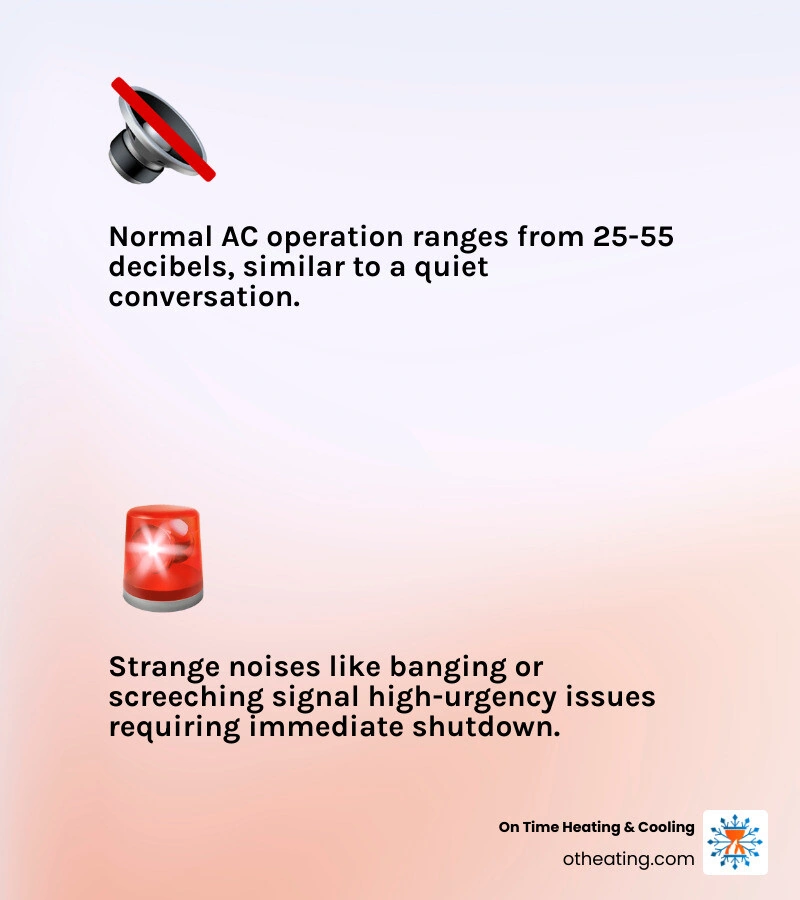
AC making strange noises what they mean is something every homeowner in Menomonee Falls, WI eventually wonders — especially on the hottest days of summer when the last thing you need is a cooling system acting up. Modern air conditioners are engineered to run quietly, typically between 25 and 55 decibels — about as loud as a hushed conversation or a quiet library. Some of the newest high-efficiency units run as low as 19 decibels, which is barely noticeable. So when your system suddenly starts banging, hissing, screeching, or rattling, that sound is your AC asking for help.
Here is a quick reference to the most common AC noises and what they likely mean:
| Noise | Most Likely Cause | Urgency |
|---|---|---|
| Banging / Clanking | Loose or broken part inside compressor or blower | High — turn off immediately |
| Screeching / Squealing | Worn motor bearings or high compressor pressure | High — turn off immediately |
| Hissing | Refrigerant leak or high internal pressure | High — call a pro |
| Buzzing | Electrical fault, failing capacitor, or frozen coils | Moderate to High |
| Grinding | Metal-on-metal from failed motor bearings | High — turn off immediately |
| Rattling | Loose panels, screws, or debris in the unit | Low to Moderate |
| Clicking (persistent) | Failing thermostat relay or bad capacitor | Moderate |
| Gurgling / Bubbling | Clogged condensate drain or refrigerant issue | Moderate |
| Whistling | Dirty air filter or blocked vent restricting airflow | Low to Moderate |
Not every strange sound means your system is about to fail. Some noises — like a single soft click when the unit starts or stops — are completely normal. But others are genuine red flags that can lead to expensive damage or even safety hazards if ignored. The key is knowing the difference, and acting quickly when it counts.
For more context on how loud your AC should actually be, check out Why Your AC Unit is Too Loud.
AC Making Strange Noises What They Mean: A Homeowner’s Guide
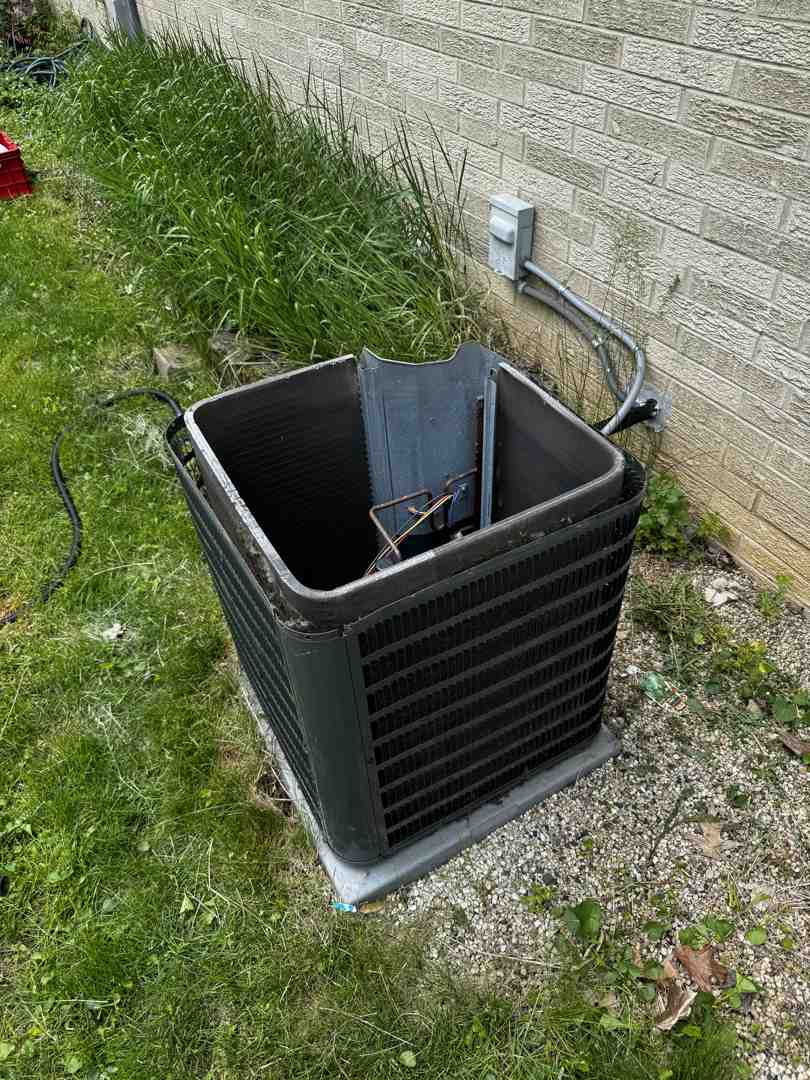
When we talk about ac making strange noises what they mean, the location of the sound is just as important as the sound itself. Is it coming from the big metal box outside (the condenser) or the unit in your basement or attic (the air handler)? Understanding these "audio clues" is the first step in diagnosing Common AC Problems.
Banging and clanking in the compressor
If your outdoor unit sounds like it’s hosting a demolition derby, you likely have a high-urgency situation. Banging or clanking usually indicates that a heavy metal component has come loose or broken entirely. Inside the compressor—the heart of your system—there are connecting rods, piston pins, and crankshafts. If one of these breaks, it will rattle around inside the sealed casing like a marble in a tin can.
Clanking can also mean the indoor blower fan or the outdoor condenser fan is out of balance. If a blade is bent or loose, it will strike other components as it spins. Because the compressor is a sealed unit, a loud banging sound often signals an internal failure that requires a professional diagnosis. For more details on these malfunctions, see our guide on Exploring Common AC Problems and Solutions.
Buzzing and humming electrical issues
A steady, low hum is usually normal, but a loud buzzing sound is often an SOS from your electrical system. This can be caused by:
- Electrical Arcing: Loose wiring or a failing connection can cause electricity to "jump," creating a buzzing sound. This is a fire hazard.
- Failing Capacitor: If the capacitor (which helps start the motor) is dying, you might hear a hum as the motor tries—and fails—to turn on.
- Frozen Coils: If your air filter is filthy, the evaporator coils can freeze over. This puts a massive strain on the system, often resulting in a loud buzzing noise from the indoor unit.
- Contactor Relay: This switch sends power to the compressor. If it’s wearing out, it can chatter or buzz incessantly.
High-Urgency Sounds: Screeching, Hissing, and Grinding
Some sounds are so alarming they make you want to cover your ears. These are usually the sounds that require you to shut down the system immediately to prevent catastrophic failure.
Understanding ac making strange noises what they mean for your indoor unit
Screeching and squealing are often compared to "nails on a chalkboard." In older systems, this is frequently a worn-out fan belt that has slipped or frayed. However, in modern, beltless systems, a high-pitched squeal almost always points to failing motor bearings in the blower assembly or the outdoor fan.
If you hear a grinding noise, think of it as the "big brother" to screeching. Grinding means the bearings have failed completely, and you have metal-on-metal contact. This will quickly burn out the motor and could lead to a much more expensive replacement if the system isn't turned off right away.
Hissing and whistling refrigerant leaks
If your AC sounds like a tea kettle or a snake, you are likely dealing with air or gas escaping where it shouldn't.
- Hissing: A persistent hissing sound usually indicates a refrigerant leak in the lines or the expansion valve. Because refrigerant is under high pressure, it makes a distinct "hiss" as it escapes. This is bad for the environment and your wallet.
- Whistling: This is often the "tea kettle effect." When the blower motor tries to pull air through a restricted space—like a clogged filter or closed vents—it creates a high-pitched whistle.
Curious about that high-pitched tone? Read more about Why AC is Making Whistling Sounds.
Signs of a Refrigerant Leak:
- Hissing or bubbling noises.
- AC is running but blowing warm air.
- Ice buildup on the refrigerant lines.
- Increased humidity levels inside your home.
- Unexpectedly high energy bills.
Troubleshooting Rattling, Clicking, and Gurgling in Your AC
Not every noise is a system-killer. Some are simply annoying or indicative of maintenance that has been deferred a bit too long.
Clicking sounds and thermostat communication
A single "click" at the start and end of a cycle is perfectly normal—that’s just the relay switch and the thermostat communicating. However, persistent or rapid clicking is a sign of trouble. It usually means the electrical signal is being sent, but the hardware (like the contactor or start capacitor) isn’t responding. If your AC clicks repeatedly but won't start, it’s time to call us for a professional look.
Gurgling and dripping drainage problems
If your AC sounds like it’s finishing a drink through a straw, you’re hearing liquid movement.
- Gurgling: This often happens in the condensate drain line. If the line or the P-trap is partially blocked by algae or mineral buildup, the water will gurgle as it struggles to flow past the obstruction.
- Bubbling: This can be more serious, potentially indicating air in the refrigerant lines or a leak that is allowing gas to mix with the liquid refrigerant.
- Dripping: While some condensation is normal, loud dripping usually means the drain pan is full or the drain line is completely clogged, which can lead to significant water damage in your home.
DIY Steps for a Noisy AC in Menomonee Falls
Before you pick up the phone, there are a few simple things you can check yourself. In 2026, we still see many "broken" ACs that just needed a little bit of homeowner TLC.
Simple maintenance tasks for 2026
- The Filter Check: If you hear whistling or buzzing, check your air filter. If it looks like a "dust bunny convention," replace it immediately. A clean filter restores airflow and often silences the system.
- Clear the Debris: Turn off the power and check the outdoor unit. Twigs, leaves, or small stones can fall through the top grille and get caught in the fan blades, causing a rattling or "thwapping" sound (like playing cards in bicycle spokes). Ensure there is at least a 2-foot clearance around the unit.
- Tighten the Screws: Sometimes a rattle is just a loose exterior panel. Use a screwdriver to ensure all the screws on the unit’s casing are snug.
- Inspect the Vents: Ensure at least 80% of your home's vents are open and unblocked by furniture or curtains to prevent whistling from high pressure.
| Task | DIY or Pro? | Why? |
|---|---|---|
| Change Air Filter | DIY | Simple, safe, and prevents many noises. |
| Clear Debris from Outdoor Unit | DIY | Easy to do once power is turned off. |
| Tighten Panel Screws | DIY | Stops simple rattling/vibration. |
| Electrical Repairs | Pro Only | High voltage and capacitor discharge risks. |
| Refrigerant Charging | Pro Only | Requires EPA certification and specialized tools. |
| Motor/Bearing Replacement | Pro Only | Involves complex mechanical disassembly. |
Professional Solutions for Your Cooling System
While DIY checks are great for minor issues, most ac making strange noises what they mean scenarios require the expertise of a factory-trained technician. Ignoring a noise for even a few weeks can turn a simple repair into a total system failure.
In SE Wisconsin, we deal with high humidity and fluctuating temperatures that can put extra stress on your system. Whether you are dealing with AC Noises for Repair Needs in Waukesha or you're trying to figure out Why Your AC is Making Noises in Waukesha, professional intervention is the safest bet.
When to call a professional for ac making strange noises what they mean
You should call us immediately if you experience:
- Burning Smells: Accompanied by buzzing, this indicates an electrical fire risk.
- Loud Banging: To prevent the compressor from destroying itself.
- Screaming/Screeching: If it lasts more than 15 seconds, it indicates dangerously high internal pressure.
- Persistent Hissing: To stop refrigerant from leaking into the environment.
Professional maintenance doesn't just stop noises; it improves energy efficiency and extends the life of your unit (which should last 15–20 years with proper care).
Frequently Asked Questions about AC Noises
Is it safe to run my AC if it is making a loud banging noise?
No. A loud banging noise usually means a metal part has broken or come loose inside the compressor or blower. If you keep running the unit, that loose part can fly around and cause catastrophic damage to other expensive components. Turn the system off at the thermostat and the breaker immediately.
Why does my air conditioner click repeatedly when it tries to turn on?
Repeated clicking is typically an electrical communication failure. The thermostat is sending the signal to start, but the electrical contactor or the start capacitor is failing to engage. This prevents the motor from starting and can eventually lead to a burned-out compressor if the system keeps trying to start unsuccessfully.
Can a dirty air filter cause my AC to make whistling sounds?
Yes, absolutely. A clogged filter creates a "tea kettle" effect. Because the blower motor is trying to pull air through a very restricted space, the air moves faster and creates a high-pitched whistling or whooshing sound. Replacing the filter is the first thing you should try if you hear this noise.
Conclusion
Your air conditioner is the "silent partner" in your home's comfort. When it starts speaking up with strange noises, it's important to listen. From the simple rattle of a loose screw to the high-urgency screech of a failing motor, understanding ac making strange noises what they mean helps you protect your investment.
At On Time Heating & Cooling, we serve Menomonee Falls and the surrounding SE Wisconsin areas, including Waukesha, Brookfield, and Pewaukee. We pride ourselves on punctuality and old-school customer service. Whether it's a 24/7 emergency repair or a routine tune-up through our On The Dot Club, we are here to bring the "Symphony of Silence" back to your home.
Don't let a small noise turn into a big headache. More info about AC services is just a click away, or give us a call to schedule your free second opinion today!
Related Articles
 Maintenance
Melting the Mystery of Frozen AC Units
Fix ice forming on your ac unit causes and what to do. Learn how to defrost your system and prevent costly damage today.
Read Article Maintenance
How to Stop AC Running Constantly in Wisconsin Heat Waves
Discover why your AC runs constantly during Wisconsin heat waves and learn proven fixes to restore comfort and cut energy costs.
Read Article Maintenance
5 Common AC Repairs and What Causes Them
Discover the most common AC repairs and what causes them in Brookfield WI homes, plus DIY checks and repair-or-replace tips from local pros.
Read ArticleNeed HVAC help?
Whether you need a repair, maintenance, or a new installation, our expert team is here to help.