Keep Your Cool with These Spring HVAC Maintenance Tips
Master spring ac and hvac maintenance with DIY tips, pro tune-ups & efficiency hacks for Wisconsin summers. Schedule now!
Shane Herro
Owner & Lead Tech

Master spring ac and hvac maintenance with DIY tips, pro tune-ups & efficiency hacks for Wisconsin summers. Schedule now!
I'm looking for reliable spring AC and HVAC maintenance. Who in Menomonee Falls can help get my system ready for summer?
Spring AC and HVAC maintenance is the most important thing you can do right now to keep your home cool and comfortable all summer long. As temperatures start climbing in Menomonee Falls, WI, your air conditioner is waking up after months of sitting idle — and that dormancy can hide problems that only show up on the hottest day of the year, when you need your system most.
Here is a quick overview of the core spring HVAC maintenance steps every homeowner should know:
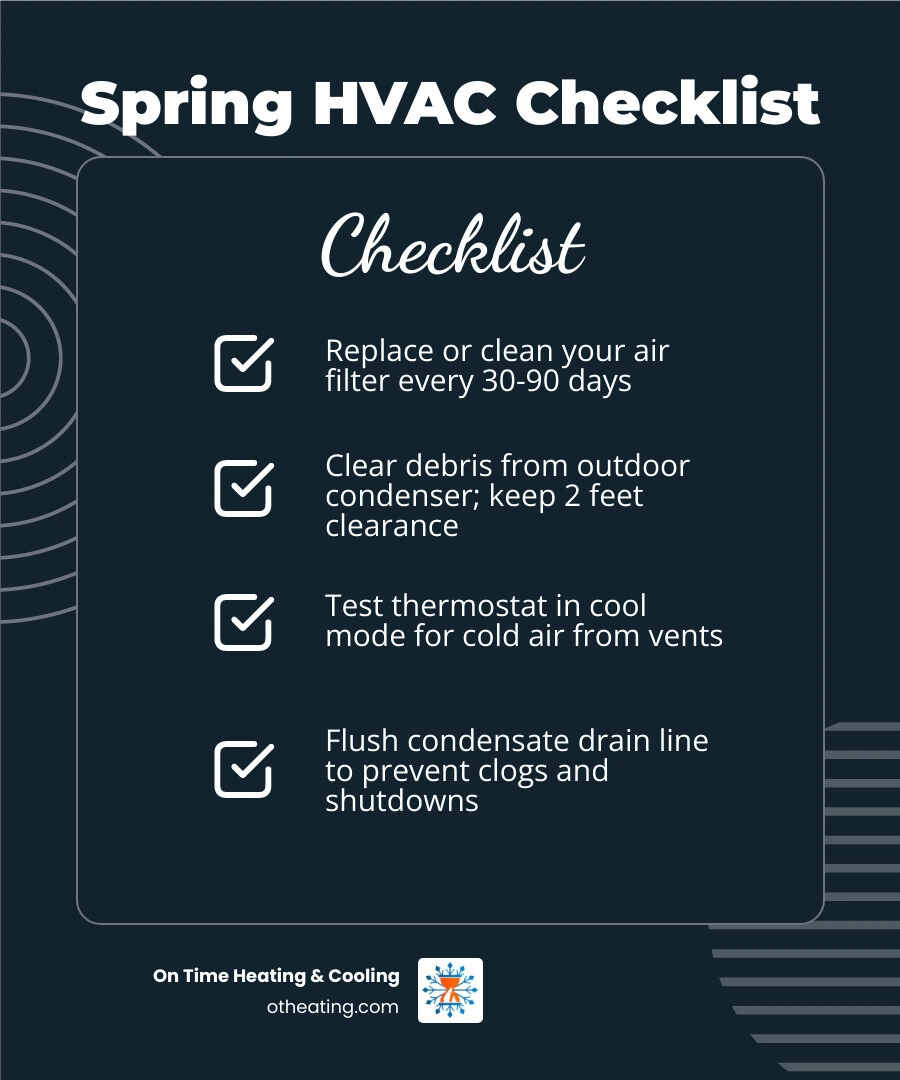
Spring AC and HVAC Maintenance: Quick-Start Checklist
- Replace or clean your air filter — every 30 to 90 days, or monthly if you have pets or allergies
- Clear debris from the outdoor condenser unit — remove leaves, grass clippings, and vegetation; keep at least 2 feet of clearance on all sides
- Test your thermostat — set it to cool mode and confirm cold air is coming from your vents
- Check and flush the condensate drain line — prevents clogs, water damage, and system shutdowns
- Schedule a professional tune-up — covers refrigerant levels, electrical connections, coil cleaning, and more
Heating and cooling accounts for a significant portion of your home's energy usage. Skipping spring maintenance can push that usage even higher — and leave you scrambling for repairs during peak summer heat when technicians are booked out weeks in advance. A little attention now goes a long way toward avoiding a sweaty, stressful July.
Why Spring AC and HVAC Maintenance is Essential for Wisconsin Homes
As we move through April 2026, the transition from heavy furnace use to air conditioning is a critical window for your home’s health. In Southeast Wisconsin, we experience a wide range of weather patterns, from lingering frost to sudden 80-degree days. This unpredictability means your cooling system needs to be ready to go at a moment's notice.
The primary reason to prioritize spring ac and hvac maintenance is reliability. Think of your HVAC system like a car; you wouldn't take a cross-country road trip after letting your vehicle sit in a garage for six months without checking the oil and tires. Your AC has been dormant all winter, likely accumulating dust and debris. Starting it up without an inspection is the leading cause of mid-summer breakdowns.
Furthermore, energy efficiency is a major factor. When a system is dirty or poorly maintained, it has to work significantly harder to reach your desired temperature, which drives up energy consumption. By performing Spring HVAC System Updates for Homes, you ensure that your system is operating at peak performance rather than fighting against a clogged machine.

Essential DIY Tasks for Homeowners
While some technical aspects of HVAC care require a pro, there are several tasks you can tackle yourself to get a head start on the season. Taking a proactive approach not only saves you stress but also helps you get familiar with how your system sounds and operates.
One of the easiest things you can do is check your thermostat. If you have an older model, spring is the perfect time to replace the batteries so you don't lose cooling on a holiday weekend. You should also take a walk through your home and ensure all air vents are open and unobstructed. It’s a common myth that closing vents in unused rooms saves money; in reality, it increases pressure in the ductwork and can actually damage your blower motor. For more on the basics, check out our Basic AC Maintenance guide.
Essential DIY Tasks for Your Spring AC and HVAC Maintenance
The air filter is arguably the single most important component a homeowner can manage. A dirty filter doesn't just lower your indoor air quality; it acts like a chokehold on your system. Clogged filters can reduce airflow by up to 15%, forcing the AC to run longer cycles and potentially causing the evaporator coil to freeze solid.
For the best results during the high-pollen spring months in Wisconsin, we recommend:
- Checking the filter monthly: If you have pets (the "fur factor") or family members with allergies, you may need to change it every 30 days.
- Upgrading your filter: Consider a high-efficiency pleated filter. These have an electrostatic charge that captures smaller particles like mold spores and fine dust.
- Timing: At a minimum, replace your filter every 90 days.
Monthly DIY Maintenance Checklist:
- Inspect the air filter and replace if visible dust is present.
- Dust off the return air grilles to ensure maximum intake.
- Listen for any new or unusual rattles when the system kicks on.
- Check the "cool" setting on your thermostat to ensure the outdoor unit actually engages.
Outdoor Condenser and Airflow Prep
Your outdoor unit (the condenser) has a tough job. It’s responsible for releasing the heat collected from inside your home into the outside air. If the unit is smothered by leaves, tall grass, or "cottonwood fuzz" (a common spring nuisance in Waukesha and surrounding areas), that heat has nowhere to go.
To ensure proper airflow, follow these HVAC Maintenance Tips Waukesha WI homeowners swear by:
- The 2-Foot Rule: Ensure there is at least two feet of clear space on all sides of the unit. Trim back shrubs, weeds, and overhanging branches.
- Debris Removal: Gently rake away leaves or mulch that have piled up against the base.
- Cleaning the Fins: With the power off, you can use a garden hose (never a pressure washer!) to gently rinse away dirt from the exterior coils. Be careful not to bend the delicate metal fins.
- Leveling: Check that the concrete pad hasn't shifted. An unlevel unit can cause oil to settle unevenly in the compressor, leading to early failure.
What a Professional Tune-Up Includes
While DIY tasks are a great foundation, a professional spring ac and hvac maintenance visit goes much deeper. Our technicians use specialized tools to measure things the human eye can't see, such as refrigerant pressures and electrical draw.
A comprehensive professional tune-up typically includes:
- Refrigerant Level Check: Too much or too little refrigerant makes the system inefficient and can lead to premature compressor failure.
- Electrical Inspection: We tighten all connections and measure the amperage on the blower motor. Faulty wiring is a major fire hazard and can lead to expensive component failure.
- Coil Cleaning: We clean both the indoor evaporator coil and the outdoor condenser coil. Clean coils are essential for efficient heat transfer.
- Condensate Drain Clearing: We flush the drain line to prevent algae buildup, which is a leading cause of water damage in Wisconsin basements and attics.
For residents in the New Berlin area, our AC Maintenance Guide New Berlin WI provides a localized look at why these professional steps are so vital.
| Task | DIY Homeowner | Professional Technician |
|---|---|---|
| Replace Air Filter | Yes | Included |
| Clear Exterior Debris | Yes | Included |
| Clean Evaporator Coil | No | Yes |
| Check Refrigerant Levels | No | Yes |
| Tighten Electrical Connections | No | Yes |
| Calibrate Thermostat | No | Yes |
| Flush Drain Lines | Limited | Yes |
Maximizing Efficiency and Lifespan
The goal of spring ac and hvac maintenance isn't just to get through the next few months—it's to protect your investment for the next 15 years. A well-maintained system lasts significantly longer than one that is neglected. In fact, routine service is often a requirement to keep your manufacturer's warranty valid.
One of the best ways to boost efficiency alongside maintenance is the installation of a smart thermostat. These devices can help reduce cooling costs by learning your schedule and adjusting the temperature when you’re away at work or enjoying a day at Pewaukee Lake. For a deeper dive into long-term care, see our HVAC Maintenance Ultimate Guide.
Maximizing Efficiency and Lifespan with Spring AC and HVAC Maintenance
Did you know the average forced-air system loses 20 to 30 percent of its conditioned air to duct leakage? That means you could be paying to cool your attic or the spaces between your walls. During a professional spring visit, we can inspect your ductwork for disconnected joints or leaks. Sealing these gaps ensures the cold air actually reaches your living spaces, further reducing the strain on your equipment.
When your system doesn't have to work as hard, it experiences less wear and tear. This is why Routine AC Maintenance Can Extend Unit life by several years, delaying the need for a full system replacement.
Signs Your System Needs Immediate Attention
Sometimes, a simple tune-up reveals that your system needs a bit more help. If you notice any of the following "red flags" during your spring startup, it’s time to call in the experts immediately:
- Strange Noises: Banging, screeching, or persistent rattling often indicates a loose belt or a failing motor bearing.
- Warm Air: If the air coming from the vents isn't cold, you could have a refrigerant leak or a failed capacitor.
- Short Cycling: If the AC turns on and off every few minutes, it’s putting massive strain on the compressor and likely isn't dehumidifying your home.
- High Humidity: Your AC is designed to remove moisture. If your home feels "sticky" despite the AC running, the system isn't performing its secondary job correctly.
- Ice Formation: If you see ice on the copper refrigerant lines (even in 90-degree weather), stop the system immediately and call us. This is usually caused by a severe airflow restriction or low refrigerant.
Recognizing these Signs It's Time for AC Maintenance early can be the difference between a quick part replacement and a total system meltdown in July.
Frequently Asked Questions about Spring HVAC Care
How often should I replace my HVAC air filter?
In the Menomonee Falls and Waukesha area, we recommend checking your filter every 30 days. Most homeowners should replace it every 1 to 3 months. If you have multiple pets, live near a construction site, or have severe allergies, monthly replacement is best to maintain airflow and energy efficiency.
When is the best time to schedule a spring tune-up?
The best time is early spring—specifically March or April. By late May, HVAC companies are often booked out for weeks with emergency repair calls. Scheduling early ensures you get a convenient time slot and that your system is ready before the first heat wave hits.
Why is my AC blowing warm air after winter?
This could be caused by several things: a tripped circuit breaker, a blown fuse in the outdoor disconnect box, a dead thermostat battery, or a refrigerant leak. First, check your thermostat settings and your electrical panel. If those are fine, you likely need a professional to check the refrigerant levels or the compressor.
Conclusion: Trust On Time Heating & Cooling for Your Spring Prep
Don't wait for the first sweltering day of summer to find out your air conditioner is struggling. Taking the time for spring ac and hvac maintenance now ensures your family stays cool, your energy bills stay low, and your system stays reliable all year long.
At On Time Heating & Cooling, we pride ourselves on our punctuality and our "old-school" commitment to customer service. Whether you are in Menomonee Falls, Waukesha, Brookfield, or any of our surrounding communities like Sussex or Pewaukee, our factory-trained technicians are ready to provide the expert care your home deserves. From simple tune-ups to 24/7 emergency service, we are dedicated to keeping your home comfortable.
Ready to ensure a stress-free summer? Schedule your professional spring maintenance today and join the "On The Dot Club" for priority service and year-round peace of mind. We look forward to helping you keep your cool!
Related Articles
 Maintenance
Melting the Mystery of Frozen AC Units
Fix ice forming on your ac unit causes and what to do. Learn how to defrost your system and prevent costly damage today.
Read Article Maintenance
How to Stop AC Running Constantly in Wisconsin Heat Waves
Discover why your AC runs constantly during Wisconsin heat waves and learn proven fixes to restore comfort and cut energy costs.
Read Article Maintenance
5 Common AC Repairs and What Causes Them
Discover the most common AC repairs and what causes them in Brookfield WI homes, plus DIY checks and repair-or-replace tips from local pros.
Read ArticleNeed HVAC help?
Whether you need a repair, maintenance, or a new installation, our expert team is here to help.