First Steps for a Dead Air Conditioner
AC not turning on what to check first: Troubleshoot thermostat, breakers, filters & more. Quick fixes before calling pros in Menomonee Falls!
Shane Herro
Owner & Lead Tech

AC not turning on what to check first: Troubleshoot thermostat, breakers, filters & more. Quick fixes before calling pros in Menomonee Falls!
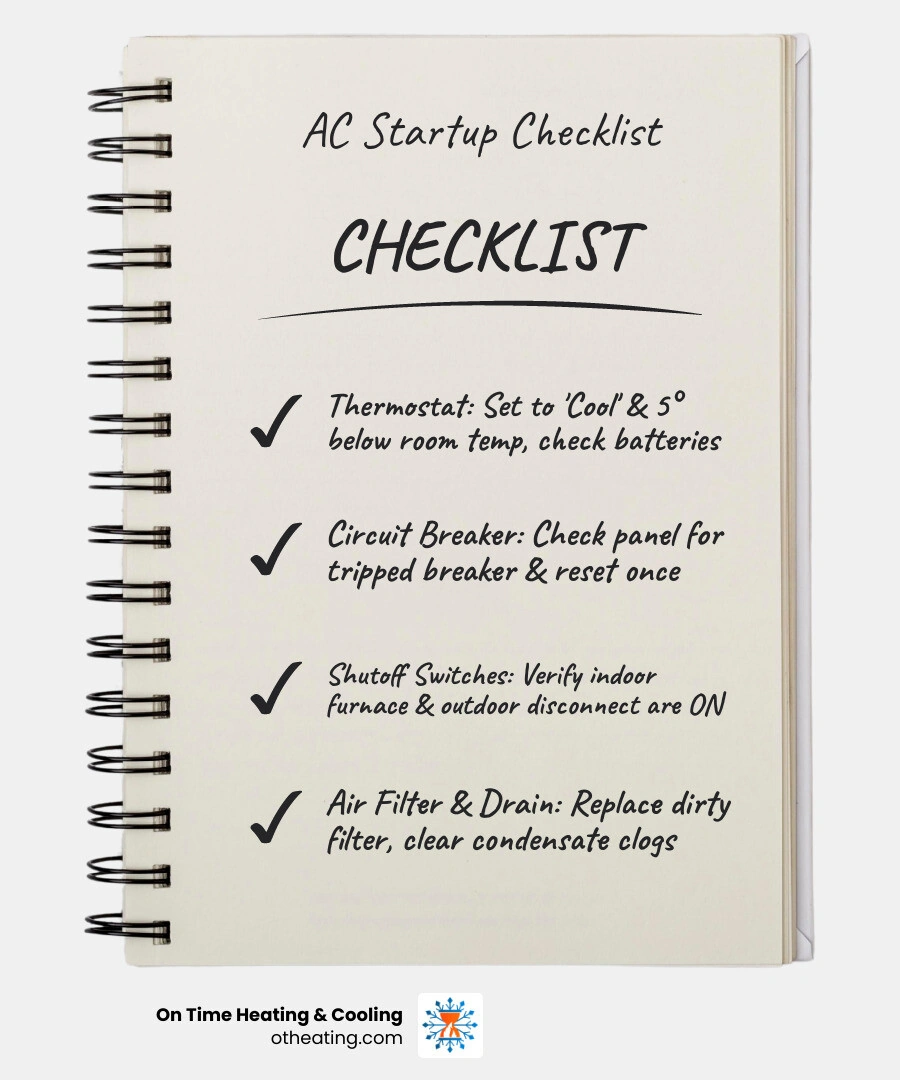
What to Do When Your AC Won't Start: A Quick-Start Checklist
If you're dealing with ac not turning on what to check first is almost always one of these six things:
- Thermostat settings - Make sure it's set to "Cool" and at least 5 degrees below room temperature. Check the batteries too.
- Circuit breaker - Look for a tripped breaker in your electrical panel and reset it once.
- Indoor shutoff switch - Find the power switch near your furnace or air handler and confirm it's on.
- Outdoor disconnect switch - Check the metal box near your outdoor unit to make sure it hasn't been switched off.
- Air filter - A clogged filter can trigger a safety shutdown. Replace it if it looks dirty.
- Condensate drain line - A clog here activates a float switch that cuts power to the system.
These six checks solve roughly 40% of AC no-start situations on their own - no tools, no technician required.
You walk into your Menomonee Falls home on a warm April afternoon and something feels off. The house is stuffy, the air is still, and when you check the thermostat, nothing happens. Your AC isn't responding at all. That sinking feeling is familiar to a lot of homeowners - and the good news is that the cause is often something simple.
Before you assume the worst, there are several quick checks you can do yourself that take only a few minutes. This guide walks you through each one in plain language, so you know exactly where to start and when it makes sense to call in a professional.
AC Not Turning On: What to Check First at the Thermostat
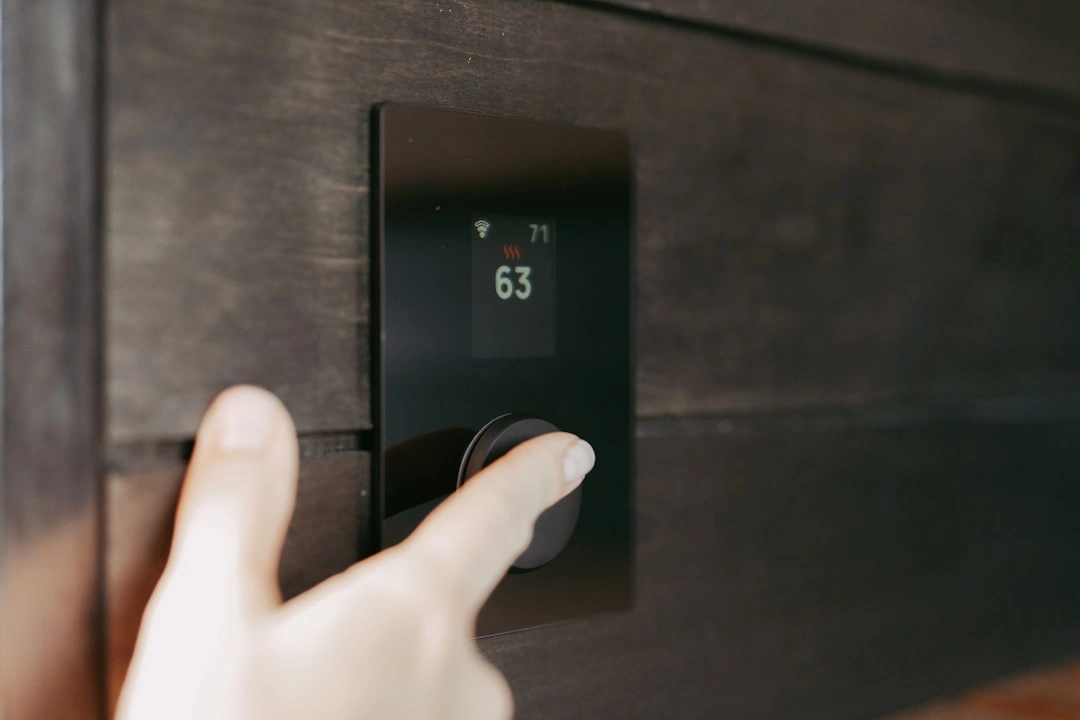
When your cooling system seems dead, we always recommend starting at the "brain" of the operation: the thermostat. It is surprisingly common for a simple setting error to be the culprit. Someone in the family might have accidentally bumped the screen while cleaning, or a guest might have switched the mode to "Heat" or "Off" without realizing it.
First, verify that the thermostat is set to "Cool." If it’s set to "Auto," it might not kick in until the house gets significantly warmer. Next, try the "5-degree rule": lower the set temperature to at least 5 degrees below the current room temperature. This creates a clear demand for cooling that should trigger the system.
If the screen is blank or flashing a low-battery icon, it’s time for a fresh set of batteries. Many modern thermostats rely on batteries as a backup or primary power source. Even if the screen looks okay, weak batteries can prevent the thermostat from sending the electrical signal to your outdoor unit. If you've checked the settings and swapped the batteries but still have an Ac Not Turning On, the issue might lie deeper in the electrical path.
Why is my AC not turning on and what to check first after a power outage?
April in Wisconsin can bring unpredictable weather, and spring storms often lead to power flickers or outages. If your power recently went out and the AC won't come back on, don't panic. Most modern systems have built-in safety timers. These timers prevent the compressor from starting immediately after a power interruption, which protects the motor from "short-cycling" damage.
Wait at least 10 to 15 minutes after power is restored before trying to turn the AC on. If it still won't budge, your system might have experienced a "lockout." This happens when the onboard computer detects a voltage surge and shuts down to protect the sensitive electronics. In this case, you may need to perform a reset by turning the system off at the thermostat and the breaker, waiting 30 minutes, and then turning it back on. To prevent this in the future, we often suggest installing a dedicated HVAC surge protector.
Is a dirty filter the reason for my AC not turning on and what to check first?
It might seem hard to believe that a simple piece of pleated fabric can stop a whole machine, but it’s true. A clogged air filter is one of the most common reasons for an AC shutdown. When the filter is packed with dust, pet hair, and dander, it restricts airflow.
Without enough air moving over the evaporator coils, the system has to work twice as hard, leading to overheating. Most units have a safety sensor that will cut power to the system if it gets too hot to prevent a fire or total motor failure. During the peak cooling season, we recommend checking your filter every 30 to 60 days. If you have pets or live in a dusty area like a new construction zone in Brookfield or Pewaukee, you might need to change it even more often.
Inspecting Power Sources and Circuit Breakers
If the thermostat is fine and the filter is clean, the next step in ac not turning on what to check first is the power supply. Your AC system is a heavy hitter when it comes to electricity, often drawing 30 to 60 amps. This high demand means it’s prone to tripping breakers if there is a surge or if the system is overworking.
Head to your electrical panel (usually in the basement or garage). Look for a breaker labeled "AC" or "HVAC." Sometimes a tripped breaker doesn't look fully "off"—it might just be slightly out of alignment. Flip it all the way to the "Off" position and then back to "On." If it trips again immediately, do not try to reset it a second time. This is a clear sign of an electrical short or a failing component, and continuing to flip the switch could cause a fire.
Checking the outdoor shutoff switch
Every outdoor condenser unit has a dedicated disconnect box, usually located on the siding of your house right next to the unit. Inside this metal box is a switch or a "pullout" fuse that cuts power to the outdoor unit.
Why would this be off? Sometimes a landscaper bumps it, or if you had work done on your home recently, a contractor might have turned it off for safety and forgotten to flip it back. In some cases, spiders or moisture can get inside the box and cause a fuse to blow. Ensure the switch is in the "On" position. If you’re comfortable, you can check the fuses inside, but if you see signs of charring or melted plastic, call us immediately. This is a job for our How To Fix An Ac That Wont Turn On specialists.
Airflow and Drainage Issues Preventing Startup
Your air conditioner doesn't just cool the air; it also removes humidity. This moisture turns into water (condensate) that drips into a pan and flows out through a PVC pipe. If that pipe gets clogged with algae, mold, or debris, the water has nowhere to go.
To prevent your basement or attic from flooding, most systems are equipped with a "float switch." This is a small safety device that detects rising water in the drain pan. When the water level gets too high, the switch "trips" and cuts power to the AC. This is a brilliant safety feature, but it will leave you with a dead unit until the water is cleared.
Signs of a clogged condensate drain
If you suspect a drainage issue, look for standing water in the emergency drain pan under your indoor unit. You might also notice a damp smell near your furnace. A quick DIY fix is to use a wet-dry vacuum on the end of the condensate line (usually found outside near the condenser) to suck out the clog. If the water drains and the float switch drops back down, your AC should kick back on.
Another airflow-related issue is frozen evaporator coils. If you see ice on the copper lines leading to your unit or on the indoor coil itself, the system will eventually shut down. This usually happens because of a dirty filter or low refrigerant. Turn the system off and let the ice melt completely—which can take up to 24 hours—before trying to restart it. If the ice returns, you've likely found Why Your Ac Is Struggling To Start Up.
When to Call for Professional AC Repair
While we love empowering our neighbors in Menomonee Falls and Waukesha to handle basic troubleshooting, some things are simply too dangerous or complex for a DIY approach. If you've checked the thermostat, the breakers, and the filters and the system is still silent, it’s time to call in the factory-trained experts.
We often use the "$5,000 rule" to help homeowners decide whether to repair or replace. Multiply the age of your unit by the cost of the repair. If the total is over $5,000, it’s usually more cost-effective to invest in a new, high-efficiency system rather than patching up an old one. For example, a 12-year-old unit needing a major motor repair is often a candidate for replacement. Our team provides Ac Repair By Our Experts to help you make the best choice for your home and budget.
Identifying a failed capacitor
The capacitor is like a giant battery that gives your AC motor the "startup jolt" it needs to begin spinning. These components are very sensitive to heat and electrical surges. If you hear a humming or buzzing sound coming from your outdoor unit, but the fan isn't spinning, you likely have a failed capacitor.
You might also notice the top of the capacitor looks "bulged" or like it's leaking oil. Do not attempt to replace this yourself. Capacitors store a high-voltage electrical charge even when the power is turned off, which can cause a severe or even fatal shock if handled incorrectly. Our technicians have the tools to safely discharge and replace these parts in minutes.
Frequently Asked Questions
Why won't my outdoor unit turn on if the indoor fan is running?
If you can hear the indoor blower motor running and feel air coming out of the vents, but that air isn't cold, your outdoor unit (the condenser) isn't running. This often points to a problem with the "Y-wire"—the low-voltage wire that carries the "call for cooling" signal from your thermostat to the outdoor unit. It could also be a failed contactor (the switch inside the outdoor unit) or a broken wire caused by a weed whacker or a hungry rodent.
How can regular maintenance prevent startup problems?
Most of the issues we've discussed—like clogged drains, dirty coils, and failing capacitors—can be caught during an annual tune-up. During a professional maintenance visit, we clean the system, tighten electrical connections, and test the "draw" of your motors. Our On The Dot Club members enjoy regular tune-ups that keep their systems running efficiently all summer long, preventing those mid-July breakdowns when you need cooling the most.
What is the difference between central AC and window unit troubleshooting?
While the cooling principles are the same, window units have a few unique quirks. Most window ACs have a special plug called an LCDI (Leakage Current Detection and Interruption) plug. If the unit vibrates too much, it can trip the reset button right on the plug. Always check that first! Additionally, window units don't have a complex drainage system; they usually just have a small hole or slinger ring to manage water. If a window unit isn't turning on, it’s almost always a power cord or outlet issue.
Conclusion
Dealing with an air conditioner that won't turn on is never fun, but by following this checklist, you can often save yourself the time and stress of an unnecessary service call. Remember to start simple: check your thermostat, your breakers, and your filters.
If those quick fixes don't do the trick, don't sweat it. At On Time Heating & Cooling, we pride ourselves on our punctuality and our "old-school" commitment to customer service. Whether you're in New Berlin, Mequon, or right here in Menomonee Falls, our factory-trained technicians are ready to get your home comfortable again. We offer 24/7 emergency service because we know that AC failures don't always happen during business hours.
Don't spend another minute in a sweltering house. If your DIY troubleshooting hasn't solved the problem, Schedule your professional AC repair in Menomonee Falls today and let us get your system back on the dot!
Related Articles
 Maintenance
Melting the Mystery of Frozen AC Units
Fix ice forming on your ac unit causes and what to do. Learn how to defrost your system and prevent costly damage today.
Read Article Maintenance
How to Stop AC Running Constantly in Wisconsin Heat Waves
Discover why your AC runs constantly during Wisconsin heat waves and learn proven fixes to restore comfort and cut energy costs.
Read Article Maintenance
5 Common AC Repairs and What Causes Them
Discover the most common AC repairs and what causes them in Brookfield WI homes, plus DIY checks and repair-or-replace tips from local pros.
Read ArticleNeed HVAC help?
Whether you need a repair, maintenance, or a new installation, our expert team is here to help.